 One of the most powerful benefits of using the WordPress platform is the ability to easily enhance your WordPress web site’s functionality using inexpensive called plugins.
What Are WordPress Plugins?
No doubt, you most likely use a device like a mobile phone. What happens when you want to access something new on your phone like a new application, software or a business productivity tool?
You download and install an app!
An app is a piece of software that is really easy to install and instantly integrates new functionality into a mobile phone.
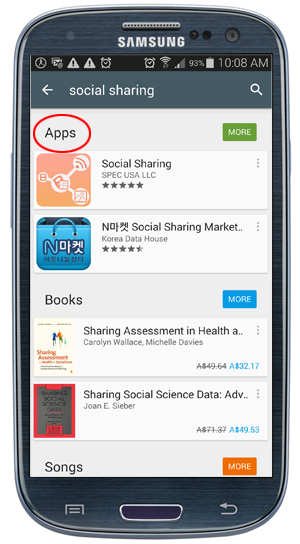
(Just as there are social sharing apps …)
A WP plugin is very much like an app. You install an application that adds new functionality to your web site …
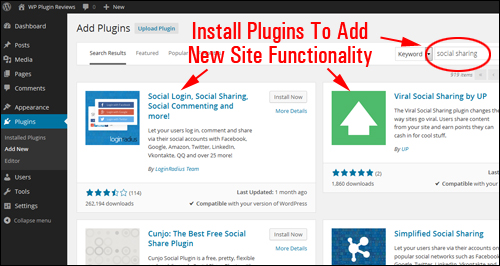
(… there are also social sharing plugins for WP users!)
Almost always, if you need to expand the functionality of an existing website, additional cost is involved. Depending on the complexity of the feature or enhancement, things can get quite expensive, especially if it involves website development.
This also applies to creating a website or business blog. Many companies often pay money upfront for additional features and customizations they may simply not need.
For sound, strategic business planning reasons, we suggest a sustainable strategy when growing your website and WP plugins are ideal for doing this.
Wouldn’t it be great if you could:
1) Start simply and with minimal cost involved. Get your website up and running quickly, then …
2) As the need for new features arises, simply add new software modules with a couple of clicks of the mouse that integrate seamlessly with your existing website, giving your website an entirely new and expanded range of useful capabilities, and also …
3) Cost not a single dollar extra to add to your site?
Well, this is just what WP plugins let you do!
Plugins – Benefits
Earlier, we compared WordPress plugins with ’apps’. In the same way that some apps are free to download and some cost a little money, so do WP plugins.
In fact, many great plugins can be downloaded to your site at no cost.
WordPress plugins that you have to pay for are referred to as ’Premium’ plugins. The good news, is that when you compare it to the cost of hiring a professional web developer to add the same functionality on your site, most Premium (i.e. paid) plugins are priced quite cheaply.
Also, as WordPress distributes its software as an Open Source application, anyone can create, rewrite and customize any portion of the code. This has enabled thousands of professional software developers to enhance and contribute to the WPsoftware.
- Plugins let you start simply with only a basic yet professional site and add new features and enhancements to your site only when necessary.
- Plugins allow you to add almost unlimited functionality to any site quickly, easily and inexpensively.
- Plugins give you virtually endless expanding capabilities.
- WP plugins allow anyone to have a web presence that they can fully manage.
- Most plugins will typically work “right out of the box” and only require to be installed and activated to give your site new capabilities, enhancements and functionality.
- Some plugins offer more advanced options and require some configuration.
Plugins – Powerful, Flexible … And (Many Of Them Are) 100% FREE!
Like WP themes, loads of WordPress plugins are available for WP users … for FREE!
You can view and download thousands of WP plugins from the Free WP Plugin Repository …
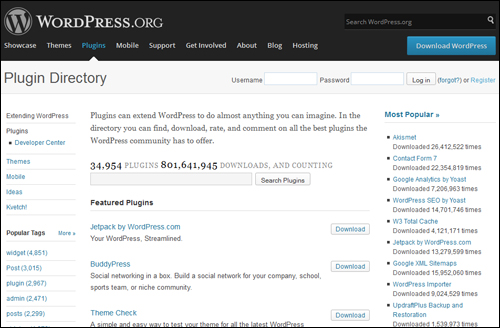
As previously mentioned, you will find WP plugins that will do just about anything you want done.
WP plugin categories cover:
- Blog Management
- Content Distribution
- Web Traffic Generation
- Visitor Interactivity
- Social Engagement
- Media Utilities Automation
- Improving Sales & Opt-In Conversions And Lead Generation
- Data Monitoring & Reporting Tools
- Site Security
For example, you can add features to your business online presence with plugins such as:
- Contact forms
- Polls and quizzes
- Surveys
- Display banners
- E-commerce (from setting up single-item ordering with PayPal buttons, to full e-commerce stores with online shopping carts, payment processing, recurring payments, discount codes, etc …)
- Social sharing buttons
- Private Membership sites
- Newsletter opt-in forms
- Sales funnels
- Mobile integration
- Improving your website’s SEO
- Image galleries (with rotating images, lightboxes, etc.)
- Customer feedback forms
- Language translation (e.g. you can instantly change your site’s content from English to Italian)
- Statistical reporting (e.g. number of visitors, pages visited, keywords searched, etc.)
- Custom navigation menus
- Customer engagement – contest, live chat, currency conversion, etc.
- Media integration
- Making pages load faster
- Event management
- Business directories
- Automatically sell spots on your website
- Set appointments and reminders
- Manage reservations and bookings
- Detect broken links on your pages and send you reports
- Redirect visitors from broken pages to other areas on your site or other websites
- Monitor social signals
- Make your pages available for printing or downloading as PDF
- Add a site map
- Hide pages from displaying on areas of your site (e.g. site maps, feeds, etc.)
- Protect content on your pages and posts
- Import data from different CMS platforms
- Search and replace data
- Prevent SPAM
- Customize visitor discussions (e.g. displaying Facebook posts)
- Insert code and code elements into your content
- Add formatted tables
- Display animated graphics and advanced text formatting options
- Add and manage QR codes
- Improve Google search
- Add business location maps
- Syndicate your content automatically on social networks like Facebook, Twitter, YouTube, StumbleUpon and others
- Show countdown timers (for special offers, discount coupons, etc …)
- Display personal greetings, timed offers, etc …
- And so many other features!
As it’s clear to see, plugins give you practically limitless possibilities. If you are planning to build a website or blog for your business, or your existing website was not built using WordPress, then consider choosing it in the future.
If you’re still wondering about the power and flexibility of using WordPress plugins, let me show you some practical advantages of adding an inexpensive plugin to your website.
For example, if you want to protect your content, you can use plugins to make just a couple of paragraphs on a page or post inaccessible, or transform your WordPress site into a full paid membership site with separate login details for all users …
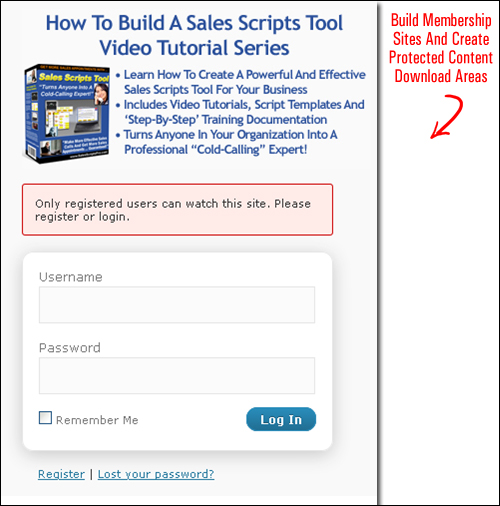
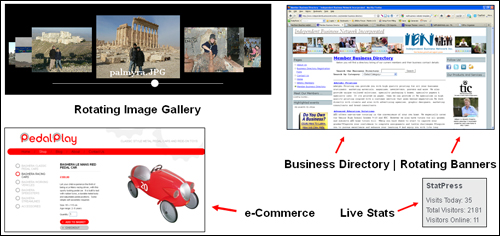
As mentioned previously, free plugins can be used to enhance your web site in so many different ways. From adding functionality that improve your business, your web users’ experience and your understanding of what is happening on your site …
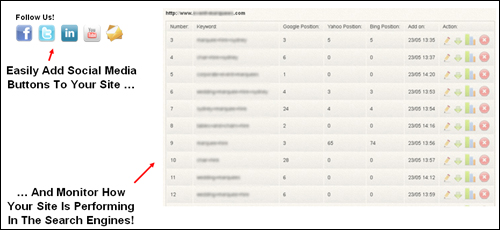
To extending your site’s reach across social sites and search engines …
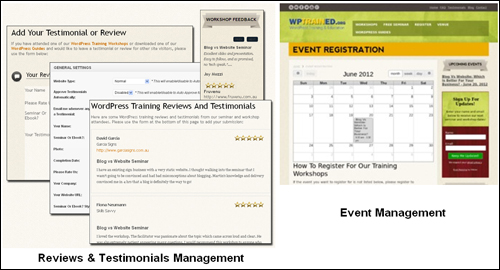
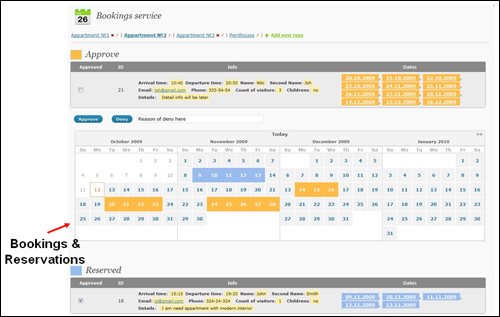
You can also add sophisticated features to your site using inexpensive paid plugins. For example, you can buy plugins that integrate and automate functionality on your website like user testimonial and event bookings management …
And also set up a custom bookings and reservations system on your site … all for a small fraction of the cost of hiring programmers to create custom applications for you …
You can also take advantage of native WordPress commenting features and plugins that will make your site even more interactive …
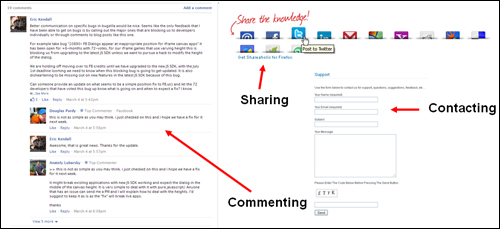
For example, your visitors can easily:
- Post comments on your blog posts (which can grow into online discussions) using either the built-in WordPress commenting function, or integrated Facebook comments (which then get displayed throughout your visitors’ Facebook pages, providing you with added exposure).
- Bookmark your content on social media.
- Contact you using contact forms
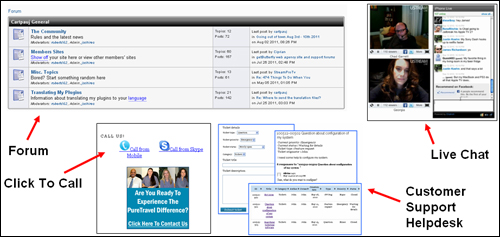
- Engage online directly with other members through online forums or even set up a private online community on your own site.
- Engage with members of your team through live video chats
- Dial your business from their smart phones when browsing your pages
- Get help and support via a dedicated client support helpdesk
- And so much more …
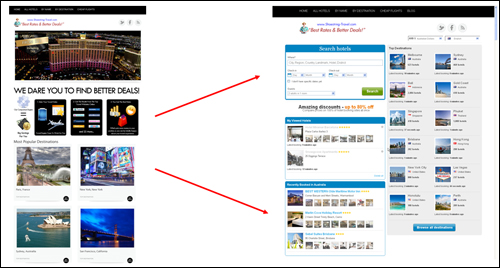
You can also integrate sophisticated “back end” solutions using a WP “front end”. This lets you manage the content that your visitors will see on your site, while the 3rd-party application handles the technological aspects …
Plugins – Additional Things You Should Know
- There are so many WordPress plugins available. Be careful of overloading your site with too many plugins, as this will invariably affect your website’s performance and site loading speed. It can also create more maintenance work for you resulting from possible errors.
- Only keep the plugins you really use. Delete any plugins you don’t use from your site, as these utilize resources.
- Many free plugins typically come with little to no support from the plugin developer. When considering paid plugins, make sure you do a little research first to see what kind of reputation the plugin developer has when it comes to offering support, upgrades, new features, etc. Be sure to check the plugin reviews we publish on this site for additional useful information.
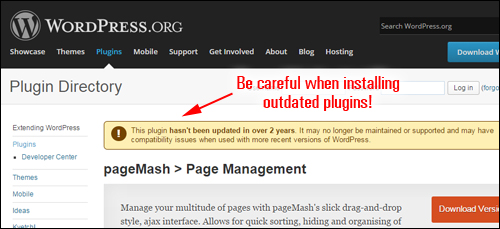
- If you see that a plugin has not been updated for a very long time (e.g. two or more years), then think twice before installing it on your website or blog. The WordPress core software is updated regularly and older plugins that have not been updated can cause errors.
- Ensure that you always keep all plugins updated to their most recent software version. Older plugin not only can cause errors and conflicts, they could also have vulnerabilities that could be exploited by hackers and malware.
As you can see, plugins are an important feature of WordPress and contribute to making it the most downloaded website management solution in the world. Plugins also provide WordPress users with easy, simple and inexpensive ways to add new functionality to their website without having to spend thousands of dollars on web development.
One last thing on the subject of WordPress plugins:
If there is any feature or functionality you need for your web site, you can guarantee that a someone has probably already authored one that will do exactly what you need it to do, and that this plugin will either be available for FREE, or if it’s a premium plugin, that the cost to buy it will be reasonable.
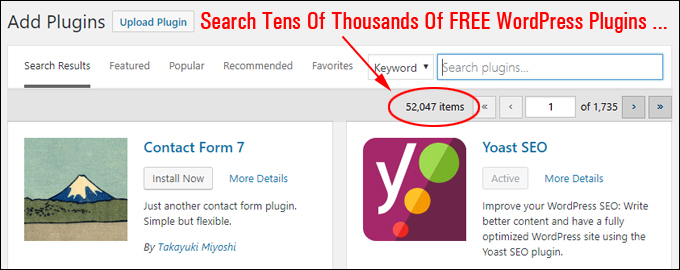
(Whatever you need done, there’s a WordPress plugin for that!)
And, if by chance such a WordPress plugin has not been created yet, then a custom plugin that does precisely what you want it to do can certainly be created for your business at a reasonable cost.
Hopefully, this post has given you a better understanding of plugins – what they are and how they can significantly expand your web site. See our related posts section to learn more about using WP plugins.
***
"I love the way your email series "Infinite Web Content Creation Training Series" is documented and presented. It is very absorbing and captivating. The links and tutorials are interesting and educational. This has motivated me to rewrite my content following the concepts I am learning from the email series." - Mani Raju, www.fortuneinewaste.com
***