 The scale of attacks on websites and blogs worldwide is rising, and this is only going to get worse.
It’s probably safe to assume that if you haven’t been hacked yet, then it’s only a matter of time.
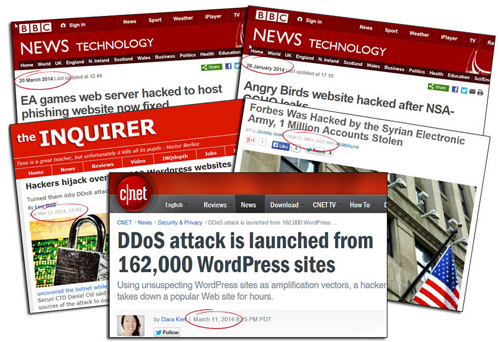
On March 11, 2014, technology sites like Cnet.com began reporting that over 160,000+ legitimate WordPress websites had been hacked.
Thousands of websites are attacked every year! Will yours be one of them?
(Screenshot: BlogDefender website)
According to the Cnet report,
“With some old-fashioned trickery, hackers were able to get more than 162,000 legitimate WordPress-powered Web sites to mount a distributed-denial-of-service attack against another Web site.”
(Source: cnet.com/news/ddos-attack-is-launched-from-162000-wordpress-sites)
As described by security firm Sucuri, hackers had leveraged a flaw to attack unsuspecting WordPress websites and direct a distributed-denial-of-service cyber attack (DDoS) towards another popular website.
Every web site with a security vulnerability provides some degree of opportunity to hackers. All websites are valuable to hackers. Business websites, personal blogs, government web sites … even web sites owned by online security experts can and have been targeted.
If hackers can discover a way to gain remote access of your blog, the site can then be employed to attack other valued sites.
The reality is that software-driven bots are scouring for weaknesses and trying to hack into your website or blog while you are reading this page at this very moment. Whether they can break in depends on how difficult or easy you have made it for them to keep trying until they can either find how to get in, or are forced to give up and go look for a less protected target.
How Much Information Are You Broadcasting To Hackers About Your WordPress Site?
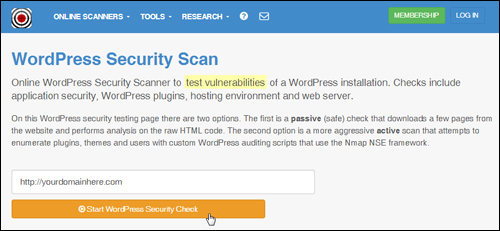
Do you own a WordPress site? If so, visit Hackertarget.com and run your website through their WordPress security scan …
(Website Security Scan Product image: Hackertarget.com)
You will see that the test returns a number of results and details about your WordPress setup …
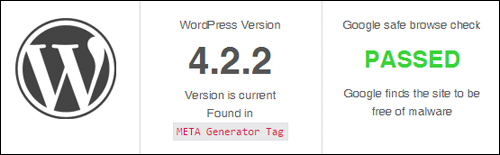
(Hackertarget – WP security check results. Screenshot: Hackertarget.com)
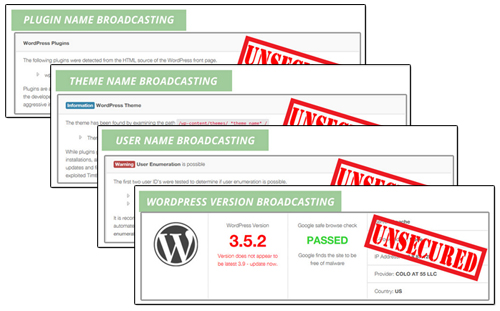
It should be obvious after using this scanning tool that if you are able to access all of this information, so can hackers.
(Image source: BlogDefender.com)
Being able to see which version of WordPress you are using, which plugins and themes you have installed, and which files have been uploaded to certain directories can all be potentially valuable information to hackers, as this can inform them about potential holes or weaknesses, especially in older versions.
Fortunately, there is a solution to stop broadcasting all of this information about your site and make your site invisible to hackers and bots.
Blog Defender WordPress Security Suite
Product Description
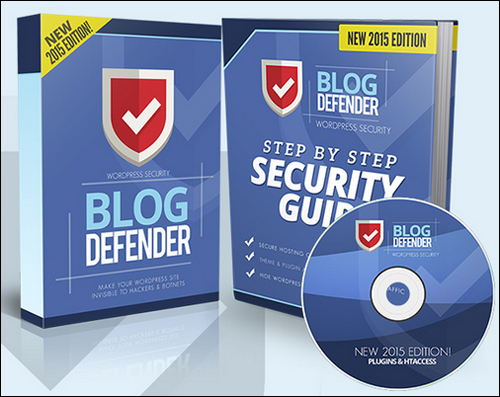
Blog Defender is a suite of WordPress security video tutorials, plugins and tools, plus a WordPress security PDF/DOC file.
Matt Garrett, the creator of BlogDefender developed BlogDefender after noticing that a WordPress site he set up for his mother had been hacked into. This blog had literally nothing to offer, yet it still was targeted by hackers.
Matt only became aware of the event after being contacted by his host and observing that a significant amount of unusual activity had occurred within his site, as well as the addition of several phishing files designed to lure unsuspecting visitors to the site and hijack their financial information.

(Screenshot: Blog Defender)
Matt’s experience shows that every website is valuable to hackers.
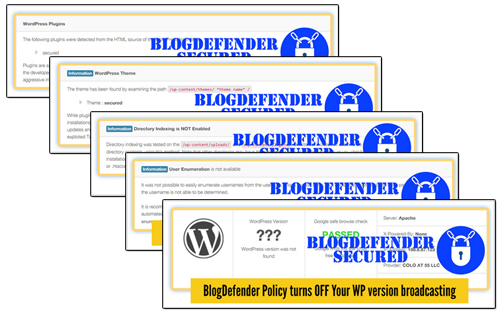
Blog Defender shows you where potential security holes in your WordPress installation are …
And then shows you how to quickly fix these …
Plugins
Blog Defender includes three plugins for WordPress:
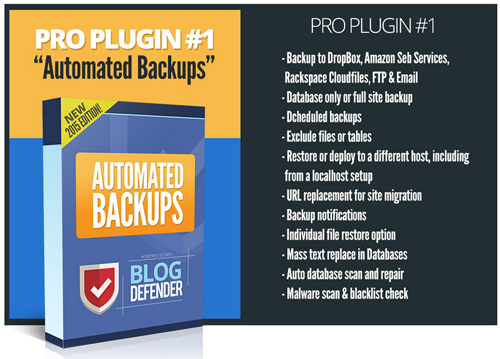
The first plugin in the product suite helps you schedule automated backups …
(Product image: BlogDefender.com)
The plugin lets you do automated site, file and data backups to your server, external servers and popular cloud-based backup solutions using a number of backup methods, schedule complete or partial backups, exclude tables or files from your backups, restore previous backups, replace URLs (for site migrations), search and replace text strings in your database, perform malware scans and blacklist checks automatically, and more.
Plugin #2 “WP Security” provides your website with security …
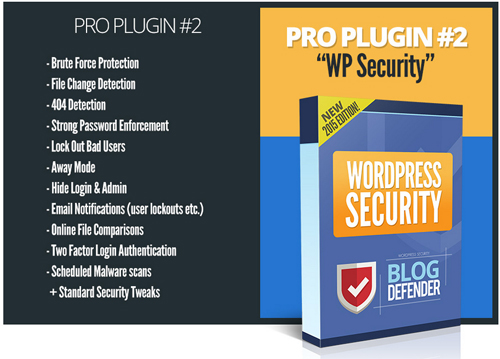
(Product image: Blog Defender)
This plugin provides a range of vital file and site security functions (see “Product Features” section below).
The third plugin scans WordPress sites to see if any of your files have been found, and repair problems …
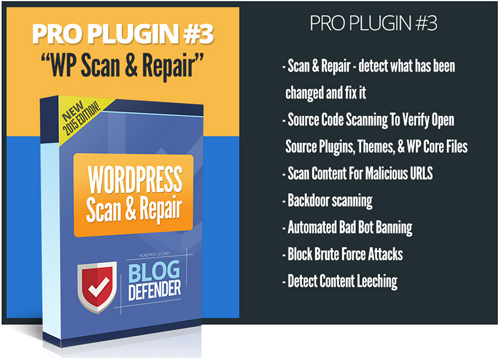
(Screenshot source: Blog Defender)
Pro Plugin #3 “WP Scan & Repair” also scans content to see if any malicious content have been inserted into your site, bans bad bots, blocks brute force attacks and detects any content leeching (where others benefit from your content without reciprocating the favor).
Video Training
In addition to the plugins, Blog Defender also includes seven videos and downloadable documentation that will show you exactly what you need to do to protect your site from malicious attacks …
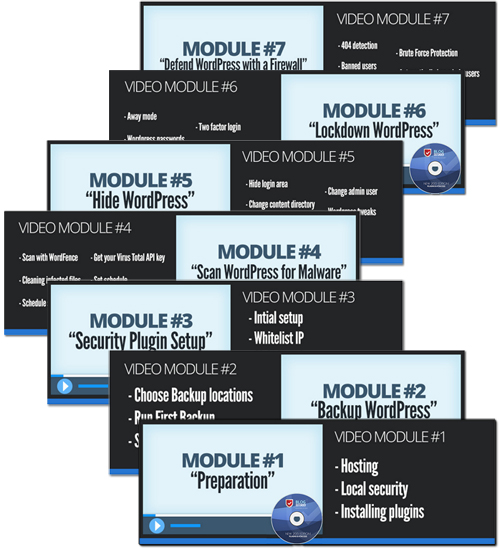
(Product image source: BlogDefender.com)
For more details, visit the plugin site here:
Benefits Of Using Blog Defender
Here we have listed just some of the benefits and advantages of using Blog Defender to make your WordPress site invisible to hackers and botnets on your web site:
Ready To Start Using In Minutes
The plugins included in the Blog Defender product install just like any other WordPress plugin. Simply upload them to your Plugins folder via your WP dashboard and activate.
Simple And Easy To Follow Training
Blog Defender is a DIY step-by-step training product that will guide you through the website security process and show you exactly what to do, including how to set things up, and even which free WordPress plugins you should use to get things done inexpensively.
Some additional benefits of using the plugin include the following:
- Secure your WordPress site from hackers, spammers, bad bots, data miners and malicious users whose aims is to exploit your site for their own personal and financial gain.
- Secure Your Info Products – If you sell digital products (e.g. downloadable ebooks, video training, etc.), your work can be stolen and end up as freeware on download sharing sites.
- Avoid Getting Blacklisted By Search Engines – When a site has been hacked, you should expect to go through a great deal of inconvenience and aggravation. It can take days to uncover the problem and sort through the issues these have caused. In the meantime, your, website can be closed by your webhost, or even blacklisted by search engines. And if this is not enough to have to deal with, hackers can spam your contact list and steal your business details and financial information, you could end up being fined or even charged with fraud, and much more.
Blog Defender Features
Blog Defender offers many features to WP users.
Blog Defender addresses the following security areas and vulnerabilities:
- Host Security Advisory
- Plugin Security Audits
- Theme Security Audits
- Anti Brute Force Security
- Anti Cross-Site Scripting
- WP Database Security
- Nefarious Traffic Blocking
- Hide WordPress ‘Tell Tale’ Signs
- Anti-Comment Spam
- File Monitoring
- Track Links
- Known Offender Blocking
- Automating WP Updates
- WordPress Security Audit
- Tightening Server Security
- Kick Out Policy
- Reputation Checking
- And More …
Blog Defender follows a logical process to help protect your web site, addressing potential hosting security issues, using tools to identify risky WP themes and plugins, and then implementing site-wide security using the tools and plugins provided.
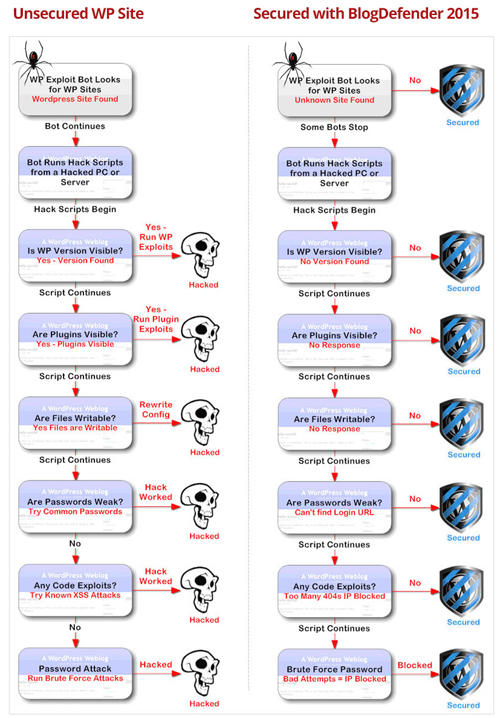
(Blog Defender WordPress security process. Image source: BlogDefender site)
Testimonials From Plugin Customers
Here are a few of the testimonials and feedback users have submitted regarding Blog Defender:
”Don’t make the mistake of thinking you’re too small or not important enough to be hacked! I’ve found out that I’ve had bots in the backend of my sites, making alterations and changing things around, so there’s no telling what damage they’ve caused. I’ve had my main blog for over 3 years now, and the thought of losing all the hard work I’ve put into it is just devastating, not to mention costly! I have a shared hosting plan, so of course once they can get into one site, they can also access the others. Luckily, I now have the procedures detailed within Blog Defender in place so that I can prevent the majority of this ever happening again. Once you’ve secured one site it gets a lot quicker to secure all subsequent sites. With Blog Defender, you get easy-to-follow videos, along with a detailed checklist that you can downloadf. You are literally walked through the process of securing your blog against hackers, which has given me real peace of mind. This is a growing issue that all website owners are facing; so it isn’t going to go away. Prevention is better than cure, particularly as some of the nastier hacks around can literally ruin your business. So do yourself a favour – get your sites protected now, before it’s too late.” Nikki Stephens, www.nikkistephens.com
***
”I discovered some incredible security tricks!” David Walker – www.inboxrockstar.com
Useful Tips
According to the plugin developer, Matt Garrett, no Blog Defender-protected websites or blogs were hacked since Blog Defender’s first release in 2012.
Matt states on his site …
“With the volume of attacks nowadays … we probably won’t hold forever, so we’ve been busy creating even tougher WordPress security.”
Cybersecurity is is a constant game of cat and mouse and all security solutions are only as good as the information and tools developers can currently access. The latest release of Blog Defender creates an easier security solution that doesn’t require constant attention, is quite inexpensive and it’s as good if not better than most premium security products or services currently being offered at a higher price.
Support
The product is well-supported, can be used by both Mac and PC users, is compatible with the latest WordPress release and is backed by a risk-free, thirty day, full refund guarantee.
Software Price
Blog Defender is normally available for personal use only on unlimited sites. When we last checked, however, it was also being sold with Developer rights, allowing users to secure client sites as well.. Cost = $47.00.
Note: Pricing details of the product depends on whether there are any promotions or limited-time specials being offered. Presently, the product retails for the pricing shown above. This may or may not be the actual price charged by the product author when you visit the product site and there may be additional upsells or one-time offers after you’ve purchased.
Check the plugin’s website for the current pricing details here:
Additional Information
For installation instructions and tutorials, FAQs, support help desk, contact details and more, visit the Blog Defender website.
Get The Product
Regardless of the kind of business you run or plan to run online and how small you think your web presence is, securing your website is something you cannot ignore.
WordPress is a secure platform, but neglecting simple maintenance tasks like making sure that your WordPress core files, WordPress plugins and themes are kept up-to-date, tightening file and data protection and taking other necessary precautions can have disastrous consequences.
Blog Defender helps you learn what your responsibilities are as the website owner, what hosting companies can and can’t do if the security on your site is compromised, what security features to look for in a webhost, and which tools can make the task of securing your installation easier.
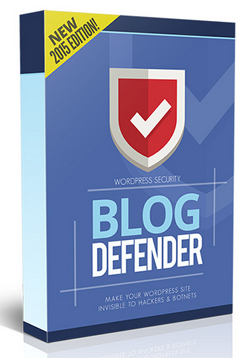
For more details, check out the plugin here: Blog Defender WordPress Security Plugin
***
***