WordPress Plugins For Managing WordPress Post Revisions
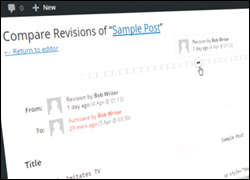
In a separate tutorial, we looked at the WordPress Post Revisions feature, where WordPress saves all your post revisions, so you can always go back to an earlier version of what you have written and restore it.
In this tutorial, we look at a number of WordPress plugins that will help you manage your post revisions.
Post/Page Revision Management Using Plugins
As soon as you edit and update your posts/pages, WordPress begins to store new revisions in its database. These are displayed in a Revisions box below the page editor …
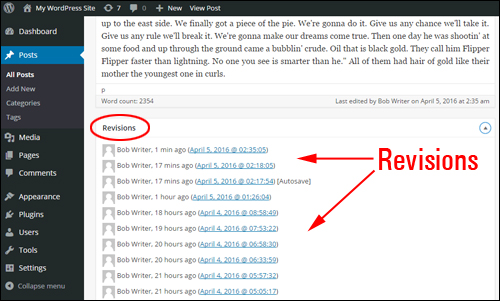
(View the revisions list – Post Editor screen)
For most WordPress users, having autosave and revisions is undoubtedly a great thing. If you write and edit often, however, the number of revisions can start to build up. This can significantly increase the size of your WordPress database, so it’s important to manage your revisions.
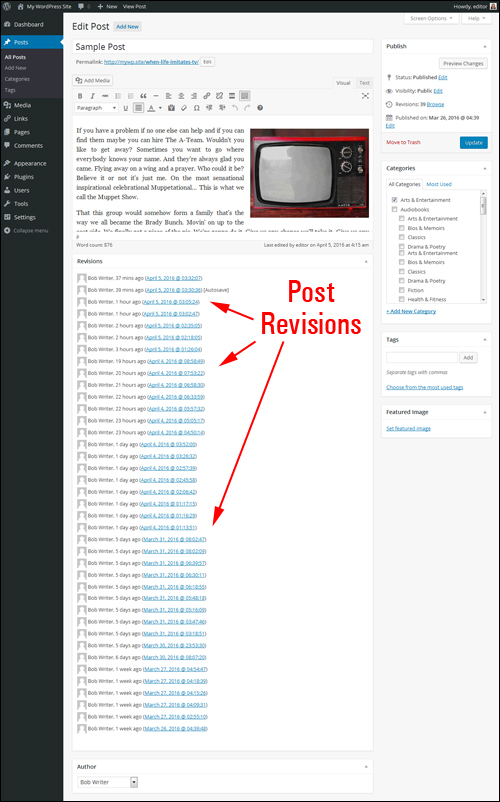
(Post revisions can really add up after a while)
For example, if you have 50 posts on your site with an average of 10 revisions each your database could be storing an extra 1,000 copies of old data. If your post averages 100KB data, then with 1,000 post revisions, the total database space wasted is about 100MB.
Fortunately, there are a few great plugins to help you control and manage your revisions and reduce the size of your WordPress database. Here are a few:
Better Delete Revision
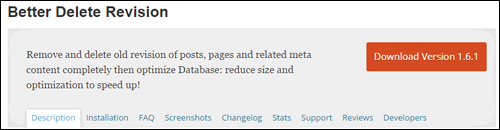
(Better Delete Revision WordPress Plugin)
This plugin removes redundant post revisions from your WordPress database as well as other revision-related content such as meta data, relationships, tags, and more.
After installing and activating the plugin, you can use the plugin to perform optimizations on your WP database without having to log into your server.
Go to your Dashboard and click on Settings > Better Delete Revision …
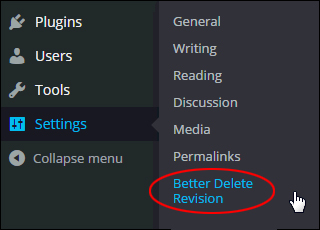
(Settings Menu – Better Delete Revision)
This brings you to the Better Delete Revision Manager area. Click the ‘Check Revision Posts’ button to calculate the number of redundant post revisions you can safely delete from your WordPress database …
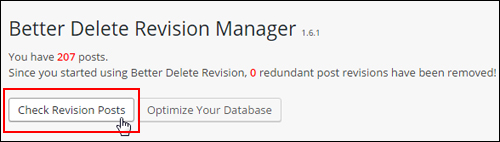
(Better Delete Revision – Check Revision Posts)
A table of post revisions stored in your database will display on the screen …
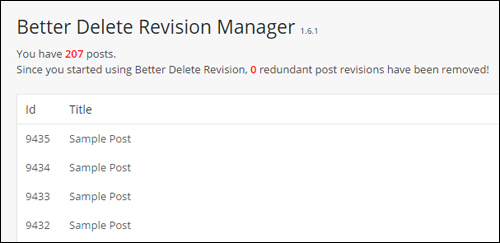
(Posts revisions)
Click on the ‘Yes, I would like to delete them! …’ button to delete all list items from the database …
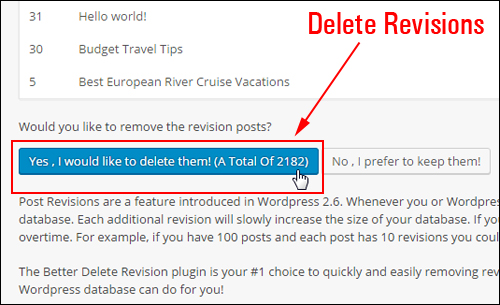
(Better Delete Revision Manager – Clear posts revisions list)
The redundant post information will be removed from your database …
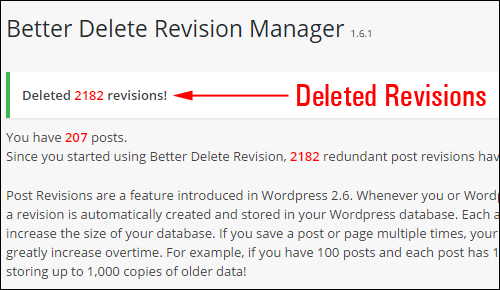
(List of post revisions removed)

As WordPress automatically saves all post revisions, the process will automatically start again (unless you specifically turn the feature off). After a period of time, we recommend running the tool again to keep your WP database as lean as possible …
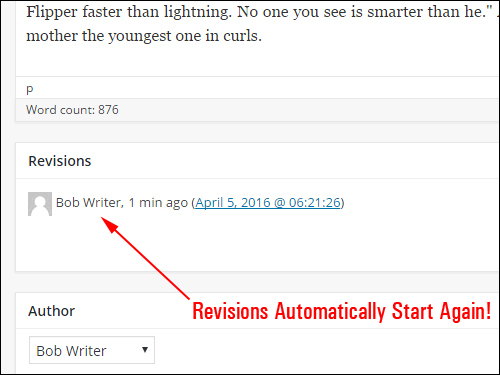
(Post revisions automatically start being stored again!)
You can also use the plugin to optimize your site’s database …
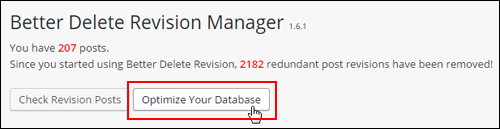
(Better Delete Revision Manager – Optimize the site’s database)
The plugin checks to see if your WP database needs to be optimized and provides an easy one-click table optimization routine without the need to log into your server control panel or mess with complicated database management applications …
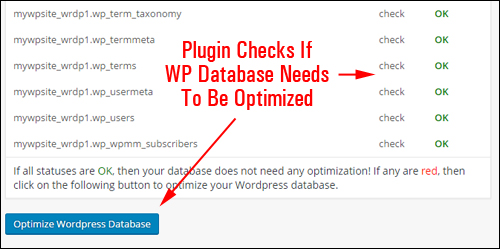
(Better Delete Revision lets you perform a one-click optimization maintenance routine)
For more details, go here: Better Delete Revision Plugin For WordPress
Optimize Database after Deleting Revisions

(Optimize Database after Deleting Revisions)
This plugin is similar to the one described above. It not only lets you prune redundant post and page revisions (it also lets you keep an ‘x’-amount of your most recent revisions) and lets you perform an easy one-click table optimization maintenance routine, it also lets you perform database maintenance tasks like:
- Delete trashed posts, comments, and pages
- Delete spammed comments
- Delete ‘expired transients’
- Exclude selected tables or even specific pages/posts from optimization
- Automatically schedule optimizations
- And more!
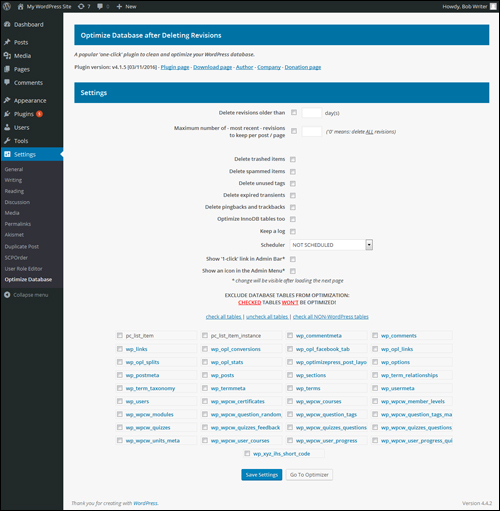
(Optimize Database after Deleting Revisions Plugin – Settings Page)
For more details, go here: Optimize Database after Deleting Revisions WP Plugin
WP Optimize
(WP-Optimize – WordPress Plugin)
In addition to deleting redundant revisions of posts and pages and performing WordPress database table optimization routines, WP Optimize also lets you do the following maintenance tasks:
- Enable/Disable comments for published posts
- Removal of stale spam comments
- Mobile device friendly
- Remove all transient options
- Clean up auto draft posts
- Ability to retain data from selected number of weeks when cleaning up
- Option to add or remove link on WP admin bar
- Enable/Disable weekly optimization schedules
- See database table statistics (e.g. how much space can be optimized
- E-mail notifications after automatic database cleanup
- Displays dangerous cleanup operations in red
- And more!
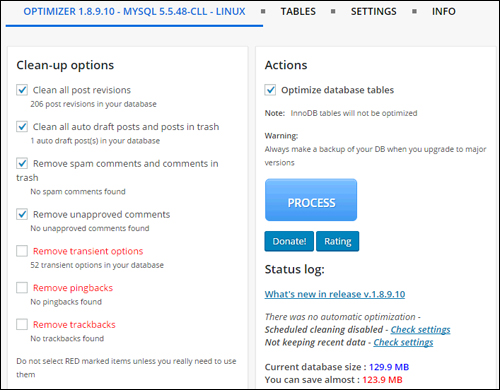
(WP Optimize – WordPress Plugin Settings Screen)
For more details, go here: WP-Optimize Plugin
WP-Sweep

(WP-Sweep Plugin)
WP-Sweep allows you to clean up duplicated, unused, and orphaned data in your database, including revisions. This plugin cleans up:
- Auto drafts
- Unapproved comments
- Orphaned post meta
- Duplicated user meta
- Transient options
- And more!
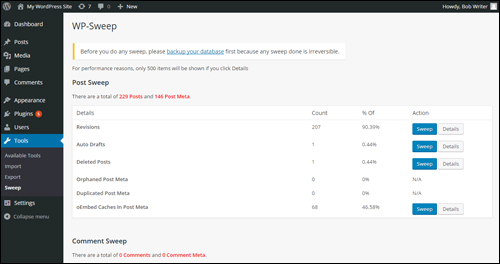
(WP Sweep WordPress Plugin – Settings)
For more details, go here: WP Sweep WordPress Plugin
Simple Revisions Delete

This lightweight and simple-to-use plugin lets you purge (delete) your posts revisions either individually or all at once.
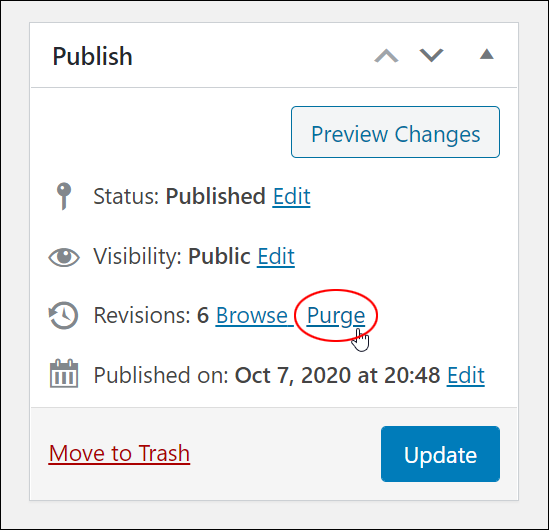
Once the plugin has been installed and activated, for example, a ‘Purge’ link appears next to the Revisions section in your Publish box (and in other sections of your admin area) allowing you to safely delete revisions.
For more details, go here: Simple Revisions Delete
WP REVISIONS CONTROL

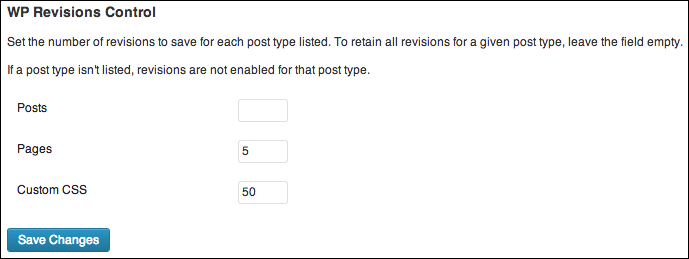
This plugin lets you specify the number of revisions retained for each post type in the Settings > Writing screen.
For more details, go here: WP Revisions Control
For more plugins that can help you manage post revisions and optimize your WP database, go to Plugins > Add New and type in keywords like “Revisions“, “Database Optimize“, etc …
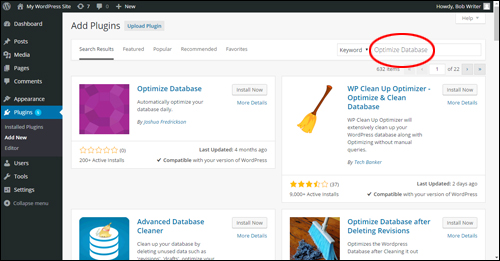
(Add Plugin – WordPress Plugins Menu)
We hope that you have found the above information on plugins that will help you manage your WordPress post revisions useful.
***
"These tutorials have so much information and are easy to understand. If you use WordPress or plan to in the future these will help you with everything you need to know." - Valisa (Mesa, Arizona)
***