How To Add Charts And Graphs To WordPress
You’ve heard the old adage “a picture is worth a thousand words.” This is certainly true when you’re presenting or explaining data.
Using charts and graphs is useful for making technical data a lot simpler to understand.
You can use tables to present data, but if you want your audience to try and make sense of complex information with figures, trends or relationships easily, then charts and graphs are perfect for helping them understand the information.

Graphs and charts help present complex information so people can more easily understand it!
If you need to display information visually and dynamically on your WordPress site like graphs and charts, this step-by-step tutorial will show you exactly how to create and add eye-catching and interactive charts to your pages that:
- Your site visitors can engage with
- Lets you upload data from your computer or a web-based source of data
- Will resize dynamically for mobile device browsing
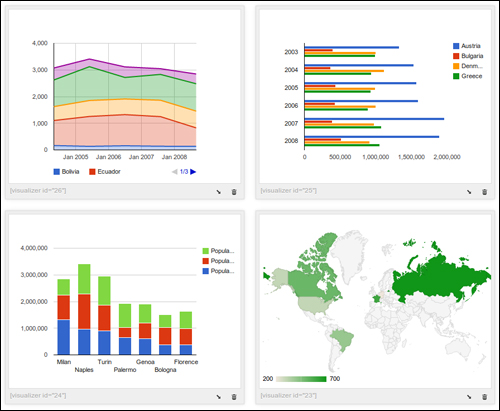

If you are displaying visual data like bar charts, comparison charts or trending graphs containing information that is not going to change (e.g. historical data), an easier option is to create the graphs or charts using a desktop application, convert these into .jpg and .png files and then simply insert your files and an image into your posts.
Use WordPress Chart & Graph Plugins
If you want to easily embed interactive bar charts and graphs into WordPress with no coding skills required, the easiest way to do this is to use a plugin.
Fortunately, there is a WordPress plugin that is simple to install, easy-to-use and allows you to not only create colorful and dynamic graphs and charts, it also lets you populate your charts and graphs with updateable information.
Visualizer
Visualizer URL
You can install the plugin from your WordPress dashboard (see a little further below), or access and download WordPress Visualizer here:
http://wordpress.org/plugins/visualizer
Plugin Description
WordPress Visualizer is a simple, easy to use and powerful tool that allows you to create, manage and insert attractive and interactive charts into your WordPress posts and pages with a few simple steps.
The plugin uses Google Visualization API to render charts, which support cross-browser compatibility (adopting VML for older IE versions) and cross-platform portability to iOS and new Android releases, and are based on pure HTML5/SVG technology (adopting VML for old IE versions), so no extra components are needed.
Visualizer also contains a variety of built-in that are optimized to address all your data visualization needs, including:
- Line chart
- Area chart
- Bar chart
- Column chart
- Pie chart
- Geo chart
- Gauge chart
- Candlestick chart
- Scatter chart
The plugin is also flexible and customizable, allowing you to use Google Chart Tools with their default setting, or configure an extensive set of options to match your site’s design. Various options are available for each chart that let you further customize their settings.
Additionally, charts are rendered using HTML5/SVG technology to provide cross-browser compatibility (including VML for older IE versions) and cross-platform portability to iPhones, iPads and Android devices. Your web visitors can see your charts and graphs on their mobile web browsers without requiring the installation of any additional plugins.
Plugin Installation
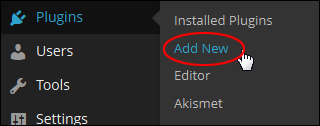
Inside your WP dashboard, select Plugins > Add New from the navigation sidebar menu …
In the Add Plugins page type search for “visualizer” and click enter …
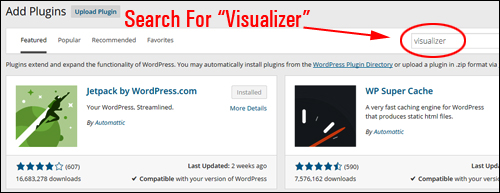
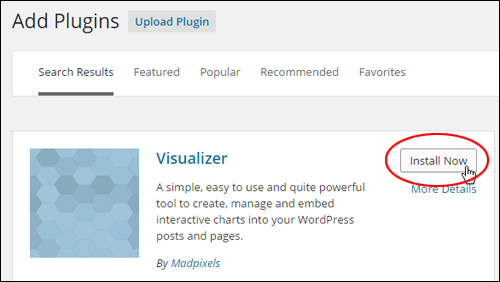
Locate the plugin in the search results area and click Install Now …
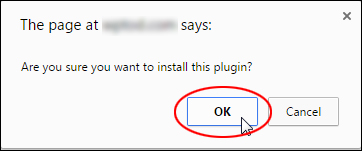
Click OK to proceed …
Activate the plugin …
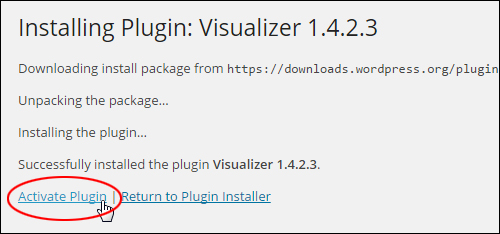
You can also activate the plugin in the Plugins section …
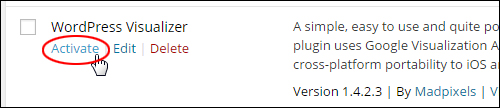
Once your plugin has been activated, click on Library …
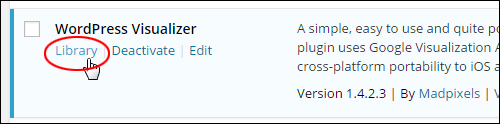
You can get to the plugin’s ‘library’ screen by choosing Media > Visualizer Library in the admin menu …
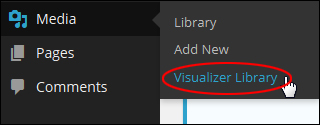
This takes you to the plugin’s Visualizer Library options …
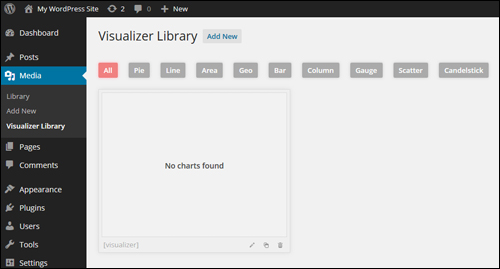
When you first install the plugin, the library section will be empty.
The next step is to add the charts and graphs to your library that you plan to publish to your content.
Visualizer Configuration
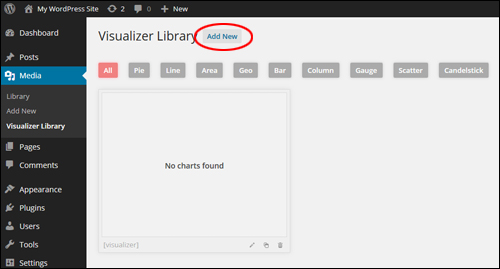
To add a new graph or chart to the library, click on Add New …
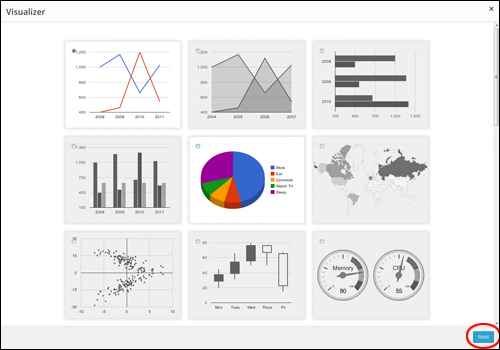
A gallery displaying all of the built-in kinds of charts and graphs available will load on your screen.
Select the graph or chart type you would like to create and click on the ‘Next’ button …
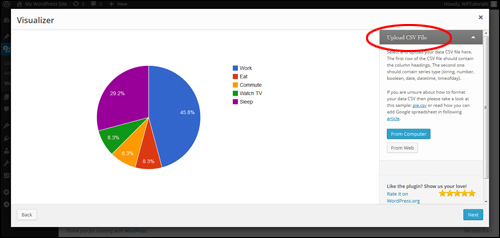
Your selected graph/chart type will open up in a new window.
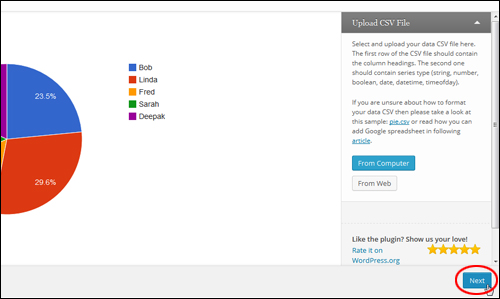
The next step is to upload a CSV file that contains your data …

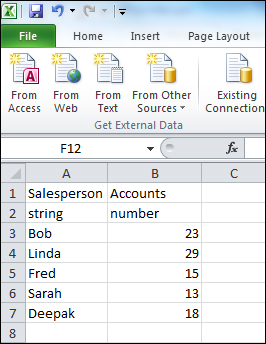
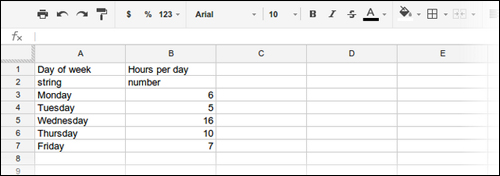
When creating your CSV data file, make sure that:
- Your first row contains the column headings.
- The second row contains the series type (e.g. boolean, datetime, etc.)
The screenshot below shows how to format your data as per the above requirements …
If you are not sure how to format your data CSV, simply download the sample provided with the plugin.
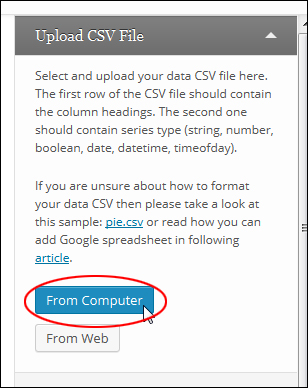
Once you have completed this step, select your data source (‘From Computer’ or ‘From Web’) in the ‘Upload CSV File’ section.
Upload CSV File From Computer
To upload a CSV file and data from your computer select ‘From Computer‘ …
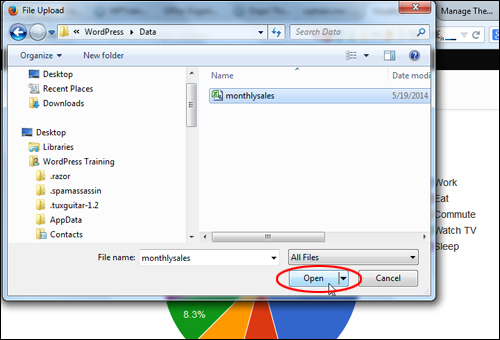
Locate and select your file and click on ‘Open‘ …
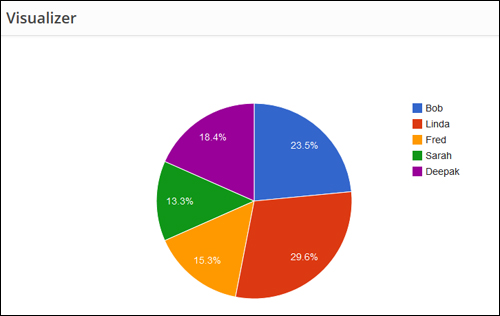
The plugin will import your data from the CSV file and display it using the graph/chart type chosen …
Upload CSV File From The Web
To learn how to create, save and publish data to a Visualizer chart or graph using Google Spreadsheet, see the article below:
After importing your data, make sure that all of your information is correct (if not, click on the ‘Back’ button and reupload a new data file with the correct data), and then click ‘Next‘ …
Depending on the chart or graph type you have selected, the plugin displays various customization settings and options …
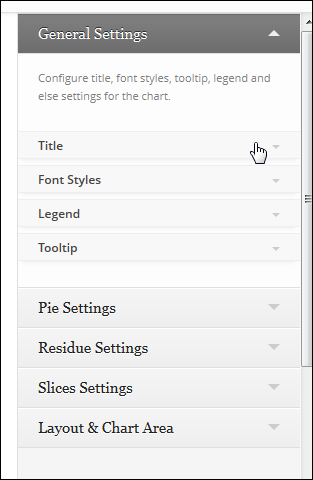
The plugin gives you total control of your information, and updates your display in real time …
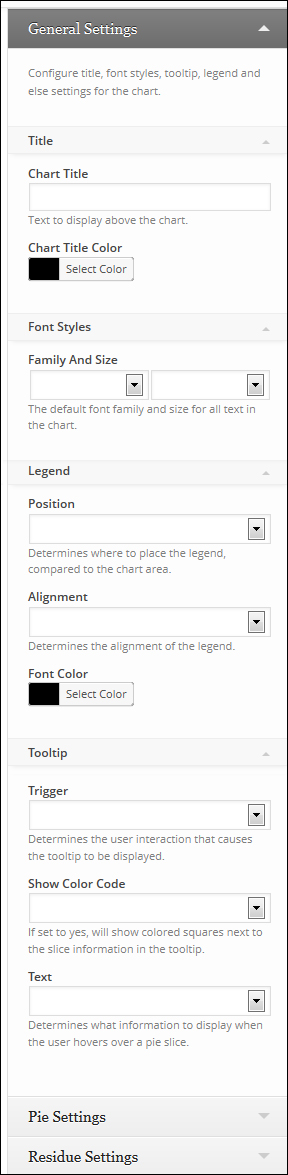
For example, the pie chart offers various configurable options, such as:
- General Settings – Configure settings for the chart’s title, font styles, tooltip, and legend.
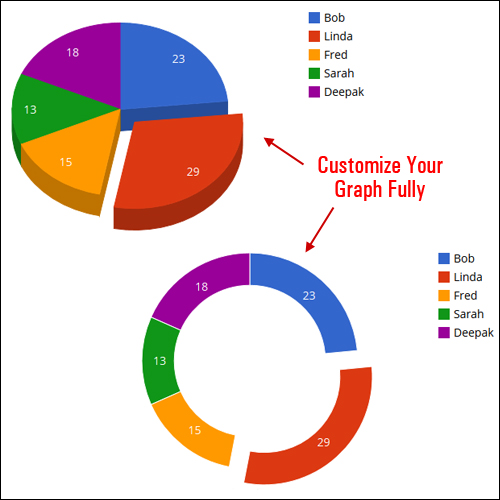
- Pie Settings – Create 3D pie charts, draw slices counterclockwise, set the text content displayed on the slice, create a “donut” pie chart, rotate the chart’s “start” angle and set the slice border color.
- Residue Settings – Set the ‘Visibility Threshold’ (the slice relative part, below which a slice will not show individually.), ‘Residual Slice Label’ (the label for the combination slice that holds all slices below slice visibility threshold, e.g. “Other”), and ‘Residue Slice Color’.
- Slice Settings – Customize the ‘Slice Offset’ (how far to separate a slice from the rest of the pie), and ‘Slice Color’.
- Layout & Chart Area – Configure the layout (total size of chart) including the width and height of the chart as a number of percentage, background color for the main area of the chart and the chart border width and color, and the placement and size of the chart area (where the chart itself is drawn, excluding axis and legends).
Once you’re happy with the look of your graph or chart, click on the ‘Create Chart’ button …
The chart or graph will be added to your Visualizer ‘Library’ …
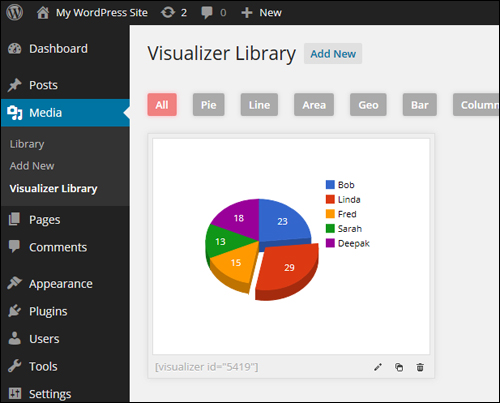
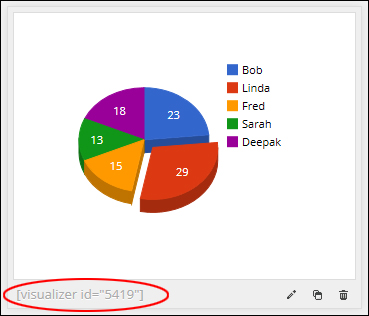
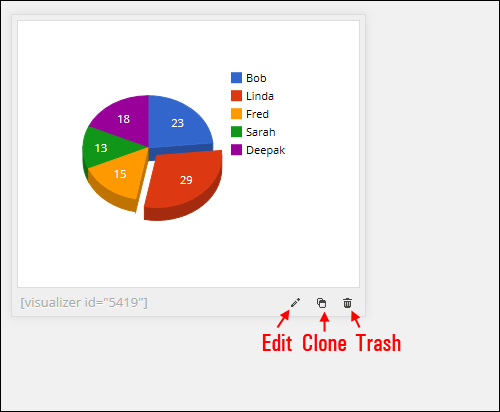
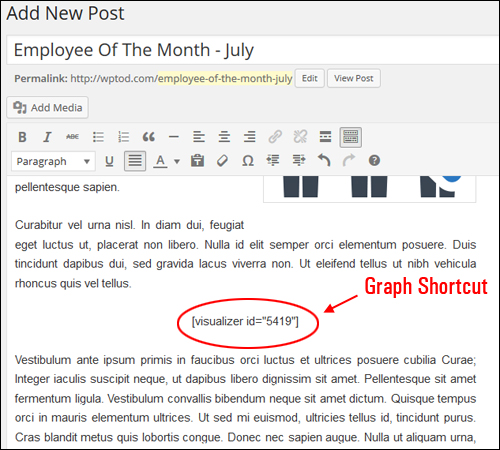
Note that each new element is given a unique ID displayed in a shortcode. As you will see in a moment, this lets you add charts and graphs to your pages and posts very quickly …
Graphs and charts added to the Visualizer Library can be accessed by their type …
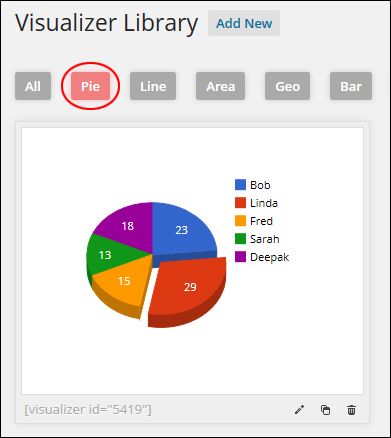
After a new graph or chart has been added to the ‘Visualizer Library’, you can edit its details, duplicate it, or trash it …
Plugin Usage
After creating a element and adding it to the Library, adding it to a page or post is really simple.
First, create a new post or page (or open an existing one) …
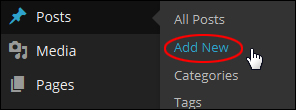
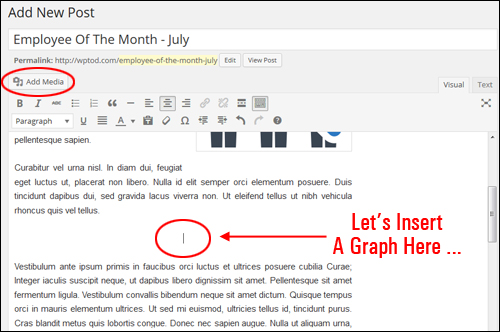
Next, place your mouse cursor where you would like to insert your visual element into the content and click on the ‘Add Media‘ button …
Click on ‘Visualizations‘ …
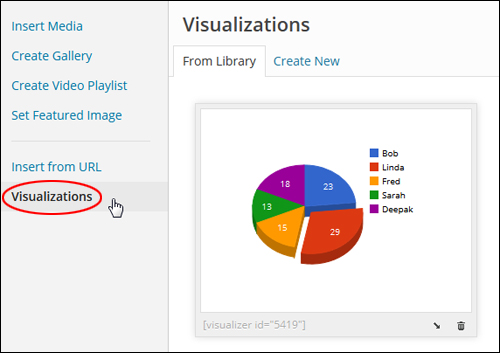
Select the element to be added to your content and click the “insert” icon …
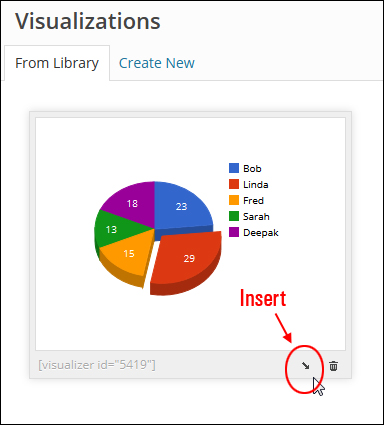
This inserts a shortcode for the element into your content …
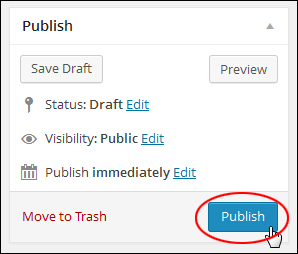
After you have added the element, click on Publish to publish (or update) your page or post …
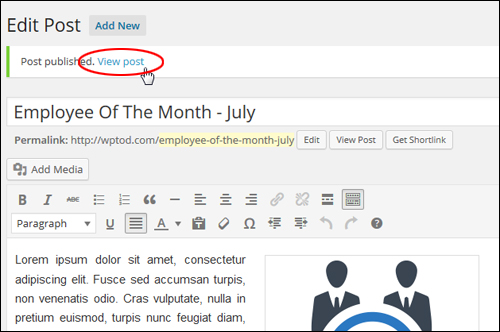
After the post has been published, click ‘View post’ to see the results …
Your visual element will display in the location you specified …
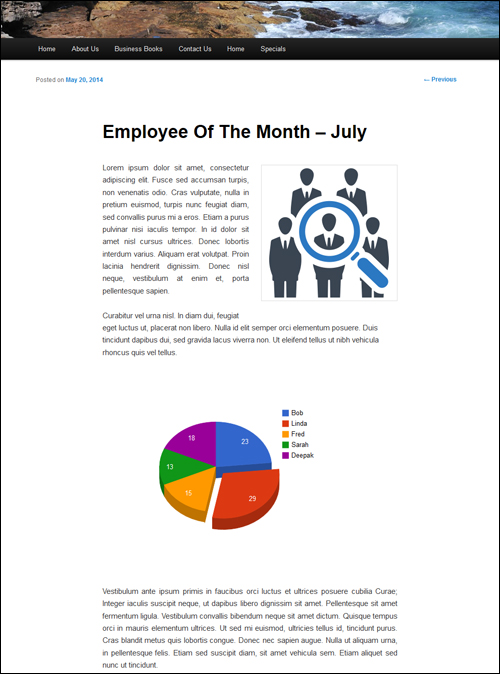
As mentioned earlier, the plugin also displays responsive visual elements for mobile viewers …
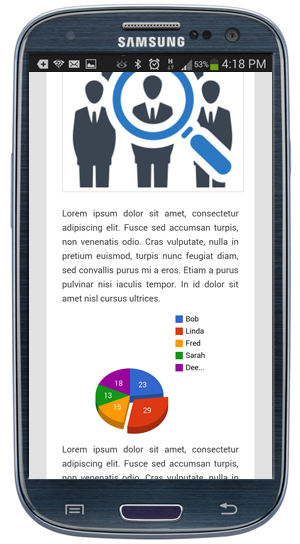
As you can see, WordPress Visualizer allows you to insert and customize dynamic charts and graphs in your content. You can update your data and your changes will automatically be reflected wherever you have inserted your charts, graphs, comparison bars , etc. in your site. This makes working with dynamic chart data in WordPress really easy.
The plugin developers have created a series of step-by-step tutorials you can refer to to learn how to edit, customize and use WordPress Visualizer.
For tutorials on editing, copying, deleting and adding data to your charts, go to the website below:
Congratulations! Now you know how to easily create great-looking and dynamic pie charts and graphs in WordPress with WordPress Visualizer.
***
"If you're new to WordPress, this can stand on its own as a training course and will stay with you as you progress from beginner to advanced and even guru status." - Bruce (Columbus, Ohio)
***