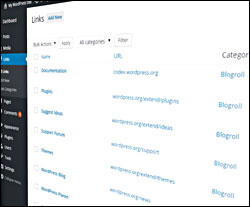
 As you continue to learn more about WordPress, you may occasionally come across the term blogroll.
In WordPress terminology, a list of links displayed on your sidebar area is sometimes referred to as a blogroll.
According to official WordPress documentation …
“The term ‘blogroll’ was originally used because it was a list of links to other blogs, but you can include links to any sites.”
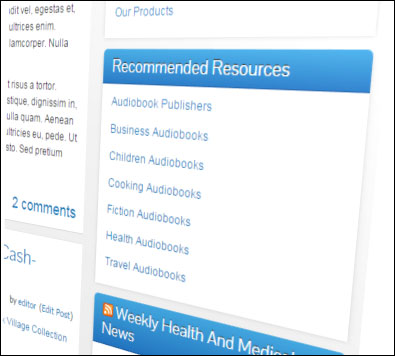
The Links feature lets you easily add hyperlinks to your sidebar menu (e.g. a “Recommended Resources” section) using a widget.

Before WordPress v 3.5 was released, Links were a built-in feature of the WordPress CMS. From v3.5 onwards, the Links manager and blogroll sections were kept hidden by default in new installations …
Before …
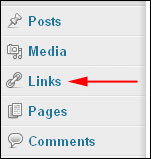
(WP Links Feature – pre version 3.5)
After …
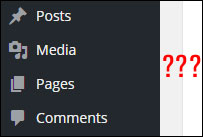
(The Link Manager feature – excluded from WordPress after WP v.3.5)
If you were using the Links feature in previous versions of WordPress, then it will still be available when your site upgrades to a newer version. If you’ve never used the Links Manager feature, however, or if your installation of WordPress is new, then this function will become invisible – it will not be displayed on the dashboard menu.
How To Add A Link Section To WordPress

You can add a link section to your sidebar menu by creating a custom menu, or use a plugin like the one shown in the tutorial below.
If the Links feature is not visible when you log into your WordPress dashboard you will need to install a plugin. This step-by-step tutorial will show you how to add and manage links on your sidebar using WordPress plugins.
Link Manager
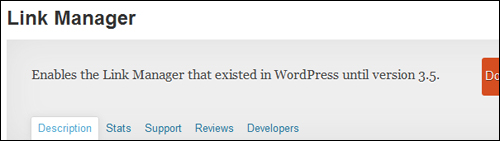
(Link Manager)
Plugin URL
http://wordpress.org/plugins/link-manager
Description
The Link Manager plugin restores the Links Manager, even if you update WordPress to a later version or remove all of your existing links.
Note: All this plugin does is add a single line of code to WordPress to restore the hidden feature. When we last checked, this plugin had not been updated for a while, but it should still work fine. If you don’t want to use the Link Manager plugin, then use the one below instead, or contact us for help editing your site’s template code.
Simple Links

(Simple Links)
Download URL
https://wordpress.org/plugins/simple-links/
Plugin Description
This plugin attempts to recreate the concept of the built-in Link Manager while removing the shortcomings of the deprecated functionality.
Installing Link Manager
To install the Link Manager plugin on your website, follow these instructions:
From the WP dashboard menu, select Plugins > Add New …
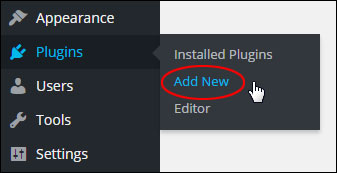
(Plugins Menu – Add New)
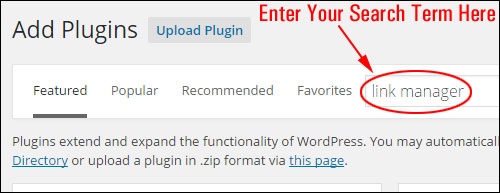
Click on the Install Plugins > Search tab, then type in “link manager” into the search field and hit Enter …
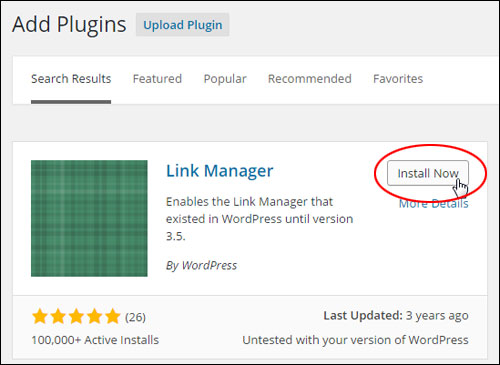
Find the plugin in the search results area and click Install Now …
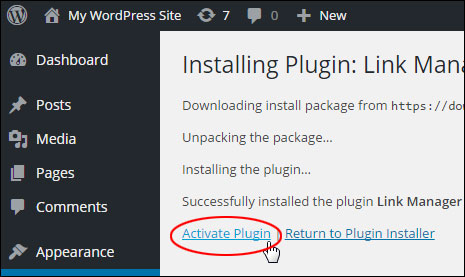
Activate the plugin after installation …
After activating the plugin, a ‘Links’ section is added to your WP sidebar menu …
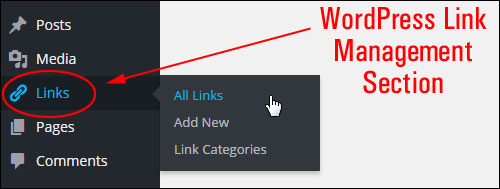
(WordPress links management menu)
Configuring The Plugin
Before adding links, we recommend setting up your link categories. This way, when adding a new link, you can assign the link to link categories you have already created.
Link Categories
To create a new link category, click on Links > Link Categories in the WP navigation menu …
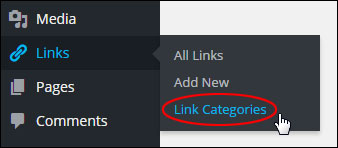
(WP Links – Link Categories)
This brings up the ‘Link Categories’ screen.
Enter the following information:
- Name: Enter the category name here.
- Slug: The slug is the URL bit of the link category. It must all be in lowercase letters and contain no spaces (use hyphens to separate words).
- Description: Some themes may display your link category description. (Optional)
Click Add New Link Category to save …
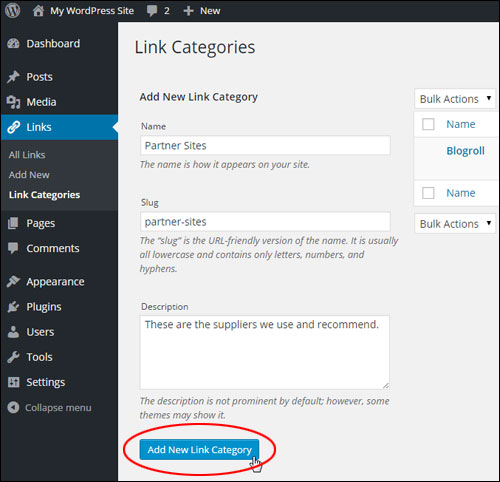
(Link Categories)
The new category will be added to the list …
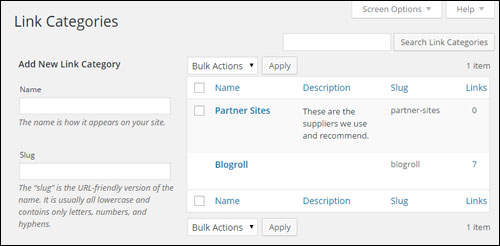
(Link Categories area)
Tip: Blogroll is the default link category name. Unless you specify the category when adding a link, WordPress automatically assigns new links to the default category …
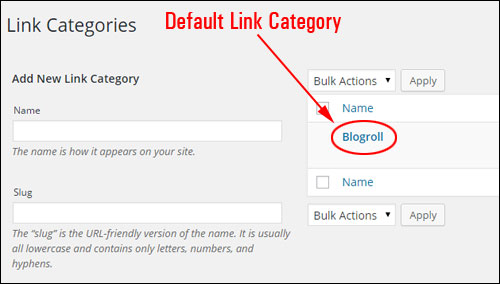
(Default link category)
You may want to change this to something that will make sense to readers. This will not only make it easier for visitors, but any new links that you add to your site will automatically be assigned to the new category name …
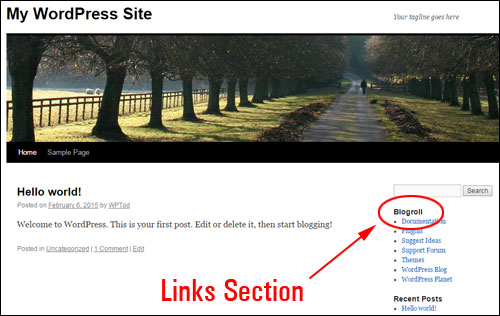
(we recommend changing the default link category name to something better suited to your business)
To change the ‘Blogroll’ link name, hover your mouse over the item and click on the Quick Edit link …
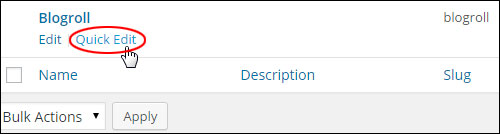
(Edit the link category name)
Change both the Name and the Slug with a new category name (remember to keep the slug in lowercase letters and replace all spaces with a hyphen), then click on the Update link Category button …
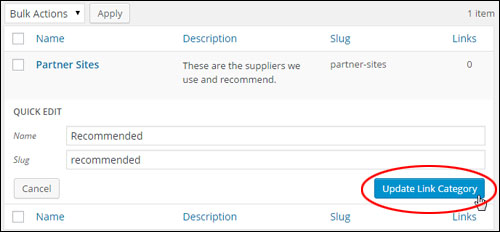
(Quick Edit)
Replace the category ‘Blogroll’ with (e.g. ‘Recommended’, ‘Links’ etc).
Let’s create a description for this link category. To add a link category description, click on Edit under the category name …
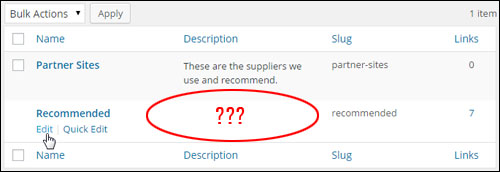
(Link category description)
Enter your description in the ‘Edit Link Category’ screen and click Update …
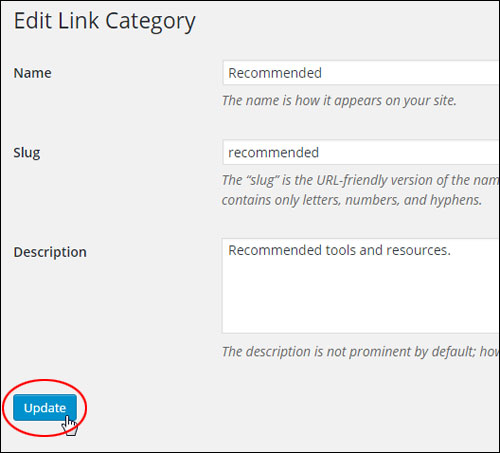
(Edit Link Category screen)
Repeat the above process and add as many new link categories as your site needs.
Once you have finished setting up your link categories, you can start adding new links.
How To Add New Links
To add a new link, select Links > Add New in the main dashboard navigation menu …
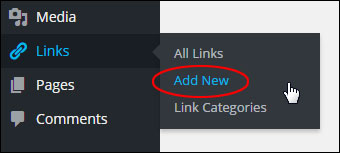
(Links Menu – Add New)
You will be taken to the ‘Add New Link’ page …
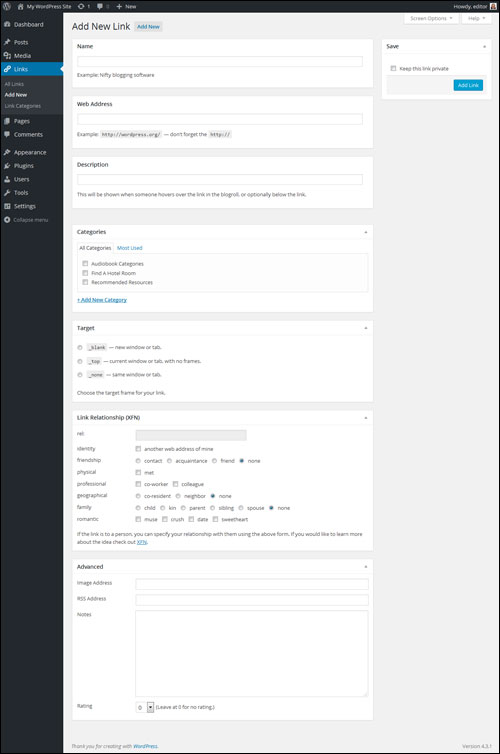
(Add New Link page)
You can also access this page by clicking on the ‘Add New’ button at the top of the main Links screen …
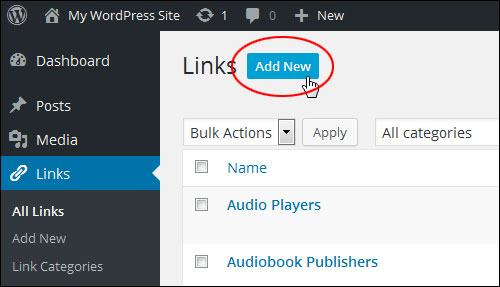
(Add New Link button)
The ‘Add New Links’ page includes several sections:
Name, Web Address & Description
Enter details about your link in this section …
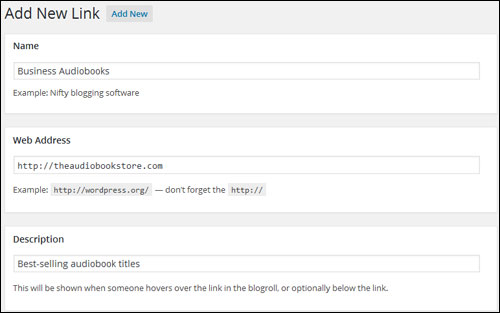
(Add New Link page – Name, Web Address, Description)
Type in the following information:
- Name: Whatever you enter in this field is the link category name that will display on your site.
- Slug: The slug is the SEO friendly URL part of the link category name. Only use lower case letters without spaces (use hyphens to separate words).
- Description: Some themes may display a link category description. (Optional)
Categories & Target
Select a Category and Target for your new link …
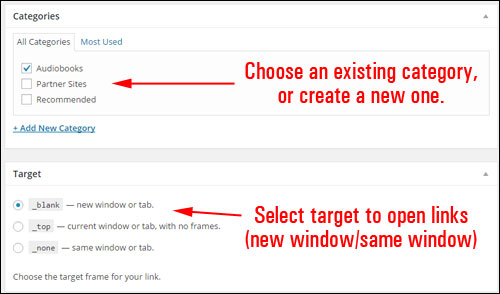
(Categories & Target fields – Add New Link)
In the Categories section, select a link category you’ve already created, or click on the ‘+ Add New Category’ link to create a new category.
Next, select a target frame for your link in the Target section by choosing one of the radio buttons. This lets you specify how you want the link to open when clicked on:
- _blank means that a separate web browser window will open up to display the content associated with the link.
- _none means that when a visitor clicks on the link, they will leave your site and a new site or page will load in your browser window instead.
- _top opens links at the top level of the frame system if you’re using frames. If you don’t use frames, or if you don’t know what frames are, then just ignore this option.
Link Relationship XFN
This section provides some additional link functionality …
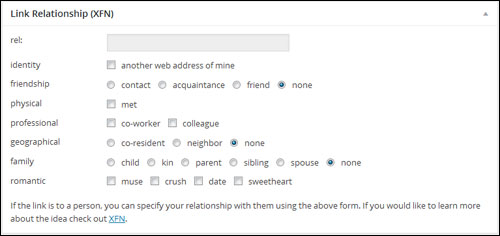
(Link Relationship (XFN) fields – Add New Link)
Link Relationship (XFN) – XFN (XML Friends Network) is a way to define your relationship to the linked person. For example, if you work with Lilly Jenkins and you link to her blog, you would probably tick co-worker or colleague.
XFN relationships are optional. You can leave everything in this section blank and all of your links will work just fine. Defining relationships with XFN makes your links more understandable to some sites and search engines that use this information.
rel – This field specifies the ‘rel’ attribute that will be assigned to your link. The rel attribute is used to define a relationship between the current document and the linked document. For example, if you don’t want search engines to follow your link, enter nofollow into this field. Separate multiple ‘rel’ attributes using spaces.
To learn more about XFN, visit the site below:
Advanced
The last section lets you enter Advanced features for your links (some themes will ignore this. You can ignore this section, unless there’s a good reason to use it) …
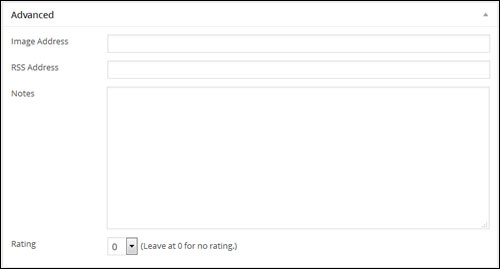
(Advanced link settings – Add New Link)
The Advanced link settings section includes the following:
- Image Address: Lets you specify an image to be displayed with the link. Add the URL of your image and make sure that the image is small (around 16×16 like a favicon).
- RSS Address: If your theme allows it, the link’s RSS feed can be displayed next to your links.
- Notes: Add notes about the link in this section for your own internal reference.
- Rating: Add a rating score to the link if you want to sort links by rating (see the ‘Links’ widget section below).
Type in your information in the above fields or just leave this section ignore this section.
When you have finished adding your new link information, click on the Add Link button to update your link settings …
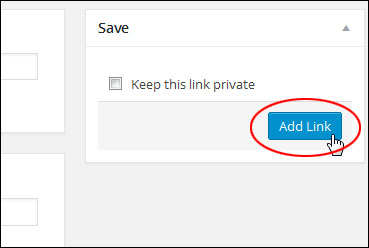
(Click on the Add Link button to update your link settings)
Note: If you select Keep this link private, the link will not be visible when links are displayed on your site …
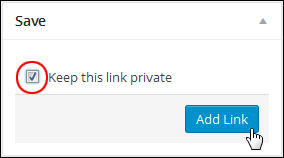
(Make your links private)
Making links private lets you add links and then toggle their visibility on or off without deleting your links (this is useful if you want links to display during certain periods and hide them when not required) …
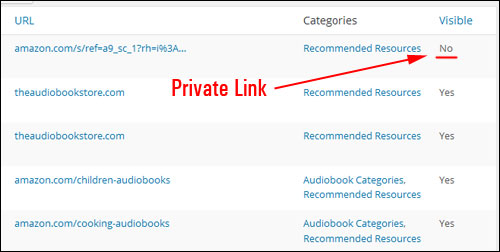
(Toggle link visibility on and off)
To view all the links you have added, go to the main admin menu and select Links > All Links …
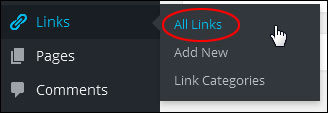
(Links – All Links)
This takes you to the ‘Links’ page. The Links table displays a list of all your links and link information (e.g. URL, categories, rating, etc.) …
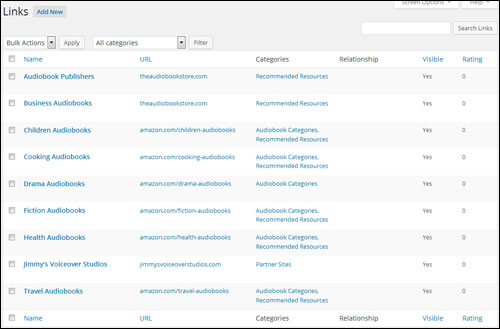
(List of links)
Tip: To display or hide options in the table of links, click on the ‘Screen Options’ tab at the top of your screen …
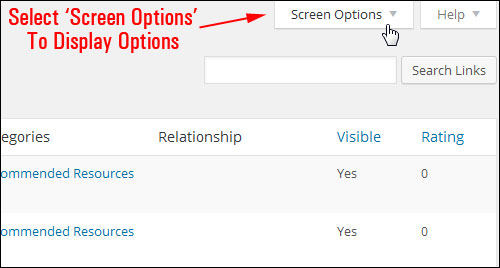
(Screen Options – Links table)
Display/hide fields on your table of links by selecting/deselecting their check boxes …
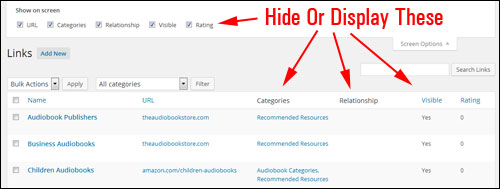
(Show/hide – List of links)
Editing Links
To modify links, go to the WP admin menu and click on Links > All Links to bring up your list of links …
(Links – All Links)
Select the item you want to edit and click on Edit to bring up the item’s link information …
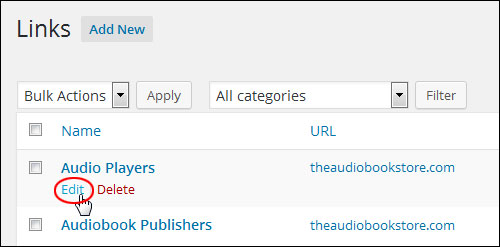
(Editing link information)
Change your link information …
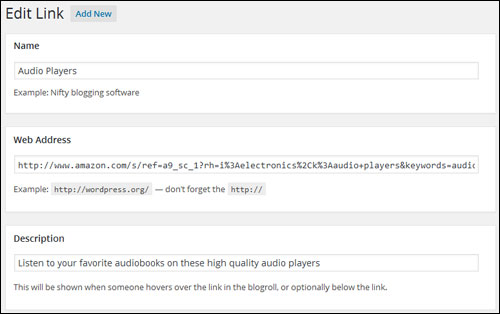
(Edit Link screen)
After you’re done editing your link, you can:
- Click the Update Link button to save and update your link details,
- Click on Visit Link to make sure that you have set up everything correctly (your link will open up in a new window),
- Click Delete to remove the link from your table …
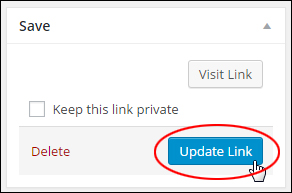
(Update Link button)
Removing Your Links
To delete a link, select Links > All Links in the WP dashboard menu …
(Links – All Links)
This loads the ‘Links’ table in your browser.
You can delete links individually, delete multiple links, or delete all your links.
To delete links individually, hover your mouse cursor over the link title that you want to remove from the link table and click on Delete …
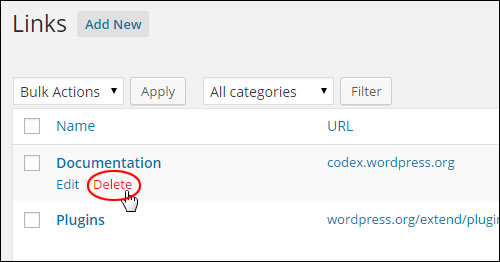
(Deleting your links)
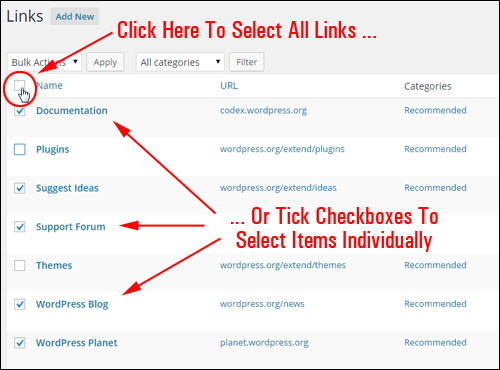
To delete links in bulk, either click on the check box next to each item that you want to be removed, or select all links by clicking on the main checkbox next to the ‘Name’ column header …
(Delete multiple links)
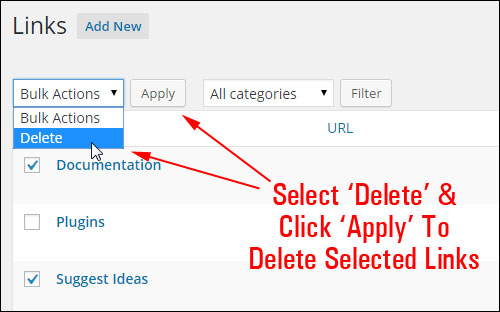
Select Delete from the ‘Bulk Actions’ dropdown menu, and click the Apply button to remove all selected links …
(Links: bulk-deletion function)
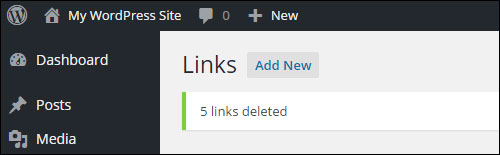
The links will be deleted …
(Deleted links message)
Plugin Usage
Now that you know how to set up link categories and how to add, edit and delete links, let’s show you how to display links on your site.
Links Widget
The Link Manager plugin adds a ‘Links’ widget to your ‘Widgets’ page.
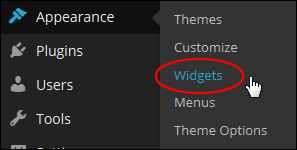
To access and configure your Link widgets, go to your WP admin menu and choose Appearance > Widgets …
(WordPress Appearance Menu – Widgets)
The ‘Widgets’ page will display in your browser.
You will notice that a ‘Links’ widget has been added to the Available Widgets section …
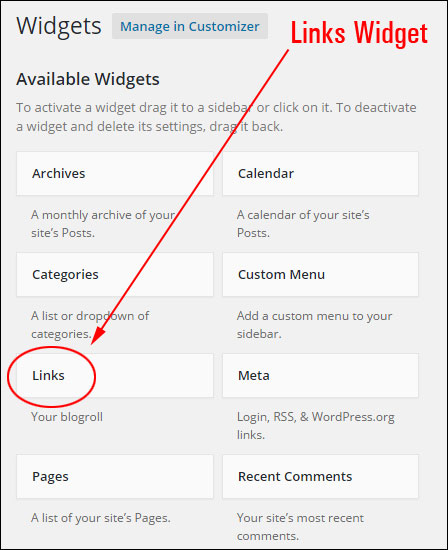
(Links widget)
Drag the ‘Links’ widget to one of the active widget bars and drop it wherever you want the links section to display …
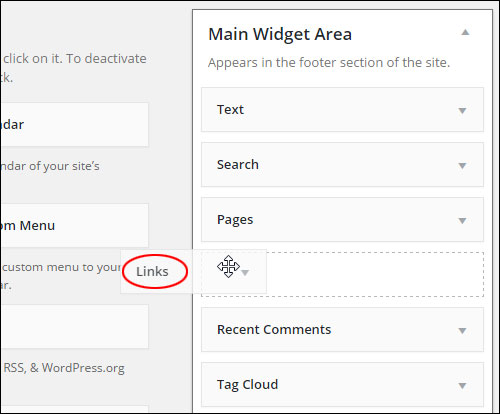
(Add a links widget to your WordPress widget bar)
The Links widget provides various settings. For example, you can specify what information you would like to display about your links and how many links you would like displayed on your sidebar menu …
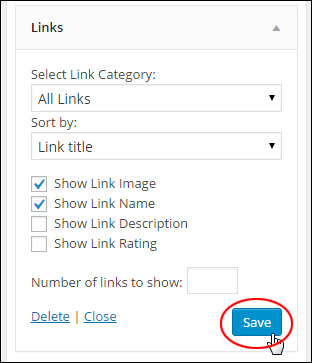
(Link widget - configurable settings)
You can add multiple link widgets to your sidebars and footers. This allows you to create and display lists of links sorted by categories throughout your site …
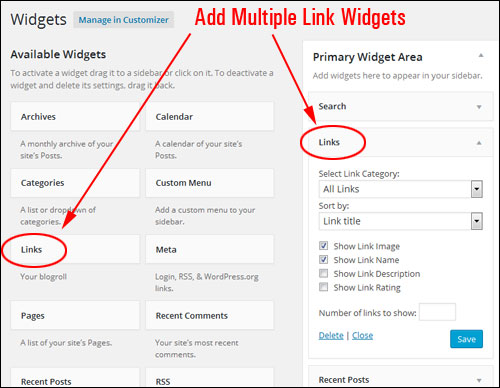
(You can add a number of link widgets to your sidebar)
Select a link category to display a specific list of items …
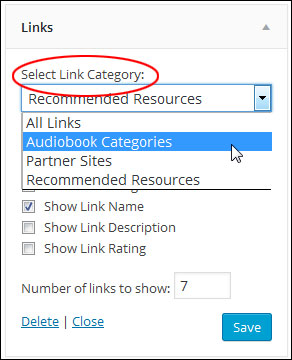
(Link widget settings – Select Link Category)
You can sort links by Link ID, Link title, Link rating, or display links in Random order …
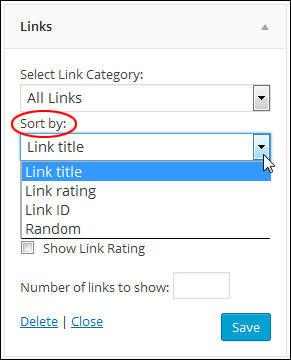
(Link widget settings – Sort by options)
After setting up your Links widget, click Save to update your settings. Your link section should show on your sidebar …
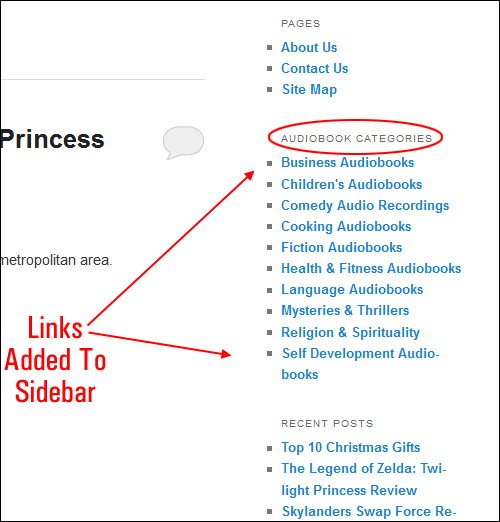
(An example of how links can be displayed on a sidebar)
As the above example shows, you can display specific links to your site visitors (e.g. a list for a specific link category only), and add multiple lists of links to your sidebar menu.
Need help using widgets? Go here if you would like to learn more about configuring widgets:
Link Manager – Additional Information
If you have many links, the Link Manager plugin allows you to easily administer these using filtering, sorting, and searching functions.
Sort Links Function
To sort links, hover your mouse cursor over the title of the column you want to sort and click on the little black triangle displayed next to the column title …
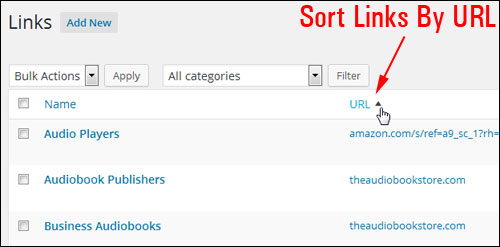
(Sorting your links)
Search Your Links
Type a search term into the search field and click the Search Links button to search for links …

(Finding links)
Filtering Links Function
You can filter links by link categories …
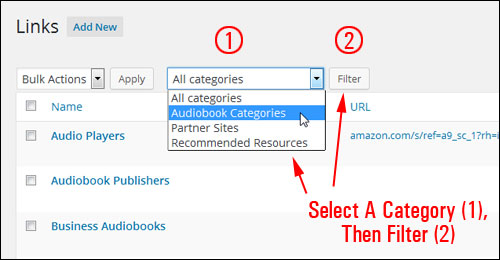
(Filtering your links by link category)
You can also search and filter links in the Link Categories screen. Use the ‘Search Link Categories’ button to find link categories, or click on the links in the ‘Links’ column …
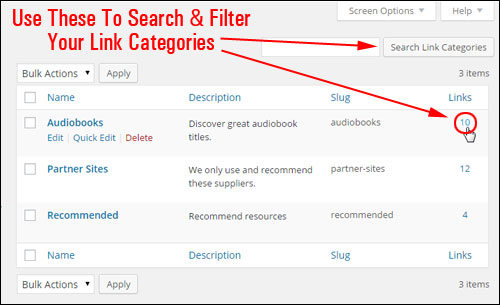
(searching and filtering links in the Link Categories screen)
This displays a list of all links grouped under a specific link category …
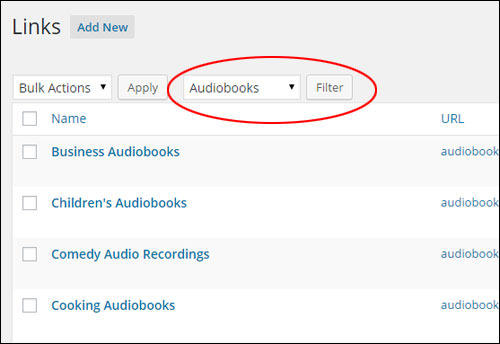
(Links filtered by link category)
Additional Link Options
If you plan to add a lot of links to your website or blog, or if you intend to add a ‘Links’ page to your site (i.e. not just add a links section to your sidebar), then you may want to look at using a plugin that can help you administer your links.
Link Library

(Link library – WordPress Links Management Plugin)
Plugin Download URL
http://wordpress.org/plugins/link-library/
Plugin Description
Link Library lets you publish a list of your link categories and a complete list of all your links plus notes and descriptions …
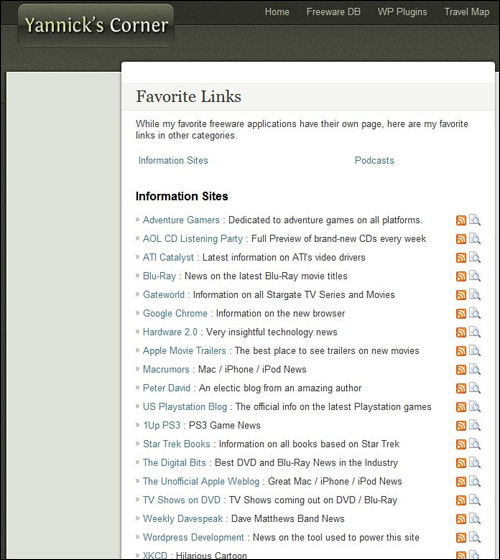
(Link Library links. Image: Link Library plugin documentation.)
Link Library creates a page on your web site containing a list of all of the link categories in your Links section, and all links listed in these categories. Additionally, you can select a sub-set of categories to display or not display, show only one category at a time, display a search box and find results based on visitor queries, display a form to accept user submissions that can be moderated by a site administrator, and even generate an RSS feed for your link collection that lets your site users become aware of additions to your link library.
To learn more about using this WordPress plugin, visit this site:
Congratulations! Now you know how to add a link section to WordPress.
If you want to learn more about adding hyperlinks into your WordPress posts and pages, see this article:
***
"Learning WordPress has been a huge stumbling block for me. I've been looking for something that covers absolutely everything but doesn't cost an arm and a leg. Thank you so much ... you have just provided me with what I have been looking for! Truly appreciated!" - Tanya