Creating A To-Do List In WordPress
 Time is always in short supply, especially if you run a growing business or manage any kind of project that requires people to work as a team.
There is just so much work to do and things to remember. You have deadlines to meet, urgent tasks to complete, meetings to attend, fires to put out, deliveries to make, schedules to keep and so on. The amount of things that need ”doing” never seems to stop.
Now … on top of all this, add the extra workload of promoting and growing your business online and keeping your website updated with fresh content and things can start feeling unmanageable and overwhelming.
Whether you are running a business, website, blog, or managing a team, you need to be able to organize and manage your daily tasks.
A simple proven method that can help you save time, alleviate stressful workloads, and allow you to take control is to use “to-do” lists.
To-Do Lists – Benefits
A “to-do” list helps you monitor your progress as you complete projects. Your to do list can be detailed and specific, or serve as a reminder of the things that need doing over a given period of time.
Here are just a few of the many benefits of using to do lists:
Clearer Thinking
Creating to-do lists means that you won’t have to try and remember stuff or clutter your head with details. Once tasks are recorded on a to do list, your brain is free to process information and you can focus on other things that are important.
Better Manage Your Time
Prioritizing tasks on your list helps you save time. You can gain a better perspective on what is more urgent vs what is not, and what tasks should be done first.
Reorganize Quickly
Having a to do list helps you better handle events. If an appointment suddenly gets cancelled or extra time has been made available when some aspect of the process gets completed sooner than expected, you can quickly reschedule and continue working with minimal loss of focus.
Eliminate Stress
Stress can result from feeling overwhelmed by so much to do and so little time to do it in. Using a to-do list allows you to prioritize important tasks that have to get done within a reasonable timeframe, and reschedule non-urgent items that can be worked on later. This can help reduce the feeling of being overwhelmed and take away some of the stress you (and your team) may be feeling.
Collaboration
Using to do lists and other project management tools is essential for getting other people involved on some of your larger or more complex projects.
As you can see, there are many benefits to using a to do list, both in business and in your personal life. Creating to-do lists, then prioritizing tasks and working to complete the items listed increases efficiency and productivity in your business.
What about using to-do lists on your WordPress website or blog?
In this detailed step-by-step tutorial you are going to learn how to add to-do lists to your WP website or blog to improve business efficiency and productivity using a great little plugin for WordPress called Cleverness To-Do List.
Cleverness To-Do List
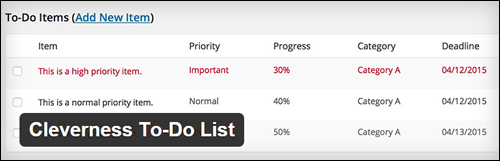
Cleverness To-Do List Plugin URL
http://wordpress.org/plugins/cleverness-to-do-list/
Plugin Description
This WordPress plugin provides users with a to-do list feature.
Features
Note: the plugin features listed below are discussed in more detail in the tutorial section.
You can set up the plugin to assign private to do lists for each user, to have all users share your to-do list, or to have a master list with individual completion of items.
The shared to-do list provides a number of settings. You can assign to do items to a specific user (this includes emailing new to do items to the assigned user) and optionally to have assigned items be viewable by that user. You can also assign different permission levels to different users. There are also settings available to enable the display of deadline and progress fields. Category support is also included as front-end administration.
A new menu item is added to the admin backend to manage your lists and your to do list can also be displayed on the dashboard widget.
A sidebar widget is also available as short code to display the to do list items on your blog. There are 2 shortcodes for front-end administration of your list. Management of categories is accessible through the back-end.
If you plan to run a multi-author site you can use this to-do lists plugin to create custom to-do lists for your post editors if you also use a copy of the developer’s premium plugin, Post Planner.
Installing The Plugin
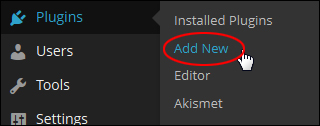
Log into your WP admin area scroll down the menu click on Plugins > Add New …
In the Install Plugins screen, type in “cleverness” into the search field and click the Enter button …
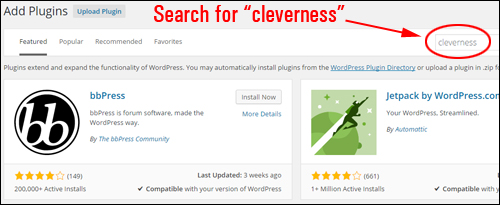
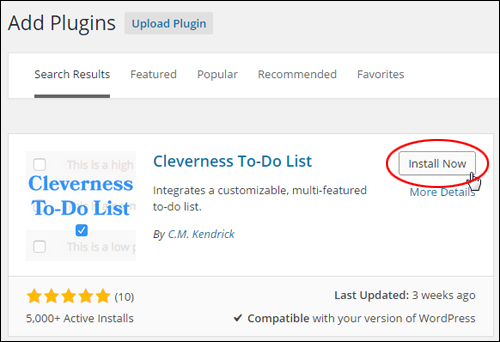
Locate the item in the Search Results area and click Install Now …
Activate the plugin after installing it …
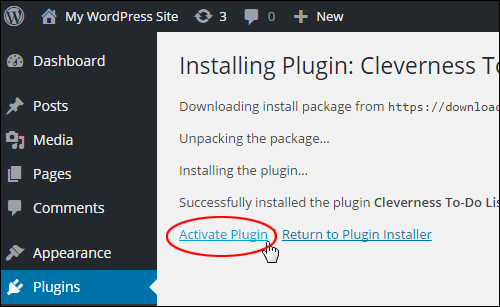
Note: You can also activate the plugin from the Plugins screen …

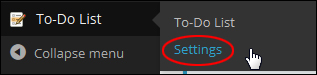
After you have activated the plugin, click on Settings …

Note: The plugin’s ‘Settings’ area can also be accessed by selecting To-Do List > Settings from the dashboard menu …
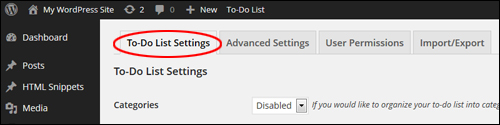
This takes you to the plugin ‘Settings’ screen …
The section below shows you how to set up the plugin …
How To Configure The Plugin
The Settings screen is divided into four tabs:
- To-Do List Settings – Here you can specify the plugin’s main settings.
- Advanced Settings – This area is where you can customize to-do lists, assign tasks to other users and perform plugin database maintenance tasks.
- User Permissions – This tab is where you set up user permissions and capabilities for Master and Group List types.
- Import/Export – This section is where you import and export your to-do plugin and list data settings.
Let’s go through each of these tabs.
To-Do List Settings
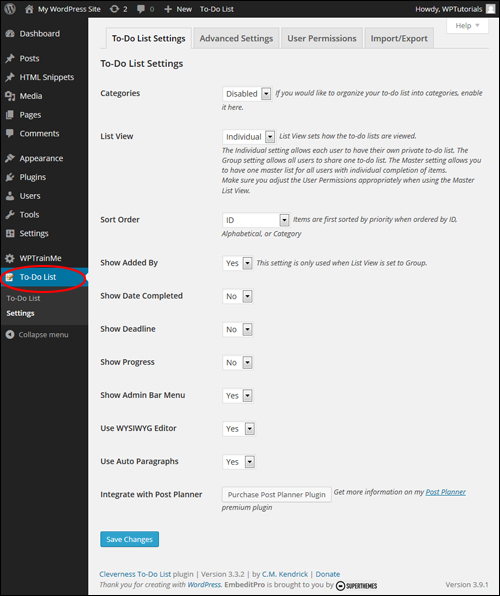
Categories
Select ‘Enabled’ to organize your list into categories, otherwise leave this option set to ‘Disabled’.
Note: If you enable this option, a ‘Categories’ item gets added to the To-Do List plugin menu …
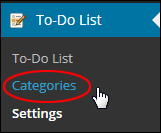
This lets you add categories to your to-do lists (see ‘Plugin Usage’ section further below for more details) …
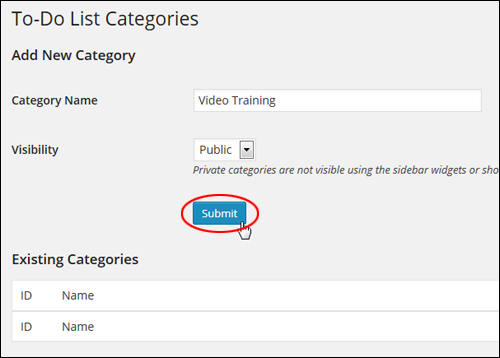
You can set up ‘public’ and ‘private’ categories for your to-do lists.
Private categories are not visible when using the sidebar widgets or short codes (only when ‘Sort Order’ is set to ‘Category’)
List View
List View lets you choose how your lists are viewed. You can choose from three to do list views:
- Individual – Choosing this option allows users to create and manage their own private to-do list.
- Group – Use this option if you want all users to share one to-do list.
- Master – Use this option to have one master list for all users, where users have their own individual completion of items. If you choose the ‘Master’ list view, make sure that you set the User Permissions appropriately in the ‘User Permissions’ tab (see further below).
Sort Order
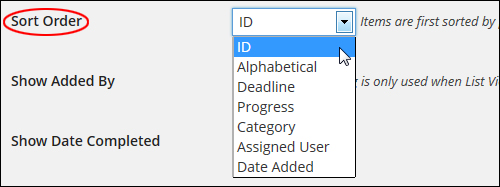
‘Sort Order’ lets you specify how to-do list items will be sorted.
If you choose ID, Alphabetical, or Category options, items will be sorted first by priority.
Show Added By
Enabling this option lets you display which members on your site have added an item to your to-do list.
Note: This setting only applies if ‘List View’ is set to ‘Group’.
Show Date Completed
If this option is enabled, completion dates will display for your to-do tasks.
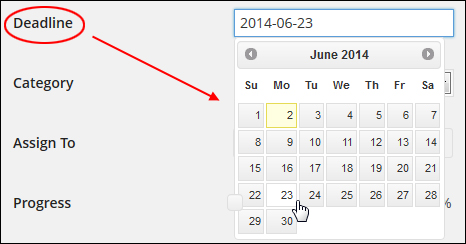
Show Deadline
Enabling this option lets you specify deadlines for to-do tasks …
Show Progress
Enabling this option (‘Yes’) lets you specify task progress indicators for your to-do items …

Show Admin Bar Menu
Enabling this option lets you display the ‘To-Do List’ menu in your WordPress Admin bar …

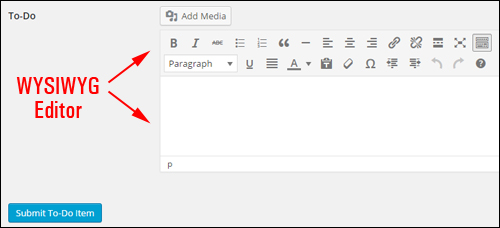
Use WYSIWYG Editor
This option lets you add and edit items on your to-do list using the WordPress WYSIWYG Editor …
Use Auto Paragraphs
If this option is enabled (‘Yes’), automatic paragraphs are used to display content in to-do lists.
Integrate with Post Planner
If you are running a collaborative website or blog, you can integrate the Cleverness To Do List plugin with a plugin called WordPress Post Planner, developed by the same author that provides you with a complete WordPress editorial solution …
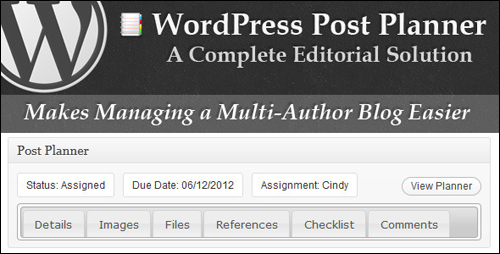
Go here to learn more about using this handy plugin: WordPress Post Planner – WordPress Plugin
When you are done configuring your plugin options in this section, remember to click the ‘Save Changes’ button to update your settings …
Advanced Settings
Once you have configured the general settings, click on the ‘Advanced Settings’ tab to proceed …

This brings up the plugin’s ‘Advanced Settings’ area …
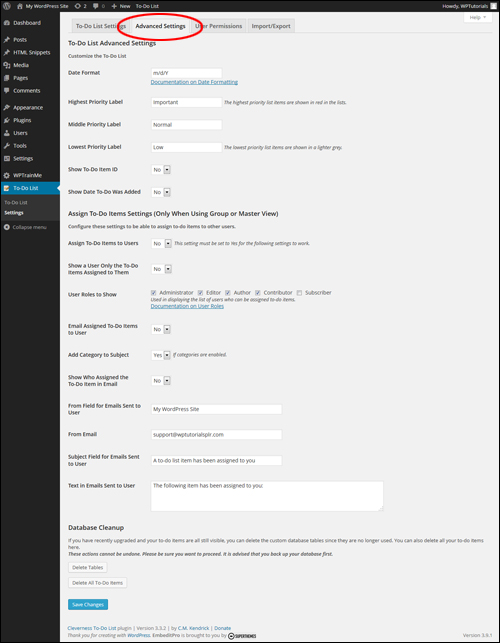
In this area you can customize your To Do lists, assign to-do tasks to other users and perform plugin database maintenance tasks.
Let’s step through how to configure the plugin’s ‘Advanced Settings’ section …
To-Do List Advanced Settings > Customize The To-Do List
This section of the ‘Advanced Settings’ tab allows you to customize your To Do List …
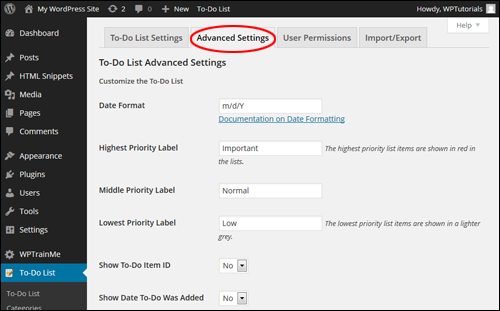
The following settings can be configured in this section:
Date Format
Here you can specify how to display dates in your to-do list (e.g. month/day/year, day/month/year, etc.)
Note: To learn more about how to format dates in WordPress, visit the relevant section of the WordPress Codex below:
WordPress Codex – Formatting Date And Time
Priority Labels
This section lets you customize the labels for highest (important), middle (normal) and lowest (low) priority items …
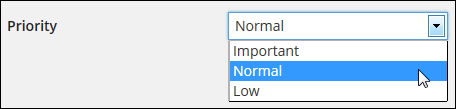
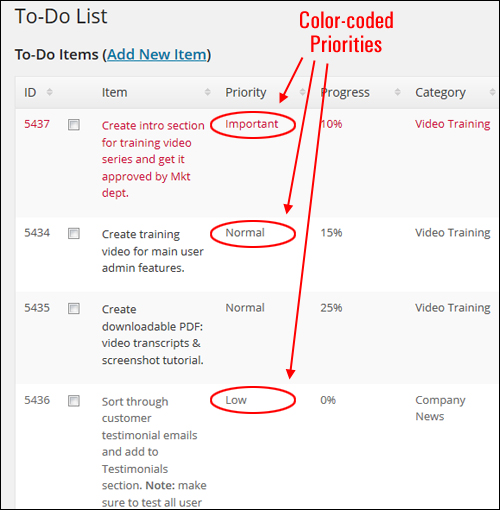
Highest (important) priority items are shown in red in your lists and low priority items display in a lighter shade of grey …
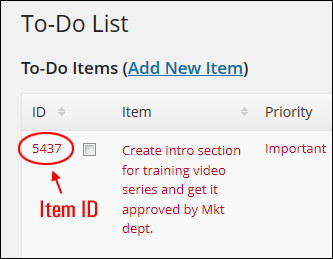
Show To-Do Item ID
If enabled, item IDs will show on the to-do list …
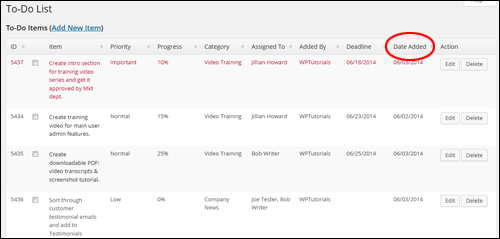
Show Date To-Do Was Added
Enabling this option will show the date the To-Do Items table was added …
To-Do List Advanced Settings > Assign To-Do Items Settings
If you have selected either ‘Group’ or ‘Master’ View for your to-do list, you can configure the options in this area and assign items to other users …
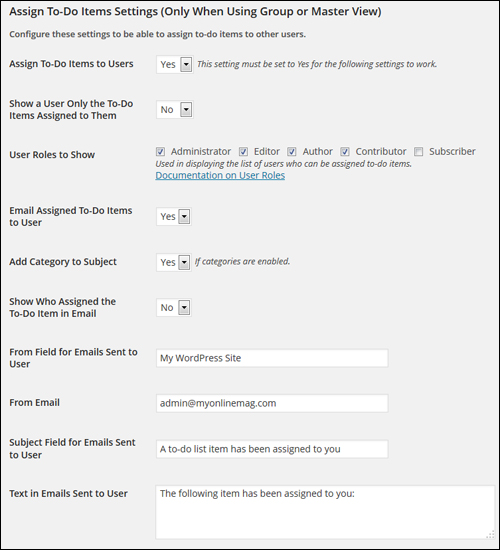
The following options can be configured in this section:
Assign To-Do Items to Users
Enabling this option lets you assign to-do items to other users …
Note: This set this option to ‘Yes’ for the settings below it to work.
Show a User Only the To-Do Items Assigned to Them
If this option is enabled, you can display tasks only to users who have been specifically assigned those items. Leaving this option disabled (‘No’) will display to-do items to all users.
User Roles to Show
Check the boxes in this section Subscriber) to display the type of users that can be assigned items. If you do not want to assign to-do items to a role, then leave its checkbox unticked.
Email Assigned To-Do Items to User
If you enable this option, WordPress will automatically send users an email with their assigned to-do items …
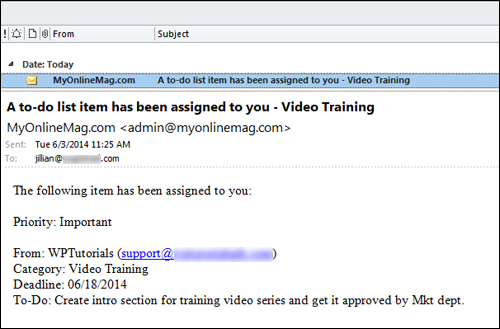
Leave this option disabled (‘No’) if you don’t want emails sent out to users.
Note: If you disable this option, you can skip the remaining items in this section.
Add Category to Subject
If you have enabled categories in your plugin settings and select ‘Yes’ for this option, the to-do category will display in the subject of emails sent to users …
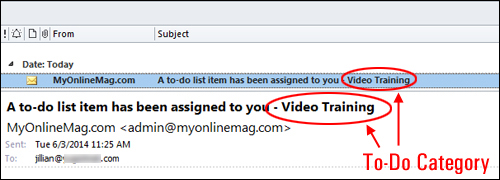
Leave this option disabled (‘No’) if you don’t want to show categories in the subject of your emails.
If you don’t want categories to show the subject of your emails, then leave this option disabled.
Show Who Assigned the To-Do Item in Email
If this option is enabled (‘Yes’), you can display the user who assigned the to-do item in the email. This option is useful if, for example, your website has various project managers assigning to-do items to users …
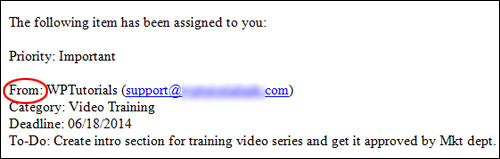
From Field for Emails Sent to User
This field allows you to customize the “From” field when sending out emails. You can enter your company name, your domain, your name, or anything you like in this field …

From Email
Add the email address that you want displayed as the “sent from” address …

Subject Field for Emails Sent to User
Type into this field a subject field for the email that will be sent automatically to users when a new item has been assigned to your to-do list …

Text in Emails Sent to User
Type into this field the body of the email message that will be sent out automatically to users when a new item has been assigned to your to-do list.

To-Do List Advanced Settings > Database Cleanup
This section lets you carry out database maintenance tasks associated with plugin data directly from the plugin settings area itself without the need to log into your server …
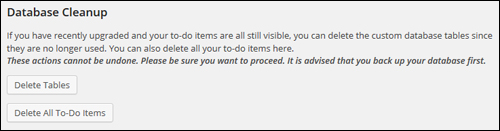
This is useful if, for example, you notice that previously deleted to-do items are still listed on your site.
You can perform the tasks below in this section:
- Delete Tables – Remove custom database tables that you are no longer using.
- Delete All To-Do Items – Delete all to-do items.

Any actions that you perform on your database from this screen cannot be reversed. If you are sure that you want to proceed with any of the database operations available in this section, then remember to backup your database first.
If you don’t want to do manual backups, then consider using a professional service, or use WordPress backup plugins. You can read about a great WordPress backup plugin that can fully automate your backup process here:
User Permissions
Here you can configure user permissions and capabilities for Group or Master List types …


If you select the Individual List type, the only configurable option applicable for this section is the View To-Do List option …
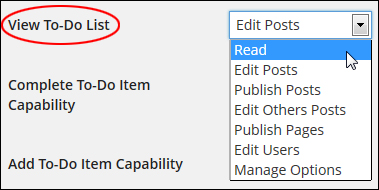
If you plan to configure user permissions and capabilities for Group and Master List types, select the highest level capabilities that you would like users to be able to perform for each option …
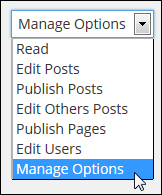
By default, general capabilities for each user role are as follows:
- Subscribers: Read
- Contributors: Edit Posts
- Authors: Publish Posts
- Editors: Edit Others Posts
- Administrators: Manage Options
Note: When working with the Master list type make sure that you only permit non-admin users to view and complete items, otherwise they will be able to edit the Master list itself.
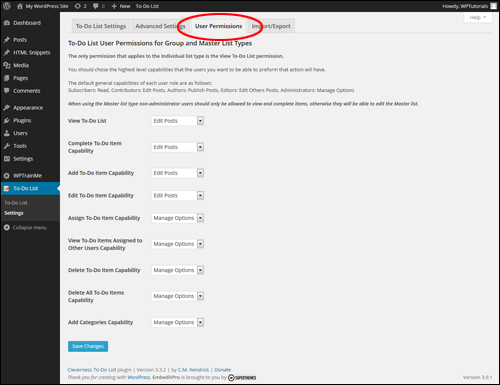
Let’s review the settings for this section:
View To-Do List
Here you can allow the selected capability to view to-do items in the dashboard widget and on the To-Do List page under the ‘Tools’ section.
Complete To-Do Item Capability
This permits the selected capability to mark items as completed or not completed.
Add To-Do Item Capability
This option allows the selected capability to add new items.
Edit To-Do Item Capability
This setting enables the chosen capability to edit existing items.
Assign To-Do Item Capability
Here you can allow the chosen capability to delegate to-do items to individual users.
View All Assigned Tasks Capability
This option allows the chosen capability to view all tasks even if “Show Each User Only Their Assigned Tasks” is set to ‘Yes’.
Delete To-Do Item Capability
This option permits the chosen capability to delete individual items.
Delete All To-Do Items Capability
This setting allows the selected capability to purge all the completed items.
Add Categories Capability
This enables the chosen capability to add new categories.
Import/Export
The ability to import and export to-do list data can be very useful. For example, you may decide to copy over data from one site to another, or store your list data for backup or archiving purposes.
To access this function, click on the ‘Import/Export’ tab in your plugin settings section …

Here you can easily import or export your list and plugin settings …
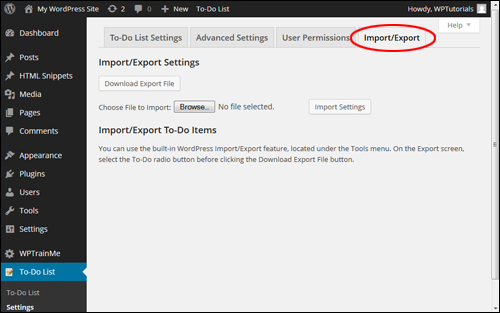
Exporting To-Do List Data
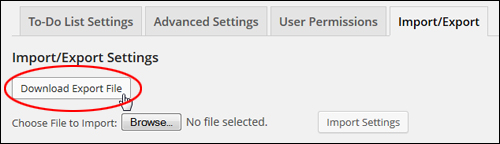
To export and download your list data settings click on the ‘Download Export File’ …
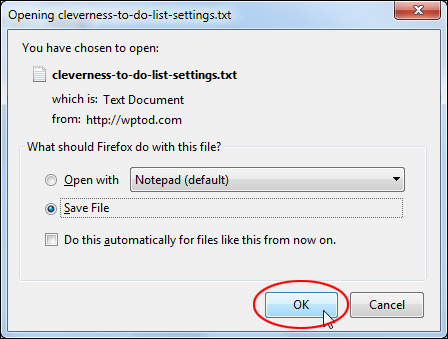
This opens up a new window allowing you to view or save the data as plain text to an internal or external storage device …
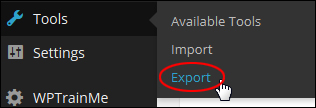
As well as exporting list data from the ‘Import/Export’ tab, you can also export data by going to your admin menu and selecting Tools > Export …
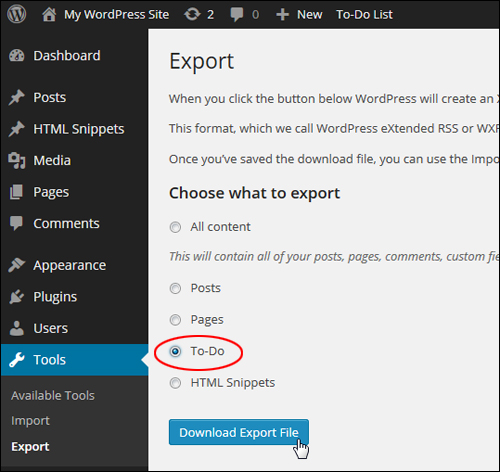
You can include to-do list data in a WordPress export file (in XML format), either by selecting ‘All content’ (includes everything – pages, posts, etc…), or selecting ‘To-Do’ from the ‘Choose what to export’ section and clicking on the ‘Download Export File’ button to download your file to your storage device…
Importing To-Do List Data
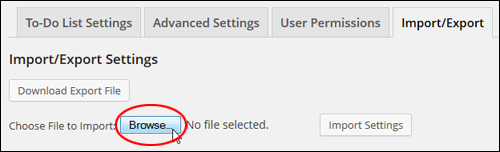
To import a list data file, click on the ‘Browse’ button next to the ‘Choose File to Import’ field …
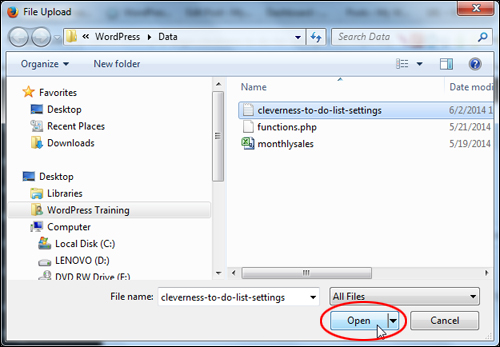
Locate the previously saved to-do list data file in your hard drive or external drive and click ‘Open’ …
Once the data file has been uploaded in your settings area, click on ‘Import Settings’ …
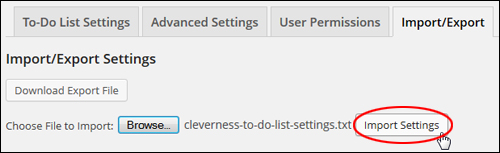
Your file will be imported.
After configuring all of the plugin settings, you are ready to begin create and edit your lists.
Plugin Usage
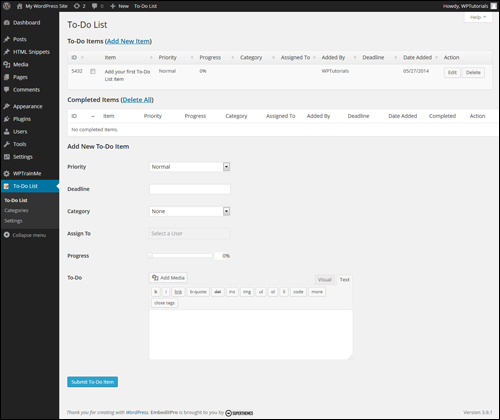
To create a new to do list, go to your WordPress admin menu and click on To-Do List > To-Do List …
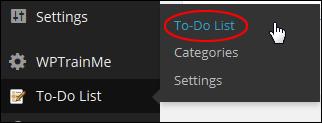
This brings up the ‘To-Do List’ page …
Adding New To-Do Items
There are a number of ways to add new to-do items to your list.
For example, you can add new to-do items from your WP admin bar …

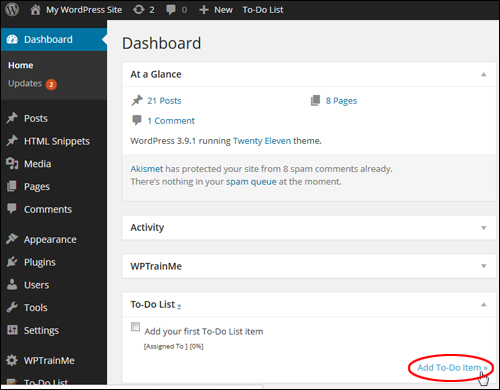
You can also add new to-do items from the ‘To-Do List’ dashboard section by clicking on the ‘Add To-Do item’ link …
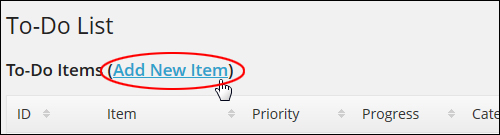
You can also click on the ‘Add New Item’ link in the ‘To-Do Items’ section (note: only use this option if your To-Do list already contains many items, as the link will simply send you to the “Add New To-Do Item” section at the bottom of the page) …
All the above methods will take you to the ‘Add New To-Do Item’ section.
Depending on the way you have configured your plugin settings, some options may not display when adding new items to your to-do list.
Set up the options you have enabled for your to-do items, add appropriate values and information into the relevant fields and click on the ‘Submit To-Do Item’ button to add the to-do item …
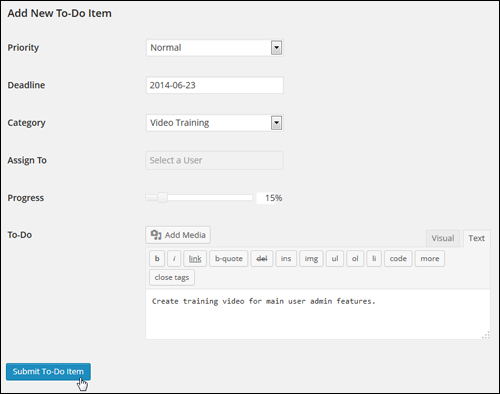
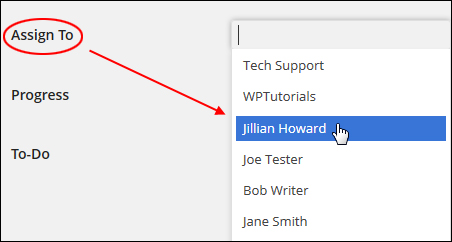
Note: If you are using a list type that lets you assign responsibilities over items to users, select a user from the drop-down list and assign them the item …
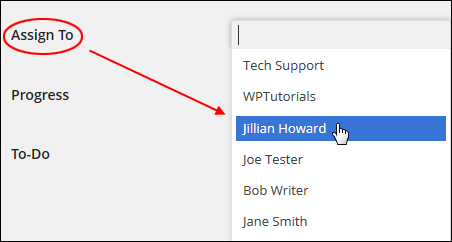
You can also make multiple users responsible for the same item (click on ‘x’ to delete a user) …

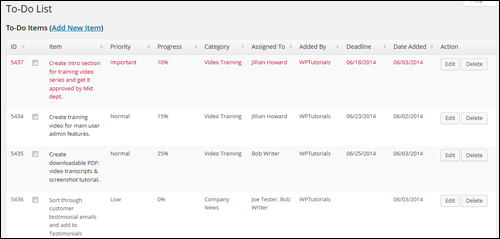
Once you have added a new item item, the item will display as an entry in the ‘To-Do List’ table …

Repeat this process to keep adding new items to your list …
Edit And Delete Items
To edit or delete an item, click on the ‘Edit’ or ‘Delete’ buttons next to each item under the ‘Action’ column …

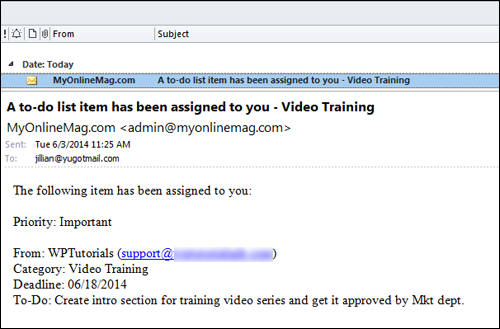
Depending on your plugin configuration settings (discussed earlier), users assigned to tasks may also receive email notifications …
Once you have created your to do list, users can view the list from their own user dashboard …
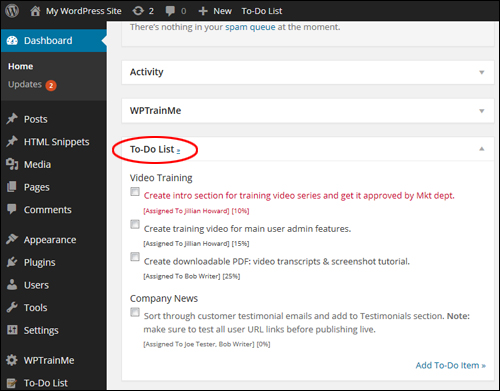
When users assigned with an item complete the task and click on the item checkbox …
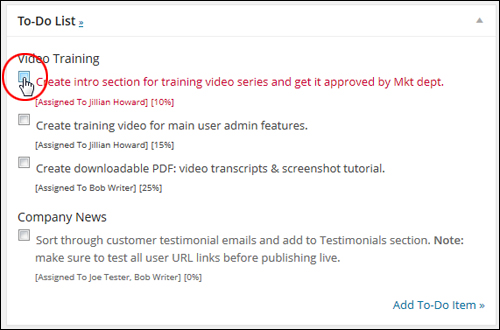
… the item disappears from the “To-Do” list …
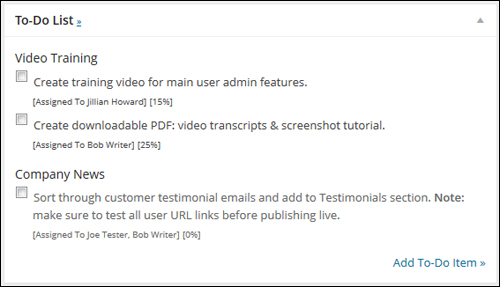
And displays in the ‘Completed Items’ section located in the ’To-Do List’ plugin page …

Additional Information
The Cleverness To-Do List plugin provides added functionality that lets you display to-do lists on your WordPress site using widgets, and add lists to any page or post using short codes.
Using The Plugin Widget
To add a to-do list to your site using widgets, go to the ‘Widgets’ page (Appearance > Widgets) and drag the ‘To-Do List’ widget to the location in your sidebar menu where you want your list to display …
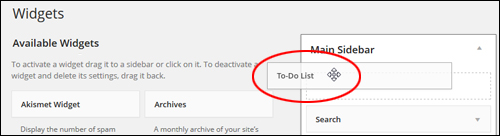
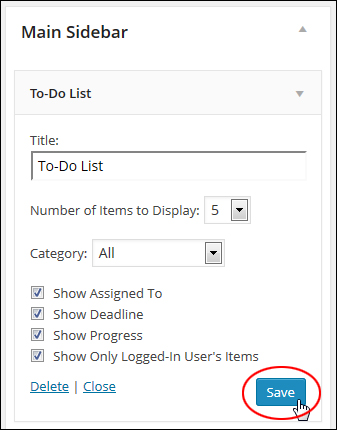
Configure the settings on the widget and click the ‘Save’ button …
Your list will display where the widget was inserted (e.g. the sidebar menu, footer, etc.)
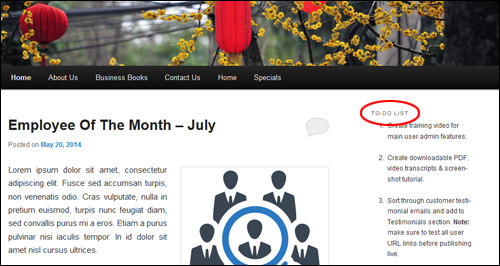
To learn more about how to use WordPress widgets, see the tutorial below:
Short Codes
The plugin also lets you add to-do lists and checklists on your site with shortcodes.
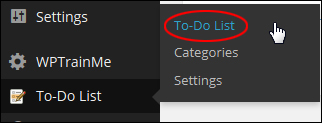
To access the plugin’s short code documentation, click on To-Do List > To-Do List from the dashboard menu …
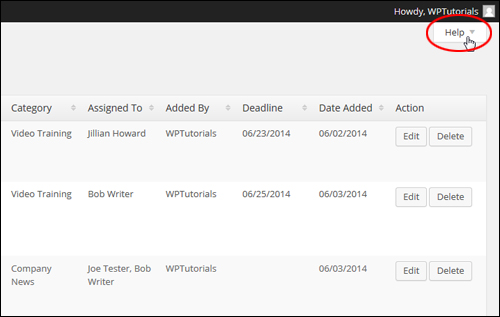
Click on the ‘Help’ tab on the corner of your screen …
Click on the ‘Shortcodes’ menu to access the Shortcode Documentation …
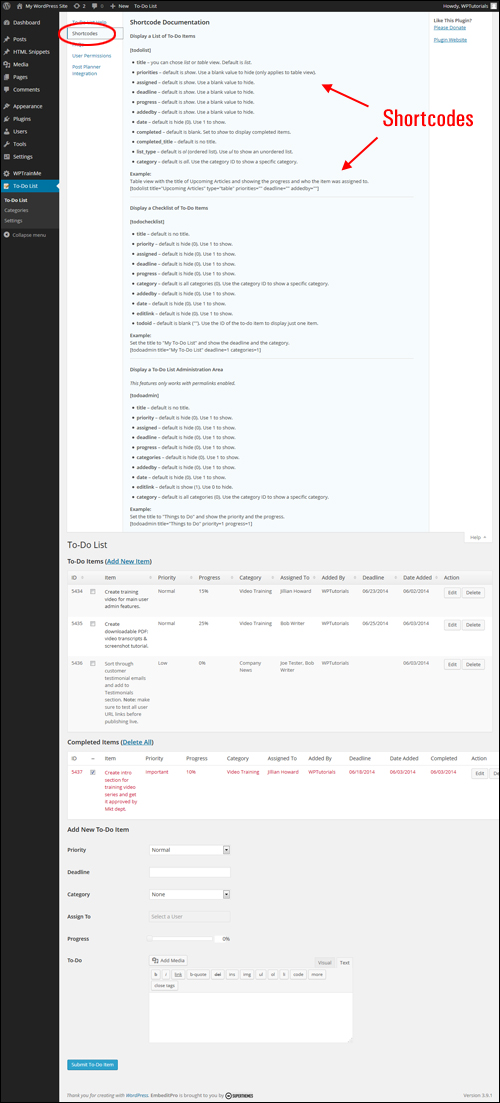
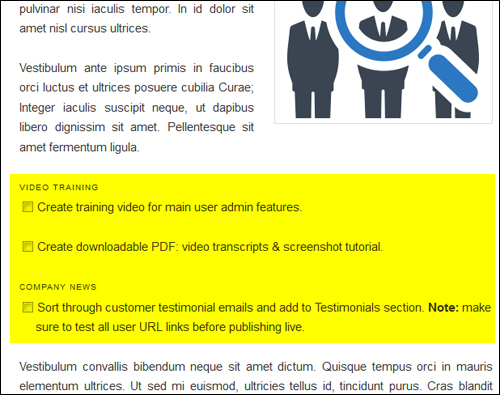
The documentation section explains different ways to configure and use shortcodes to display lists and checklists on your content.
Once you know what information you want to add to your site, open up a new post or page and either type or paste the short code into the content editor …
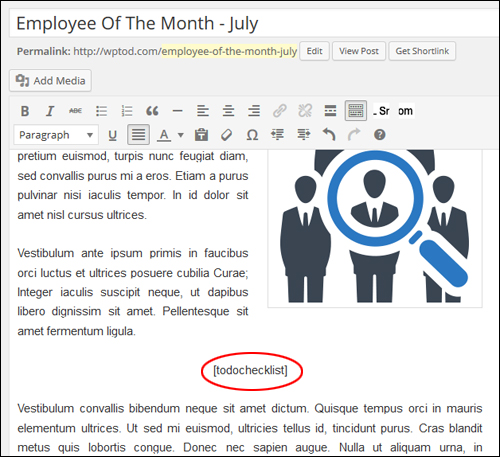
Publish your page or post and you should see the list showing in the location where you have added the shortcode …
Visit the plugin website here to learn more about this plugin:
Congratulations! Now you know how to add a to-do list to your WordPress site.
***
"I have used the tutorials to teach all of my clients and it has probably never been so easy for everyone to learn WordPress ... Now I don't need to buy all these very expensive video courses that often don't deliver what they promise." - Stefan Wendt, Internet Marketing Success Group
***