Creating To Do Lists In WordPress
 Time always seems to be in short supply, especially if you are running a hectic business or managing other people.
There are so many things to do and remember. You have so many deadlines to meet, tasks to complete, priorities to attend to, fires to extinguish, calls and appointments to make, schedules to keep and so on. The amount of things that need to get done never seems to stop.
Now … on top of all this, add the extra workload of promoting and growing your business online and keeping your website or blog updated with fresh content and everything suddenly begins feeling unmanageable and out of control.
Whether you run a business, website, blog, or manage a team, it’s important to be able to organize and manage your daily activities.
A simple “tried and true” tool that can help you save time, create a sense of order and manageability, and allow you to regain control is to use a “to do” list.
The Benefits Of Using To Do Lists
A “to do” list helps you track your progress when trying to achieve your objectives. Your to-do list can be quite detailed or specific, or just serve as a reminder of the things that need to be done today, tomorrow, this week, this month, etc.
Here are some of the many benefits of using to-do lists:
Create Order
To-do lists help you create order, stay organized and achieve goals sooner.
Strategize
After creating and organizing a to do list, you can see the bigger picture and come up with a strategic plan for getting everything done effectively.
Quickly Reorganize
A to-do list helps you better deal with events. If you find that a meeting has been cancelled at short notice or extra time becomes available because some task got completed sooner than expected, you can quickly reschedule and continue working with little to no disruption.
Ensures Accountability
Without accountability there’s no commitment to completion, and no motivation to act with a sense of purpose. Lack of accountability can also let excuses creep in and take over your productivity.
Delegate Better
To-do lists help you better assign work to others. This is also important if you plan to collaborate within a team (see further below).
As you can see, there are many benefits to using a to do list, both in business and in your personal life. Creating a to-do list, then prioritizing tasks and working in a focused way increases productivity and efficiency in your business.
What about using to-do lists on your website?
In this tutorial we are going to show you how to easily create to do lists in WordPress to improve business efficiency and productivity using a customizable, multi-featured to-do list WordPress plugin called Cleverness To-Do List.
Cleverness To Do List
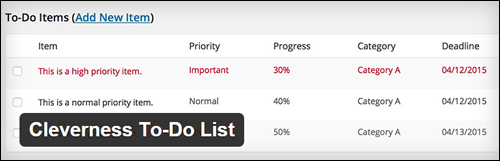
Download The Cleverness To-Do List Plugin
http://wordpress.org/plugins/cleverness-to-do-list/
Description
This plugin provides users with a to-do list feature.
Plugin Features
Note: the plugin features listed below will be discussed in more detail in the tutorial section.
You can configure the plugin with private to do lists for each user, to have all users share your to do list, or to have a master list with individual completion of items.
The shared to-do list provides different settings. You can assign to-do items to a specific user (this includes a setting to email a new to-do item to assigned users) and optionally to have assigned items only viewable by that user. You can also assign different permission levels to different users based on user roles. There are also settings to display deadline and progress fields. Category support is included as well in the front-end administration.
A new menu item is added to the backend to manage your list and your to-do lists can also be displayed on the dashboard widget.
A sidebar widget is available as well as shortcode to display the to do list items on your site. There are 2 shortcodes for front-end administration of the list. Management of categories is accessed via the back-end admin section.
If you plan to run a multi-author blog you can use this to do lists plugin to create custom to do lists for your post editors if you also download the developer’s premium plugin, Post Planner.
Plugin Installation
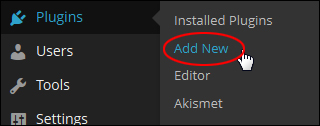
In your WordPress administration area, click on Plugins > Add New …
In the Install Plugins section, type in “cleverness” into the search field and click Enter …
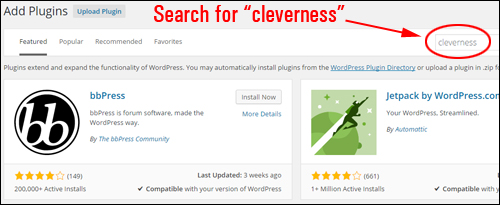
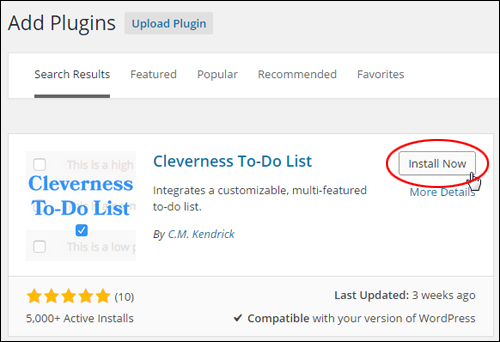
Locate the Cleverness To-Do List plugin in the Search Results section and click Install Now …
Activate the plugin …
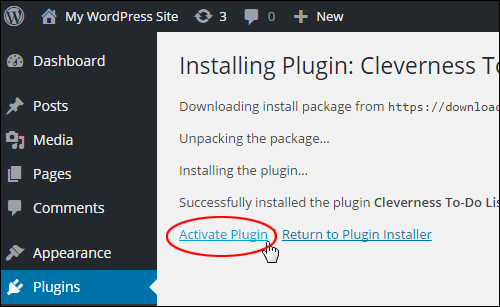
Note: You can also activate this plugin in the Plugins area …

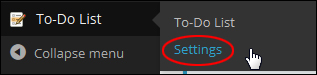
Once you have activated the plugin, click on Settings …

Note: You can also get to the plugin’s settings section by choosing To-Do List > Settings from the admin menu …
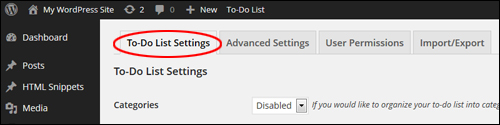
This takes you to the ‘Settings’ page …
Let’s set up the plugin …
Setting Up The Plugin
The Settings area is divided into four sections:
- To-Do List Settings – This tab is where you can specify the plugin’s main settings.
- Advanced Settings – This tab is where you can customize your To Do lists, assign tasks to other users and perform database maintenance tasks.
- User Permissions – This area is where you can configure user permissions and capabilities for Group and Master List types.
- Import/Export – This section is where you can export and import to-do plugin and list data settings.
Let’s review each of these sections.
To-Do List Settings
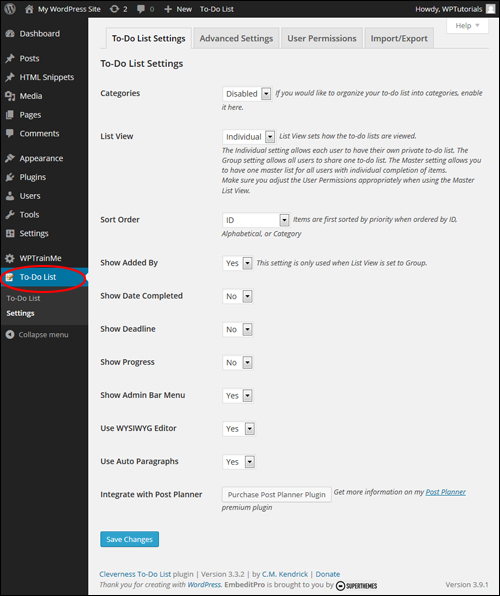
To-Do List Categories
Select ‘Enabled’ to organize your to-do list into categories, otherwise leave this option set to ‘Disabled’.
Note: When you enable this option, a ‘Categories’ item will be added to the To-Do List menu …
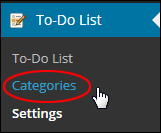
This allows you to add categories that can help organize your to-do lists (see ‘Plugin Usage’ section further below for more details) …
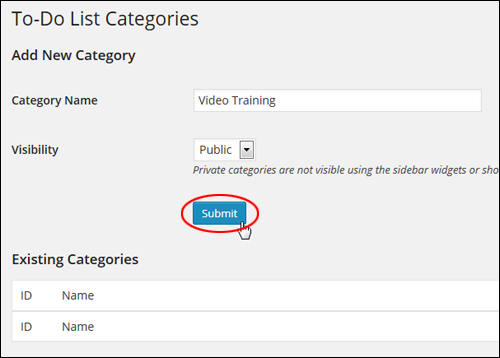
You can create ‘public’ and ‘private’ categories for your lists.
Categories marked ‘private’ will not be visible using sidebar widgets or short codes (only when ‘Sort Order’ is set to ‘Category’)
List View
List View allows you to specify how your to-do lists are viewed. There are 3 to-do list views available:
- Individual – Choosing this option lets users create and manage their own private to-do list.
- Group – Select this option if you want all users to be able to share the same to-do list.
- Master – Use this option to have one master list for all users, where users have their own individual completion of items. If you select the ‘Master’ list view, make sure to set the User Permissions appropriately in the ‘User Permissions’ tab (see further below).
Sort Order
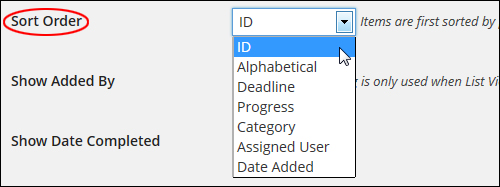
‘Sort Order’ lets you specify how to sort list items.
If you choose Category, Alphabetical or ID, Category, ID or Alphabetical options, items will be sorted first by priority.
Show Added By
Enabling this option lets you display which of your members has added an item to your to-do list.
Note: This setting only applies when ‘List View’ is set to ‘Group’.
Show Date Completed
Enabling this option displays completion dates for your to-do items.
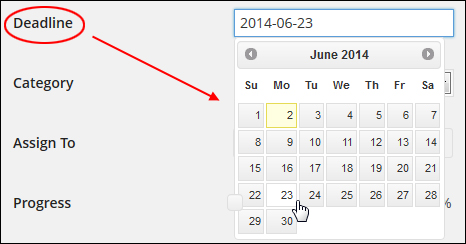
Show Deadline
Enabling this option (‘Yes’) lets you specify deadlines for your to-do tasks …
Show Progress
If enabled (‘Yes’), you will be able to specify task progress indicators for your to-do items …

Show Admin Bar Menu
If this option is enabled, the ‘To-Do List’ menu displays in your WordPress Admin bar …

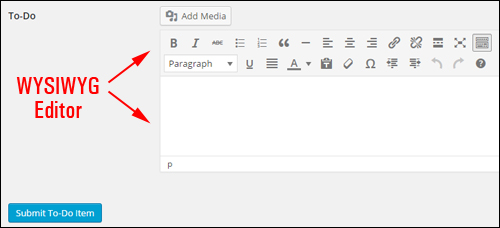
Use WYSIWYG Editor
This option lets you add and edit items on your to-do list using the WordPress WYSIWYG Editor …
Use Auto Paragraphs
Enable this option (‘Yes’) to display content in your to-do list items using paragraphs.
Integrate with Post Planner
If you plan to run a collaborative site or blog, you can integrate the Cleverness To-Do List plugin with a plugin called WordPress Post Planner, from the same developer that provides you with a complete WordPress editorial solution …
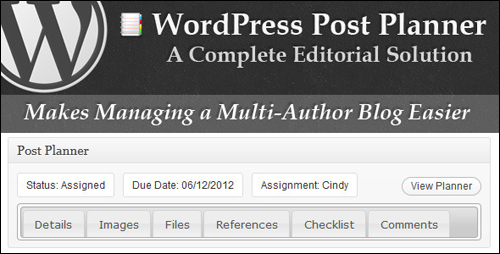
To learn more about using this WordPress plugin, visit this site: WordPress Post Planner
After you have configured your plugin options in this section, click the ‘Save Changes’ button to update your settings …
Advanced Settings
After configuring the settings in the To-Do List Settings tab, click on the ‘Advanced Settings’ tab to continue …

This brings up the ‘Advanced Settings’ section …
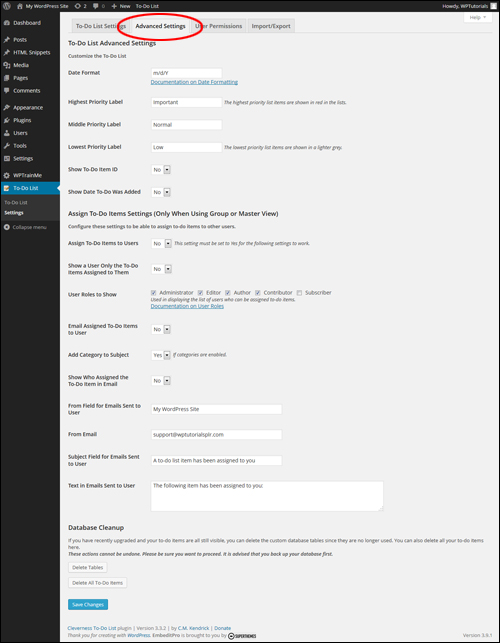
This tab lets you customize your To Do lists, assign to-do tasks to other users and carry out plugin database maintenance tasks.
Let’s go through how to configure the plugin’s ‘Advanced Settings’ section …
To-Do List Advanced Settings > Customize The To-Do List
This section of the ‘Advanced Settings’ tab allows you to customize your To-Do List …
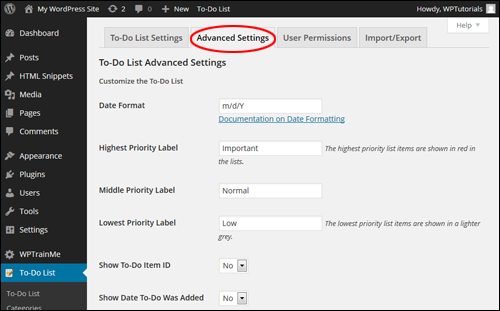
You can configure the following options in this section:
Date Format
Here you can specify how to display dates in your todo list (e.g. month/day/year, day/month/year, etc.)
Note: To learn more about formatting dates in WordPress, refer to the date section of the WordPress Codex below:
WordPress Codex – Formatting Date And Time
Priority Labels
This section lets you customize your labels for prioritizing highest (important), normal and lowest items …
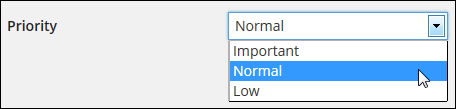
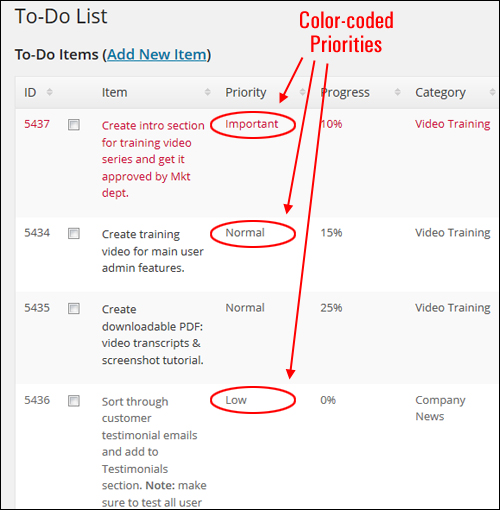
Items given the highest (important) priority are shown in red and lowest (low) priority items display in a lighter shade of grey …
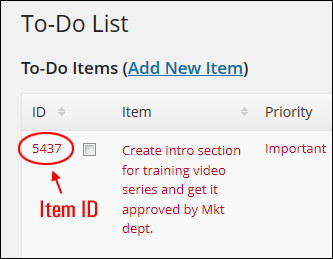
Show To-Do Item ID
Enabling this option (‘Yes’) will display item IDs on the list …
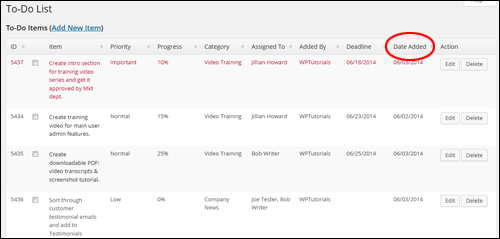
Show Date To-Do Was Added
Enabling this option (‘Yes’) will display the date the items table was added …
To-Do List Advanced Settings > Assign To-Do Items Settings
If you have selected ‘Group’ or ‘Master’ View for your to-do list, you can configure the settings in this section and assign items to other users …
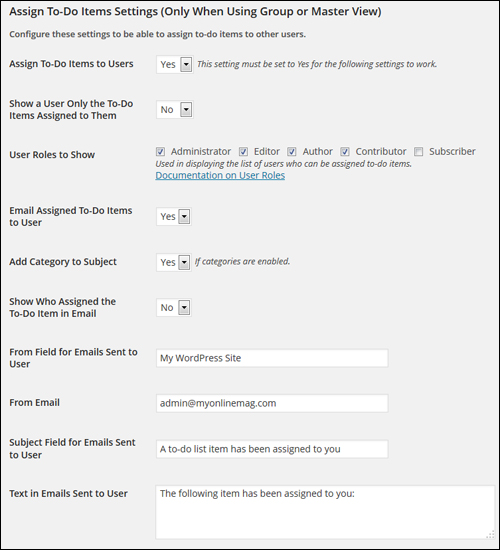
The following options can be configured in this area:
Assign To-Do Items to Users
Enable this option to assign tasks to other users …
Note: This setting must be set to ‘Yes’ for the settings below it to work.
Show a User Only the To-Do Items Assigned to Them
If this option is enabled (‘Yes’), you can display to-do items only to users who have been specifically assigned those items. Leaving this option disabled (‘No’) displays items to all users.
User Roles to Show
Check the boxes in this section Contributor to display the type of users that can be assigned todo items. If you do not want to assign to-do items to a particular role, then leave its check box unticked.
Email Assigned To-Do Items to User
When this option is enabled, WordPress will automatically send users an email with their assigned to-do items …
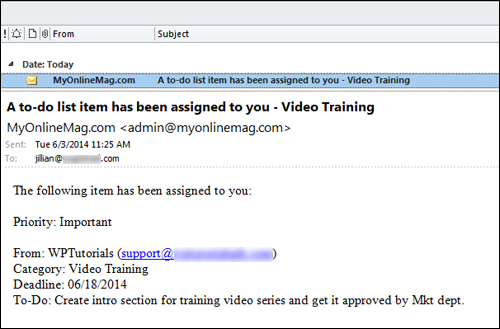
If you don’t want to send out emails to users, then leave this option disabled (‘No’).
Note: If you disable this option, skip the other settings in this section.
Add Category to Subject
If categories are enabled in your plugin settings and you have selected ‘Yes’ for this option, the to-do category will display on the subject of your emails …
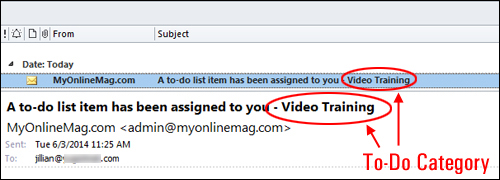
Leave this option disabled (‘No’) if you don’t want to display categories in the email subject.
Leave this option disabled (‘No’) if you don’t want to display categories in the subject of your emails.
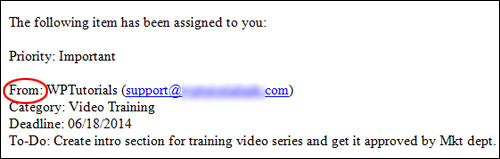
Show Who Assigned the To-Do Item in Email
If this option is enabled, you can display the user who assigned the to-do item in the email. This option is useful if, for example, you have a number of project managers assigning to-do items to users …
From Field for Emails Sent to User
This field allows you to customize the “From” field when sending out email notices to users. You can enter the name of your company, your domain, your name, or anything you like in this field …

From Email
Enter the email address that you would like to display as the “sent from” email address …

Subject Field for Emails Sent to User
Type into this field a subject field for the email that will be automatically sent out to users when a new item has been assigned in your to-do list …

Text in Emails Sent to User
Add into this field the body of the email message that will be sent out automatically to users when a new item has been assigned to your to-do list.

To-Do List Advanced Settings > Database Cleanup
This area of the ‘Advanced Settings’ tab allows you to perform database maintenance operations associated with plugin data directly from the plugin settings area without the need to access your web server …
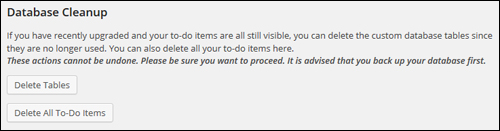
This is useful if, for example, you notice that to-do items you have already deleted are still appearing on your site.
You can perform the tasks below in this section:
- Delete Tables – Delete custom database tables that you are no longer using.
- Delete All To-Do Items – Delete all to-do items.

Any database operations carried out from this screen cannot be undone. If you are comfortable to perform database maintenance in this section, then remember to backup your database first.
If you don’t want to back up your files manually, then consider getting professional WordPress help, or use a WordPress backup plugin. You can learn more about a WordPress backup plugin that we recommend using to automate WordPress file and database backups here:
User Permissions
This section lets you configure user permissions and capabilities for Group or Master List types …


If you have selected the Individual List type, the only permission that applies in this section is the View To-Do List permission …
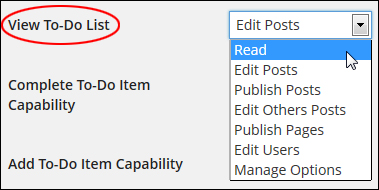
If you are setting up user permissions and capabilities for Group and Master List types, select the highest level capabilities that you would like users to have access to for each option …
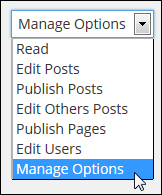
By default, general capabilities for each user role are set up as follows:
- Subscribers: Read
- Contributors: Edit Posts
- Authors: Publish Posts
- Editors: Edit Others Posts
- Administrators: Manage Options
Note: When working with the Master list type make sure that you only authorize non-admin users to view and complete items, otherwise they will be able to edit the Master list itself.
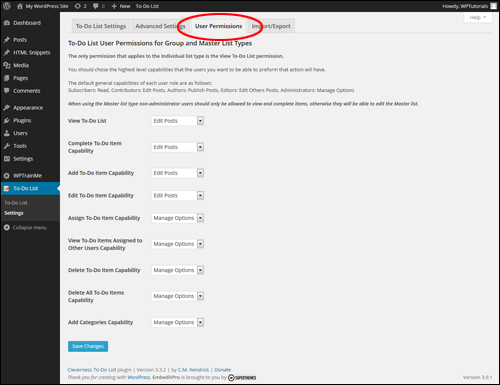
Let’s now review the settings for this section:
View To-Do List
Here you can allow the selected capability to view items in the dashboard widget and on the To-Do List page under the ‘Tools’ section.
Complete To-Do Item Capability
Here you can allow the chosen capability to mark to-do items as completed or not completed.
Add To-Do Item Capability
Here you can permit the chosen capability to add new items.
Edit To-Do Item Capability
This enables the chosen capability to modify existing items.
Assign To-Do Item Capability
Here you can permit the selected capability to delegate items to individual users.
View All Assigned Tasks Capability
Here you can permit the selected capability to view all tasks even if “Show Each User Only Their Assigned Tasks” is set to ‘Yes’.
Delete To-Do Item Capability
Here you can enable the selected capability to delete individual items.
Delete All To-Do Items Capability
Here you can permit the chosen capability to purge all the completed to-do items.
Add Categories Capability
Here you can permit the chosen capability to add new categories.
Import/Export
Being able to import and export to-do list data can be useful. For example, you may need to transfer data from one site to another, or store your data for backup or reporting purposes.
To access this function, click on the ‘Import/Export’ tab in your plugin settings area …

Here you can easily export or import your list and plugin settings …
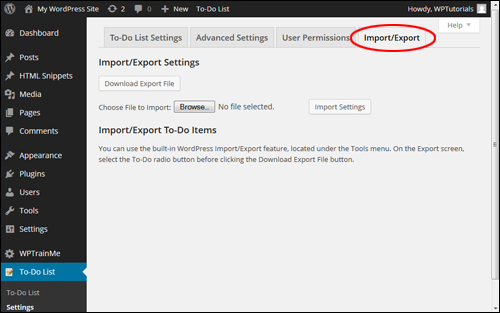
Exporting To-Do List Data
To export and download your list data settings click on the ‘Download Export File’ …
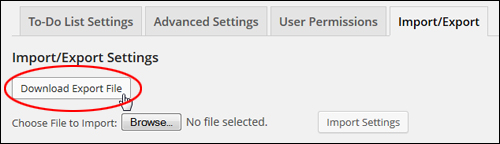
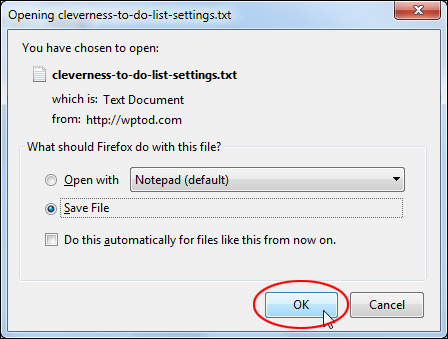
This opens up a new window allowing you to download and save the data as plain text to a storage device (e.g. your hard drive) …
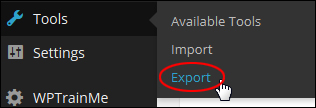
In addition to exporting data from the ‘Import/Export’ tab, you can also export data by going to your WordPress main menu and selecting Tools > Export …
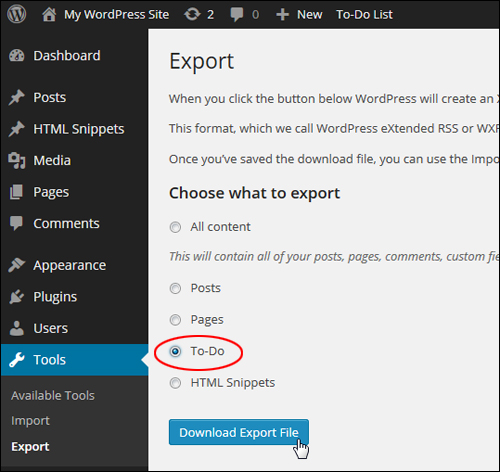
You can include to-do list data in a WordPress export file (in XML format), either by checking ‘All content’ (includes everything – pages, posts, etc…), or just select ‘To-Do’ from the ‘Choose what to export’ section and click on the ‘Download Export File’ button to save your file to an internal or external hard drive…
Importing To-Do List Data
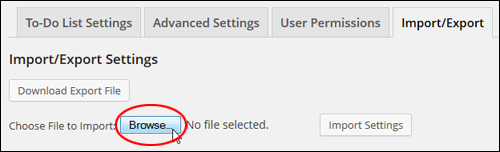
To import a previously saved to-do list data file, click on the ‘Browse’ button next to the ‘Choose File to Import’ field …
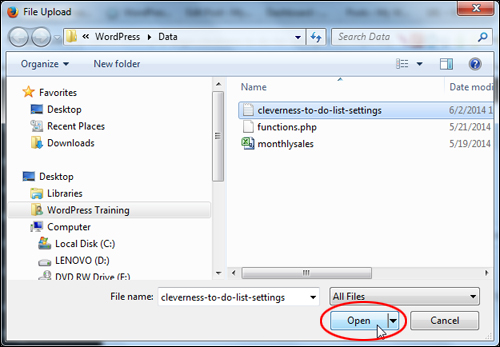
Select the previously saved to-do list data file and click ‘Open’ …
Once your data file has been uploaded in your settings area, click on the ‘Import Settings’ button …
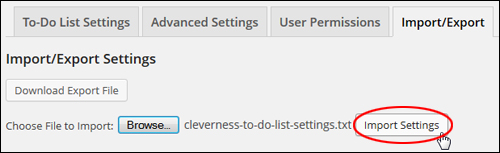
The data from the existing to-do file will be imported.
Now that you have configured all plugin settings, you are ready to start creating and editing your lists.
How To Use The Plugin
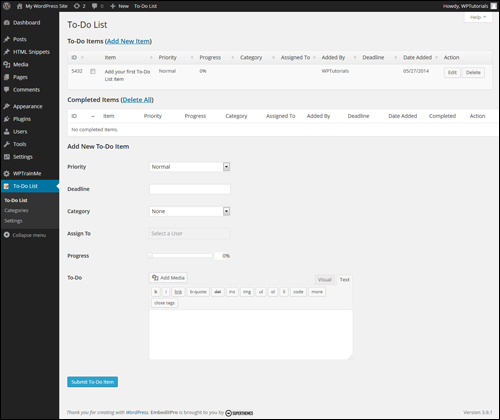
To create a new to do list, go to your WordPress dashboard menu and select To-Do List > To-Do List …
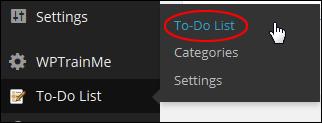
This brings you to the ‘To-Do List’ screen …
How To Add New To Do Items To Your List
There are a number of ways to add new to-do items.
For example, you can add new to-do items from your WP dashboard bar …

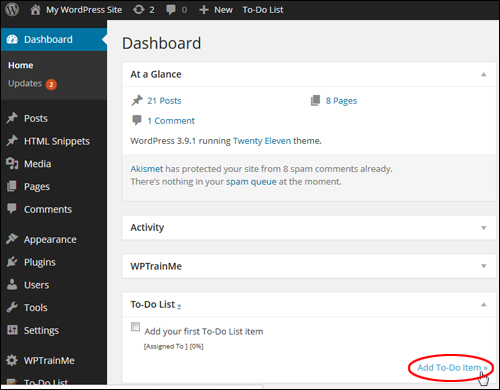
You can also add new to-do items in the Dashboard by clicking on the ‘Add To-Do item’ link …
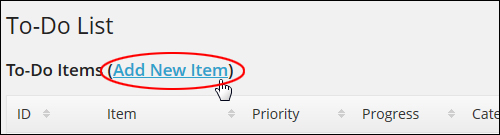
You can also click on the ‘Add New Item’ link in the ‘To-Do Items’ section (note: only use this option if your To Do list already contains many items, as the link will simply take you to the “Add New To-Do Item” section further down the screen) …
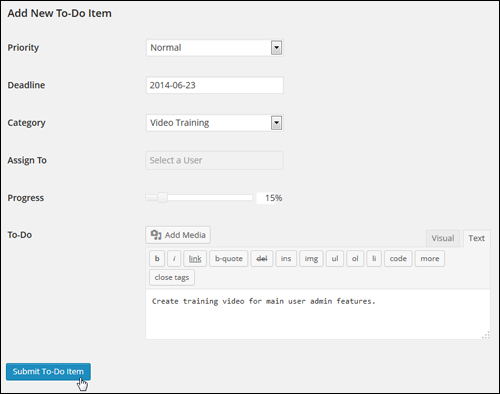
All the above methods will take you to the ‘Add New To-Do Item’ section.
Depending on how you have set up your plugin, you may or may not see certain options displayed when adding new items to your to-do list.
Set up the options you have enabled for your to-do items, add appropriate values and information into the relevant fields and click on the ‘Submit To-Do Item’ button to add the item to your list …
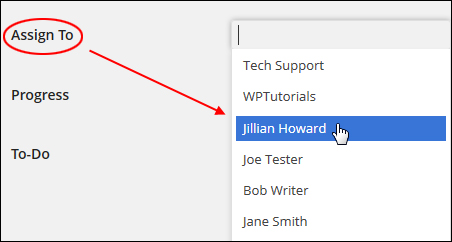
Note: If you are using a list type that allows you to assign responsibilities over items to specific users, select a user from the drop-down list and assign them the item …
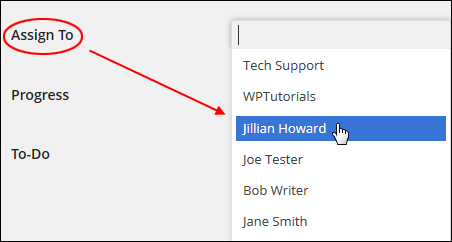
You can also make multiple users responsible for the same item (click on ‘x’ to delete users) …

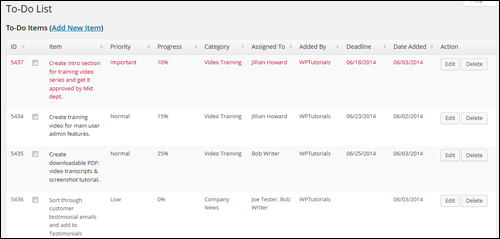
After After adding a new item, the item will display as an entry in the ‘To-Do List’ table …

Repeat the above process to keep adding items to your to-do list …
Edit And Delete Items From Your List
To edit or delete an item, click on the ‘Edit’ or ‘Delete’ buttons next to items under the ‘Action’ column …

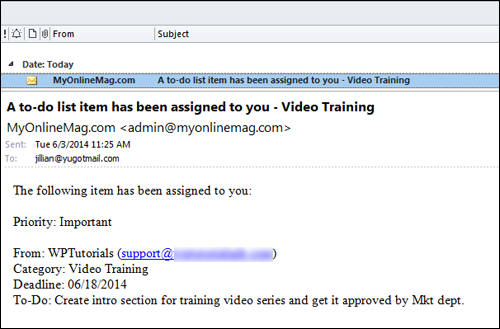
Depending on how you have configured the plugin (discussed earlier), users assigned to completing tasks may also receive an email notification in their inboxes …
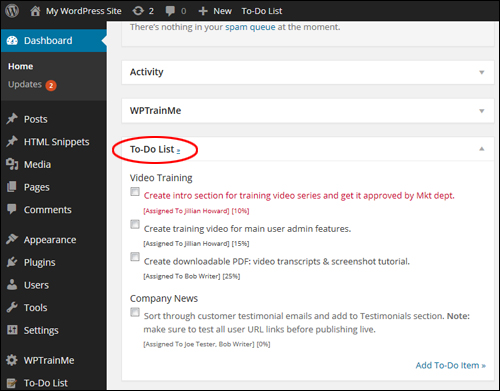
Once you have created your to-do list, users can view the list from their own dashboard …
When a user assigned with an item completes the task and ticks the item checkbox …
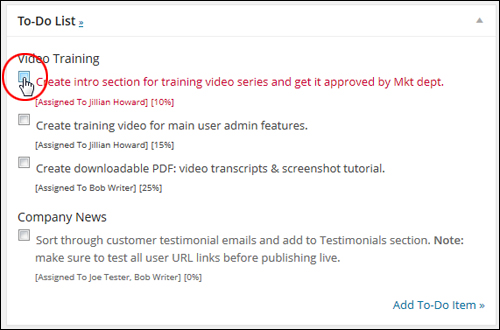
… the item disappears from the “To-Do” list …
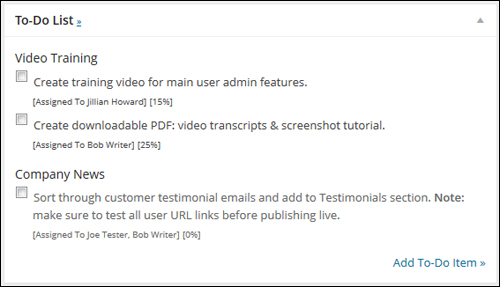
And appears in the ‘Completed Items’ section located in the ’To-Do List’ page …

Additional Information
The Cleverness plugin provides added functionality that lets you display a to-do list on your website using widgets, and add lists to any page or post using shortcodes.
Using The Cleverness Plugin Widget
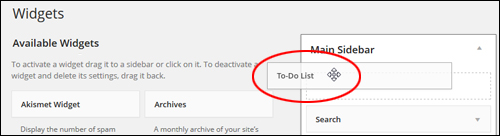
To add to-do lists to your site using widgets, go to the ‘Widgets’ page (Appearance > Widgets) and drag the ‘To-Do List’ widget to the location in your sidebar menu where you would like the to-do list to appear …
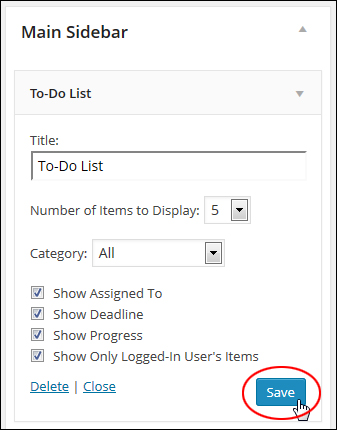
Configure the settings in the widget and click ’Save’ to update your settings …
The list will now display where you have placed the widget (i.e. the sidebar menu, footer, etc.)
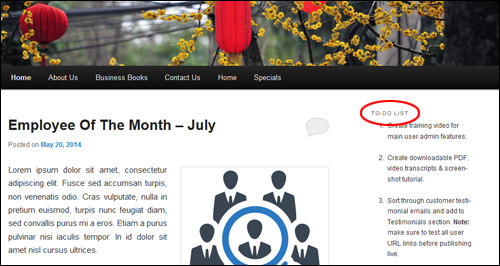
To learn more about using WordPress widgets, see the tutorial below:
Using Plugin Shortcodes
Cleverness To-Do List also lets you add lists and checklists on your site using short codes.
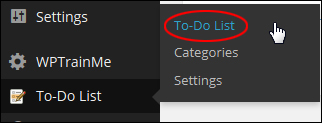
To access the plugin’s short code documentation, click on To-Do List > To-Do List from your dashboard menu …
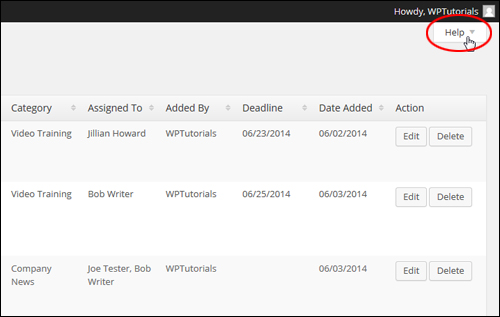
Click the ‘Help’ tab on the corner of your screen …
Click on the ‘Shortcodes’ tab to access the Shortcode Documentation screen …
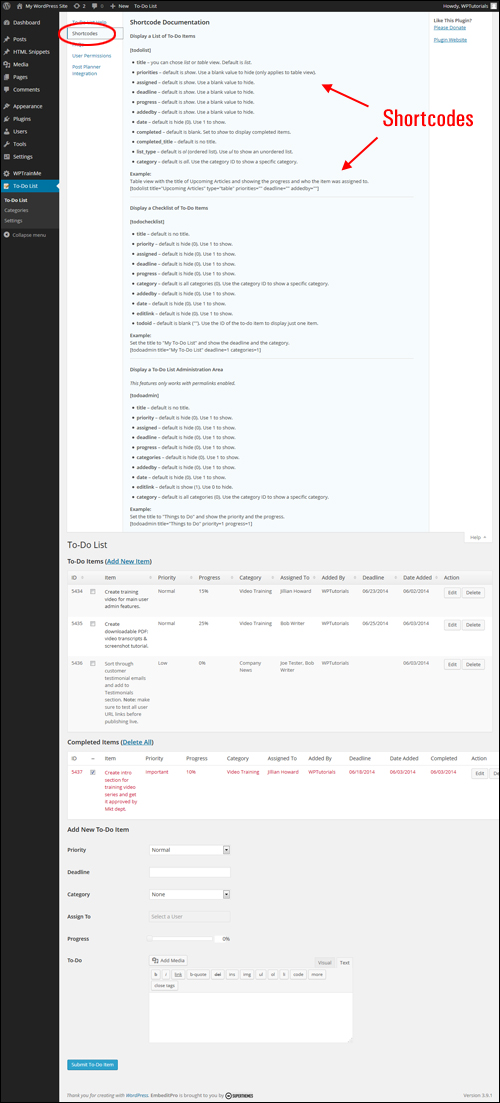
This section explains different ways to configure and use shortcodes for displaying lists on your pages and posts.
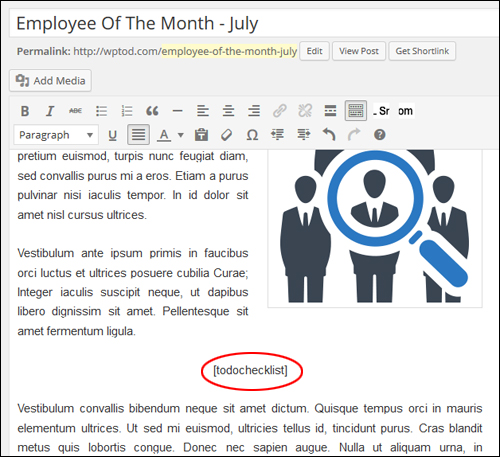
Once you know what information you want to display on your site, create or edit a new or existing post or page and either type or paste the short code inside the content area …
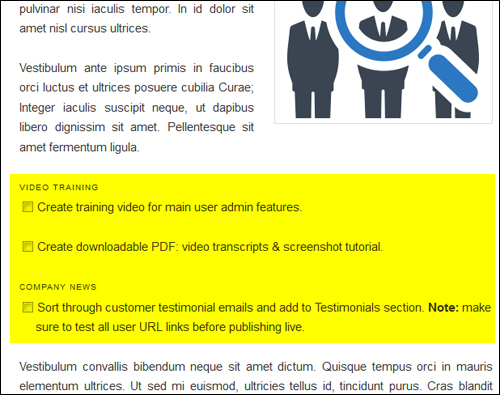
Publish your page or post and you should see the list displayed exactly where you entered the short code …
To download this plugin, visit the plugin website:
Congratulations! Now you can add a to-do list to your WordPress site.
***
"I was absolutely amazed at the scope and breadth of these tutorials! The most in-depth training I have ever received on any subject!" - Myke O'Neill, DailyGreenPost.com
***