 Consumer buying habits show that people will buy from people they already know, like and trust.
If you are searching for quicker, simpler and cost-effective ideas to sell more products online and get people to stay longer on your site, then one of the things you can do, is make it easier for visitors to get to know your business better.
Adding a directory of employees to your site can help increase your online credibility and get more prospects buying from you.
In this tutorial, we explain how to create and add an easy-to-update simple faculty members directory to your web site using free plugins.
Tutorial: How To Add A Staff List Directory
In this tutorial, we will install, activate and configure a WordPress plugin called Simple Staff List.
Simple Staff List WordPress Plugin

(Simple Staff List)
Simple Staff List lets you staff members.
The first step is to install and activate the plugin.
Log into your WP administration and from the admin menu section, choose Plugins > Add New …
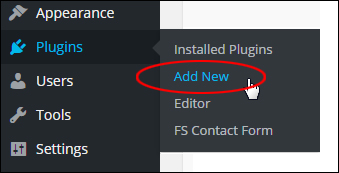
(WordPress Plugins Menu – Add New)
In the Plugins area, search for “simple staff plugin”. This brings up the Simple Staff Plugin in your search results area.
Click on the Install Now button …
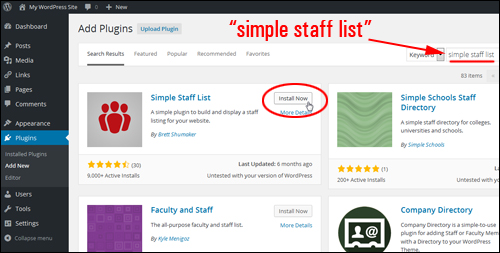
(Plugins – plugin search results)
Click on Activate Plugin …
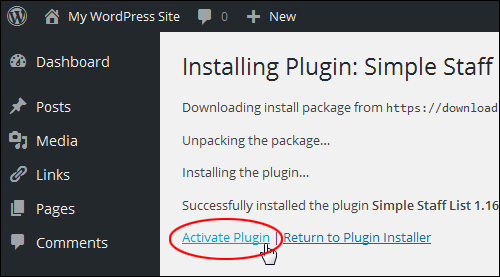
(Activate plugin)
After installing and activating your plugin, a new entry will have been added to your main WP menu bar called Staff Members …
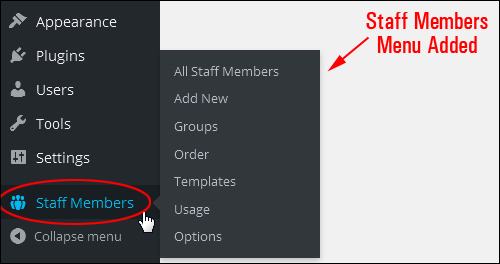
(Staff Members menu)
Here is where you will manage and configure all of the options and settings for your plugin are configured and managed from the Staff Members menu.
Plugin Configuration
Depending on how many people are in your business and how you want to structure your staff directory, you can begin to add new employee entries at this at this stage, or create several groups (i.e. categories) to place your individualstaff into.
Staff Members – Groups
To configure your groups go to your WordPress dashboard menu and select Staff Members > Groups …
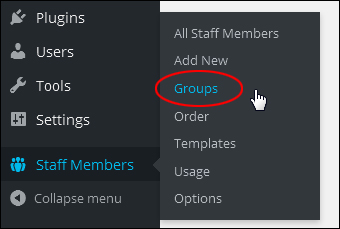
(Staff Members – Groups)
The Groups settings screen …
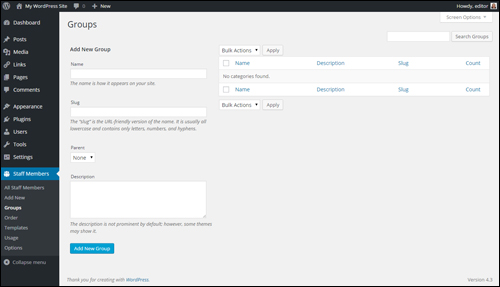
(Groups screen)

Note: Adding directory groups works just like WordPress categories …
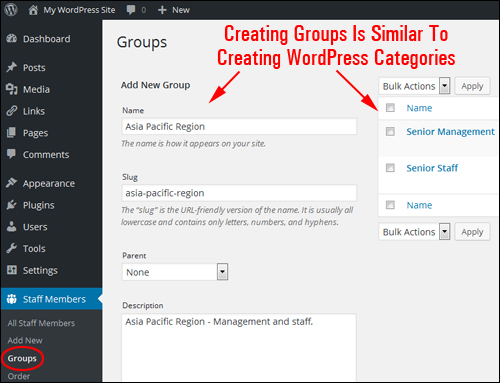
(Groups work just like WordPress categories)
Add new groups by typing in the following information:
- Group Name – Enter your category name here
- Slug – Enter the URL-friendly version of your group. Note: make sure that all letters are in lower case and use hyphens instead of spaces.
- Parent – Use this section to set up nested groups
- Description – Enter your group description
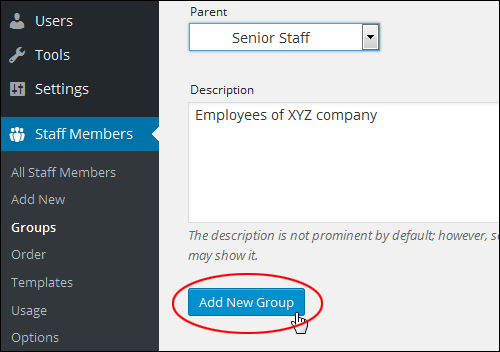
- Click Add New Group when done to create the new directory category …
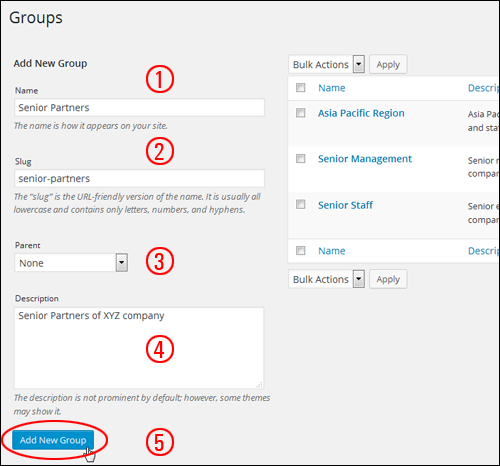
(Groups section)
If you manage a larger organization, having the ability to create groups can be very useful. For example, you can create a group for partners, project teams, departments, etc.
Create as many categories and nested categories as you need by adding new Groups and then using the Parent drop-down menu to organize these into a hierarchical structure …
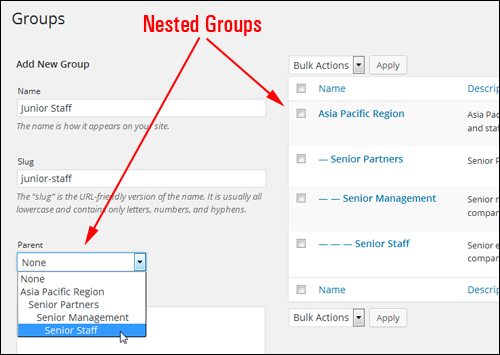
(Nested groups)
Remember to click the Add New Group button after entering new items …
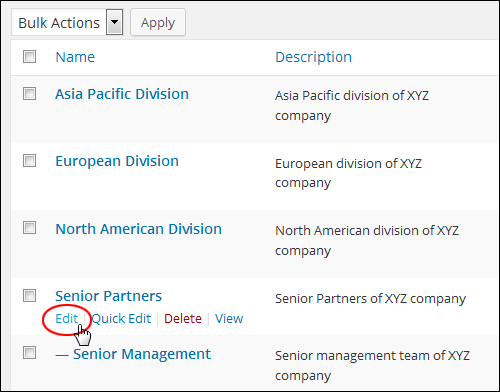
To change Groups for a particular item, hover over a category title and select the Edit link …
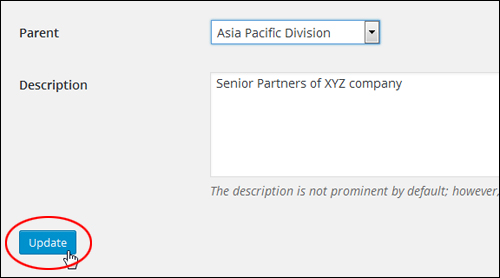
The item’s details open in the Edit Group screen. Select a new category from the Parent drop-down menu …
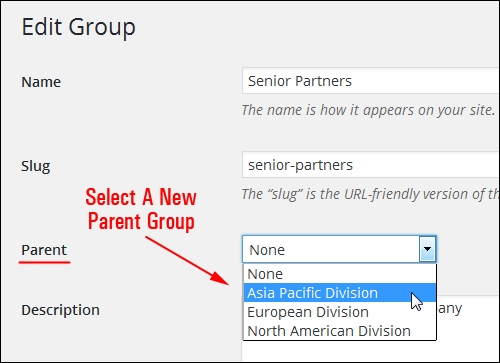
(Edit Group settings)
Click the Update button to save your changes …
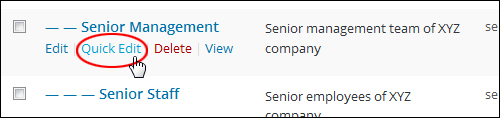
To change your Group name or slug, hover over the group name and select Quick Edit …
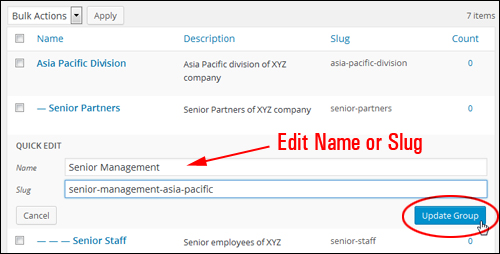
Click the Update Group button when done to save your changes …
Add as many categories as you need to until you have created your directory structure …
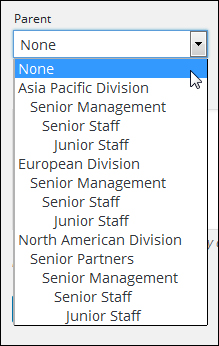
Add as many nested categories as you like …
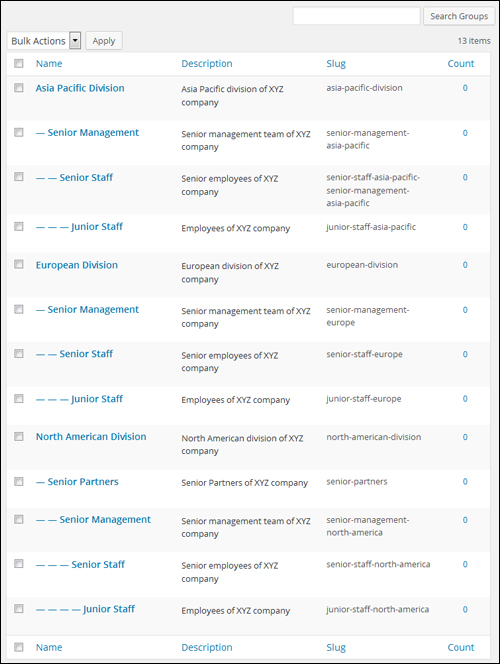
(Nested categories)
Once you are done setting up your directory structure, you can start to add names to your directory.
Staff Members – Add New
In your WP admin menu, select Staff Members > Add New …
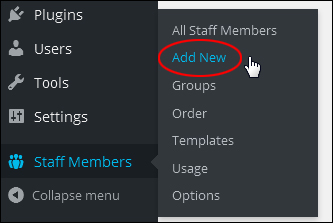
(Staff Members Menu – Add New)
The Add New Staff Member settings screen …
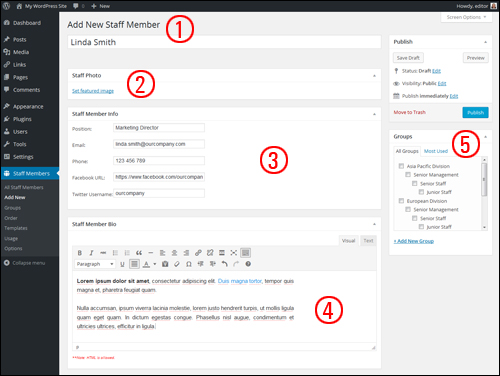
(Add New Staff Member settings area)
This section provides an easy-to-use interface for adding your staff member profile and includes the following fields:
Name Section (1)
- Name: Your staff member’s name
- Slug: You can change the slug for your staff member if you want (this section appears after your first save).
Staff Photo Section (2)
- Photo: Upload a photo in this section
Staff Member Info Section (3)
- Position: Type the person’s role
- Email: Add the person’s email here
- Phone Number: Type in your employee’s phone number
- Facebook URL: Type your company’s Facebook URL (note: use the full URL, e.g. http://www.facebook.com/username)
- Twitter URL: Type your employee’s Twitter username here (note: only enter the username, not the full twitter URL)
Staff Member Bio Section (4)
- Staff Member Bio: Type a profile description for your staff member here. This uses the WordPress Text Editor, so you can use HTML into this section.
Groups Section (5)
- Groups: You can assign an employee or team member to a specific group (see the previous section to learn how to set up groups).
If you click on the Screen Options tab at the top of your screen …
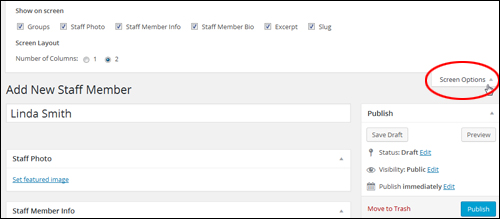
(Screen options)
You will see options to enable additional page settings …
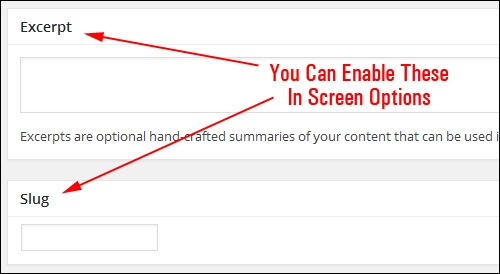
(Enable additional fields in screen options)
Now that you know what each section does, enter each of your staff member’s details …
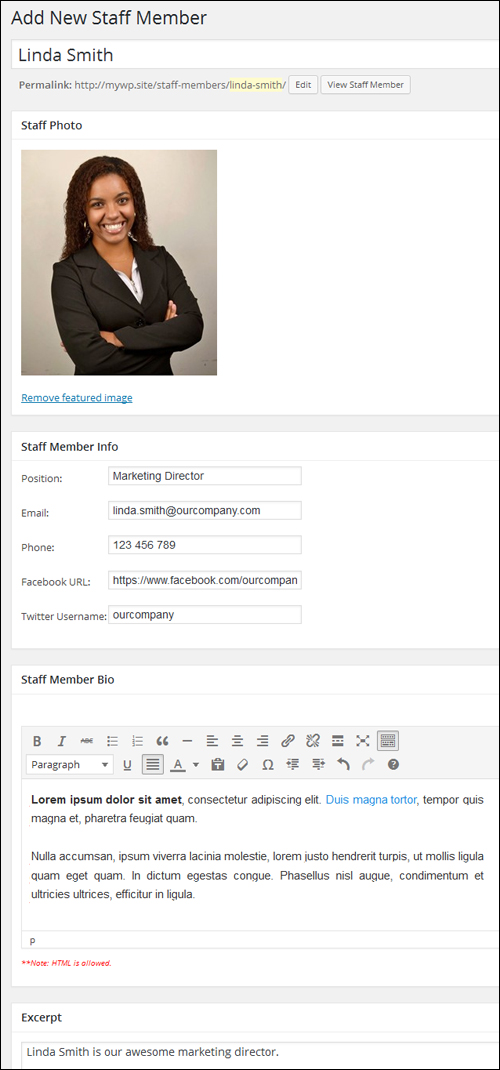
(Add Staff Member fields)
Once you are done entering details, assign the new entry to a directory group in the Groups box located in the sidebar …
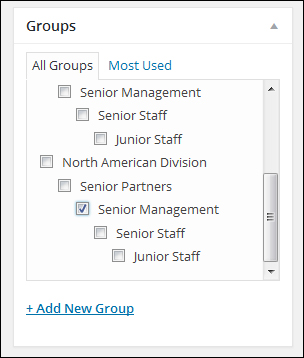
(Groups box)
Note: If you did not set up groups before starting to add new staff members, you can create a group now by selecting Groups > + Add New Group …
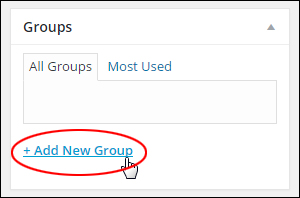
(Groups - + Add New Group)
A field will display allowing you to create a new group name, with a dropdown menu that lets you assign your new entry to a parent group. Type in the name of your new group and click on Add New Group …
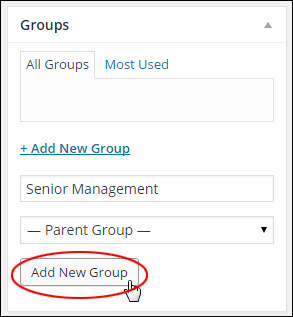
Your new group will be added. Make sure that the checkbox is ticked …
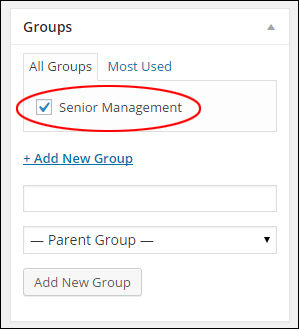
(New group added)

Note: Groups cannot be edited when a staff member’s details are being added or modified. To edit a group item, go to the Groups section of the plugin’s settings (see “Groups” section of the tutorial above for details).
***
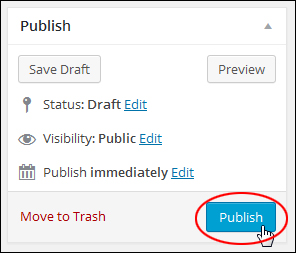
After typing in the person’s details, click the Publish button to add them to the directory …
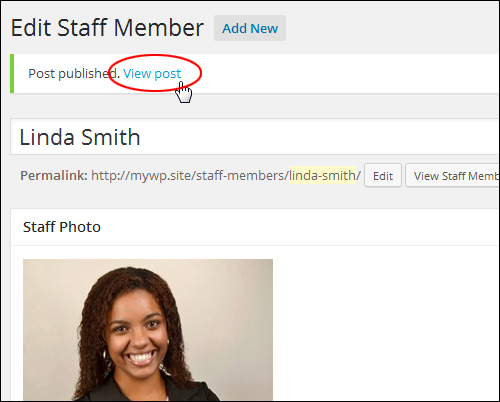
Click View Post …
To update the person’s profile, click on the Edit Staff Member link in your WP admin toolbar …
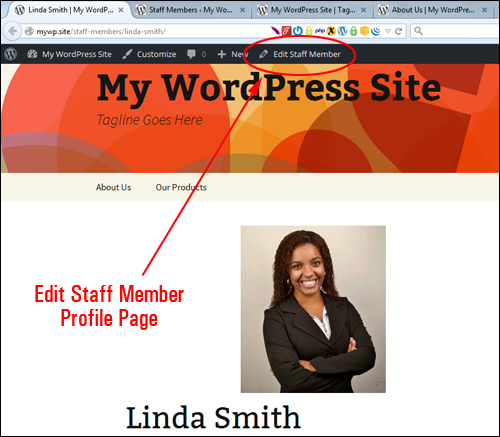
(Edit Staff Member link – admin toolbar)
We have created a detailed tutorial about using the admin toolbar here:
Note: If you see an error like the one shown below, check that you have set up your site permalinks correctly …
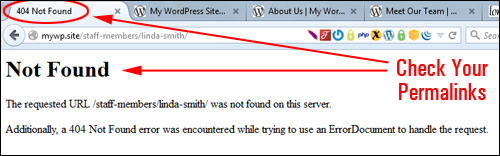
(Page error? Check your permalinks)
For a detailed step-by-step tutorial about setting up permalinks in WordPress, go here:
Keep adding new details to your employee or faculty directory as shown above until done.
Staff Members – All Staff Members
Once you have finished entering staff details into your directory, you can view and edit details by clicking Staff Members > All Staff Members on the WordPress admin menu …
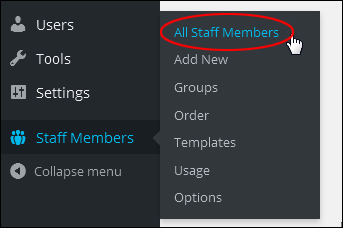
(Staff Members Menu – All Staff Members)
This brings up a table listing all your directory entries and all details you have added for each entry …
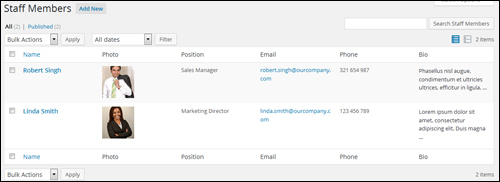
(Staff Members details list)
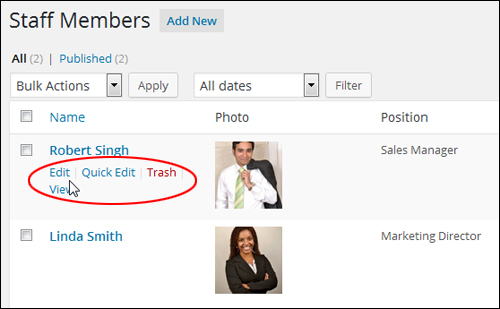
If you need to make changes to an individual’s entry, hover your mouse over their listing, and a menu will appear.
Click on Edit if you want to edit the item’s Staff Bio, or Quick Edit to edit details such as their name, slug, group, and publish status. You can also delete a member from the staff directory by clicking on the Trash link, or view the entry on your site by selecting View …
(Edit Staff Members profile details)
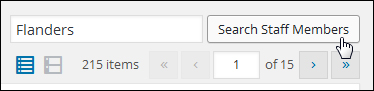
If you have many names to add, your table can grow quite large.
You can use the Search Staff Members search feature to find listing items if necessary …
(Search members)
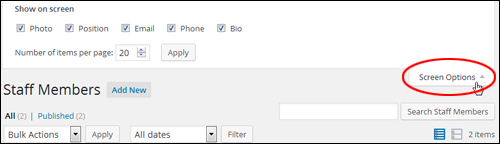
You can specify which fields to display in this section. To hide or hide fields on your screen, click the Screen Options tab at the top of your page …
(Screen Options)
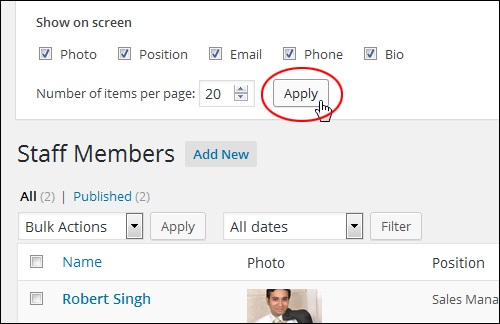
Placing a tick in the item’s check box displays the field and unchecking a box hides the field. You can also select how many staff members are shown per page. Click the Apply button when finished to update your settings …
Staff Members – Order
The Simple Staff List plugin also features a drag-and-drop interface that lets you specify the order that entries display on your directory page.
Choose Staff Members > Order on your WordPress admin menu …
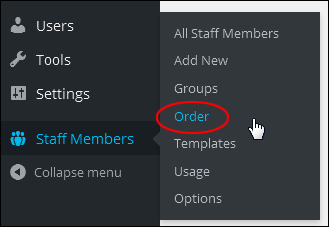
(Staff Members Menu – Order)
To rearrange the order of your listings, click and drag the item to the desired location …
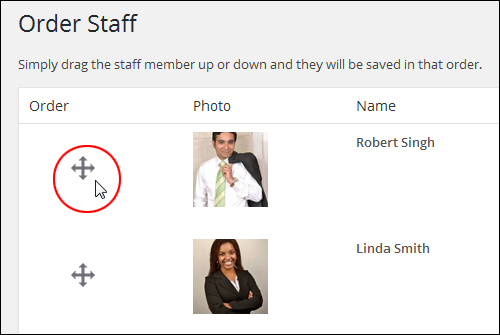
(Rearrange listings using drag and drop)
Your directory will be automatically rearranged …
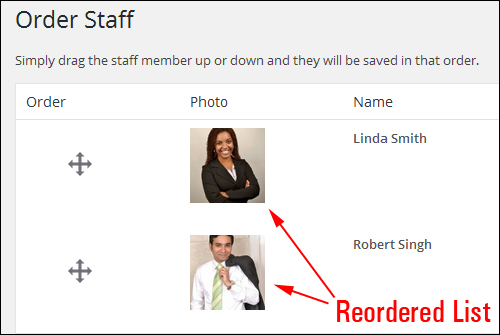
(Reordered listings)
Once you are done adding employees’ details to the directory, the next step is to add your directory to your site visitors.
Staff Members – Order
Simple Staff List also features a drag-and-drop interface allowing you to arrange the order that your employees display on your directory page.
Choose Staff Members > Order in the main admin menu …
(Staff Members Menu – Order)
To rearrange the order of your entries, click and drag the entry to its new location …
(Rearrange listings using drag and drop)
Your directory will be automatically rearranged …
(Reordered list entries)
After adding your employees’ details to the directory, the next step is to display your directory on your site.
Simple Staff List – Additional Notes
The Simple Staff List plugin lets you edit the style and layout of your employee directory entries using template tags and CSS (Cascading Style Sheets).
Templates Menu
To customize the layout and style of your directory, select Staff Members > Templates from the menu …
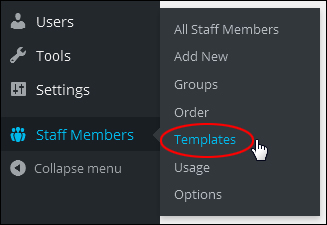
(Staff Members Menu – Templates)
This opens the Templates screen …
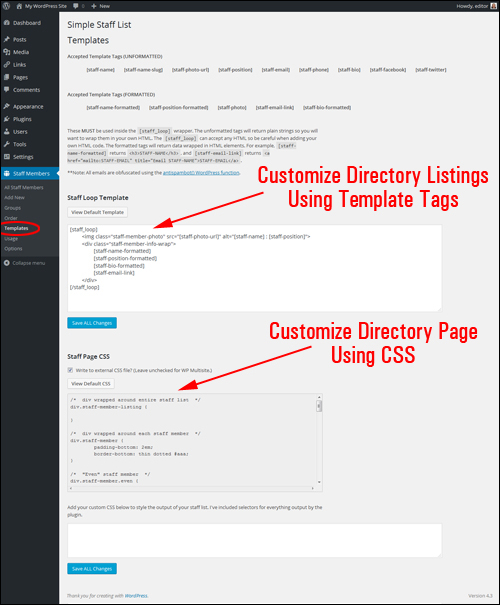
(Customize your directory template)
To customize your directory listings, reorganize any of the allowed template tags inside the [staff_loop] [/staff_loop] code.
For example, below is the Default Staff Loop Template …
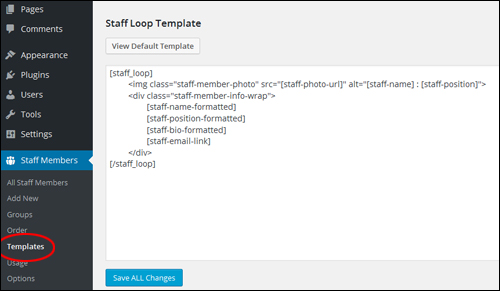
(Default Template)
The above code displays the listing shown below …
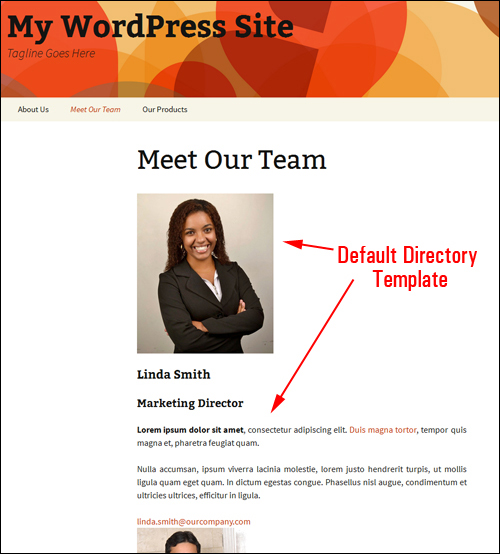
(Default Template Listing)
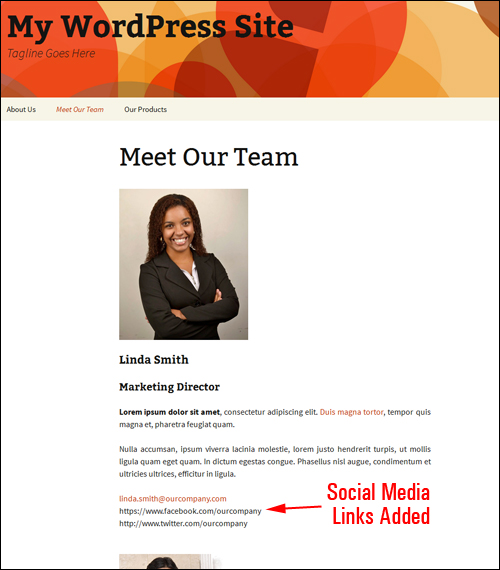
Notice that there are no Facebook or Twitter addresses showing in the above listing. To make these fields show in your directory, you will need to include the [staff-facebook] and [staff-twitter] template tags, as shown in the screenshot below …
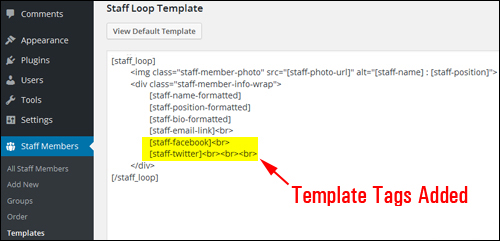
(Template tags can be added to Staff Loop Template)
Your employee entries will now display with Facebook and Twitter addresses as shown in the example below …
(Directory with social media links)

Note: If you want to customize your directory listings but don’t want to mess around with template tags or are not sure what to do, please contact us for help.
Usage Menu
In addition to allowing you to customize your directory templates, the Simple Staff List plugin lets you display your listings differently using modified shortcodes.
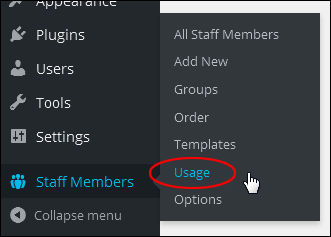
In your menu, click on Staff Members >Usage …
(Staff Members Menu – Usage)
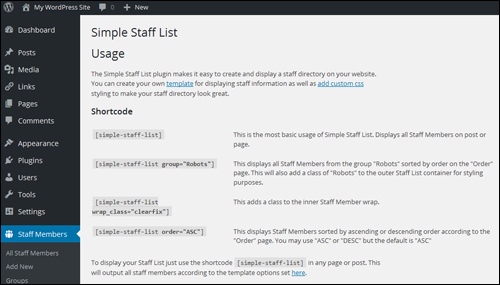
This brings up the Usage page …
(Simple Staff List shortcodes)
This screen provides a list of all the shortcode variations that you can use with the Simple Staff List plugin.
For example, a useful shortcode variation you can decide to use to display a list of persons belonging only to a specific group is the shortcode [simple-staff-list group=”group name”], (e.g.:[simple-staff-list group=”senior staff”])
You can also make your listings display in ascending or descending order by adding the shortcode [simple-staff-list order=”ASC”] (ascending).
Options Menu
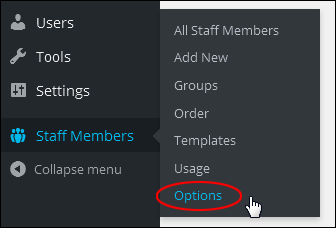
In your menu, select Staff Members >Options …
(Staff Members – Options)
This brings up the Options screen …
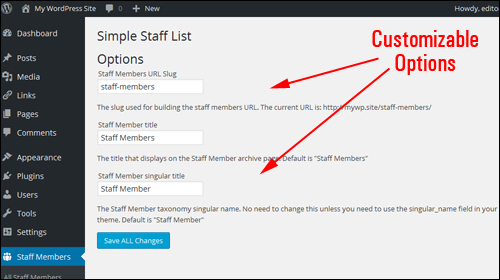
(Simple Staff List – Options settings screen)
Here you can modify labels like Staff Members URL Slug and Staff Member titles
Finally, you can also export your staff members details from the Tools > Export menu …
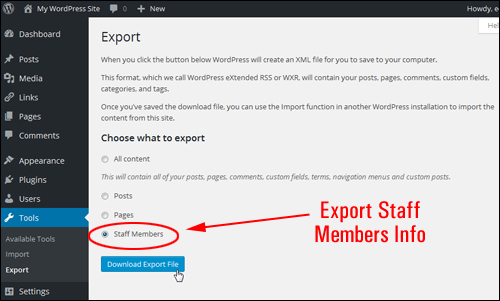
(Export Staff Members plugin information)
If you need plugin support, visit the plugin plugin website.
Other WordPress Plugins For Creating Staff Directories
Simple Staff List isn’t the only plugin you can use to build a listing of your employees in WordPress. Here are a few other plugins you can check out:
Modern Team Staff Directory
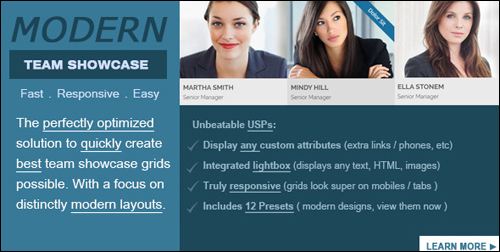
(Modern Team Staff Directory)
The Modern Team Staff Directory plugin helps you collect your team information and showcase it anywhere on your site in beautiful grids, columns and tables. This premium plugin features over a dozen presets and provides editors that make it easy to edit and update your directory.
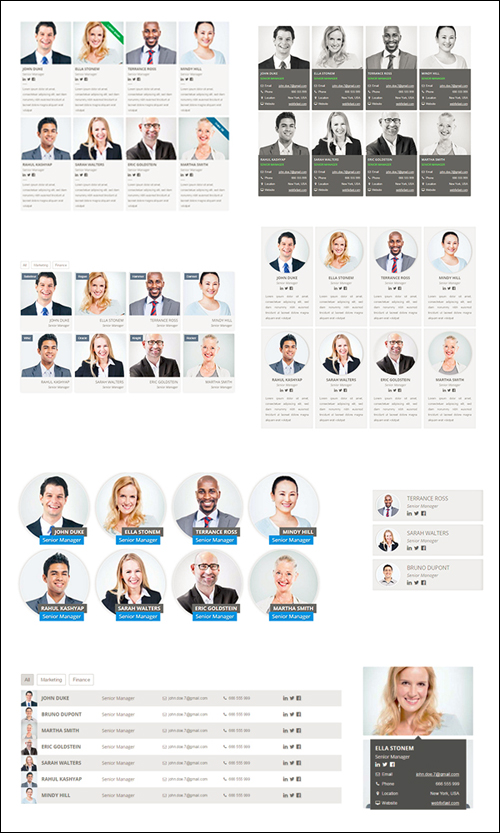
(Modern Team Staff Directory – Responsive Templates)
For more details, visit the plugin site here:
Staff Directory

(Staff Directory)
With Staff Directory, you can easily create a directory of team/staff/faculty members. The plugin supports staff categories and can be used for churches, teams, etc.
This plugin also lets you set up custom fields …
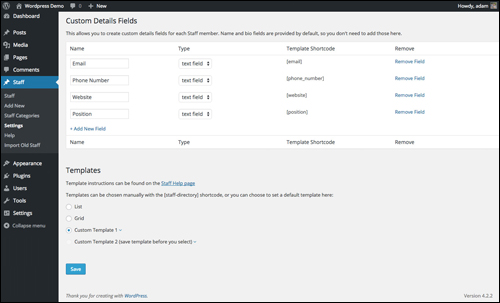
(Custom Details Fields. Screenshot source: Staff Directory plugin website)
For more details go here:
Faculty And Staff Directory
(Faculty And Staff Directory – Plugin For WordPress)
Faculty And Staff Directory provides a simple and flexible faculty and staff directory for a small college, school or university.
The plugin also includes a widget that allows you to feature profiles in a widget area.
Learn more about the plugin here:
Company Directory

(Company Directory – WordPress Staff Directory Plugin)
With the Company Directory plugin, you can easily add your employees to your website. Different layouts are included, including list and single views, as well as fields like title, email, phone, image and member bio, allowing you to present your company and capabilities.
Visitors will be able to click through from your list, grid, and table views to read more about each employee in a customizable single view …
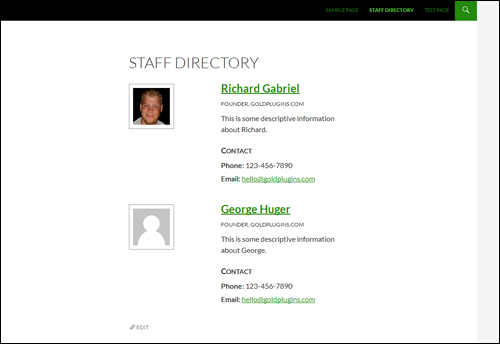
(Display your staff and faculty in an easy to view format. Screenshot source: plugin website)
This plugin also uses simple shortcodes.
Go here to learn more:
Employee Spotlight

(Employee Spotlight)
Employee Spotlight displays employees, partners or just an individual person in a four-column circle grid page. This page can be easily created with a setup assistant upon plugin activation.
With Employee Spotlight, you also get two sidebar widgets which display featured and recent employees, and two responsive views which adjust to the screen in the viewer’s device.
Detailed information about each staff member can be displayed in their own page, as well as in summary …
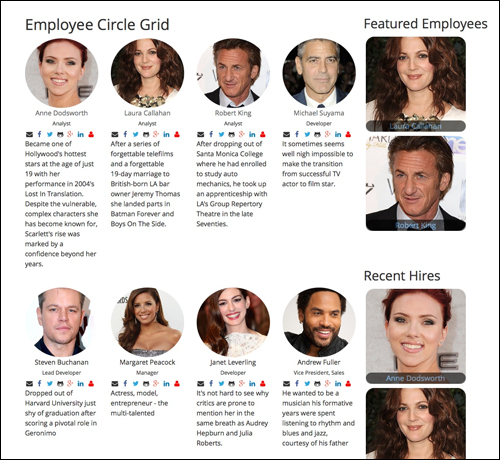
(Responsive layout with employee circle grid. Screenshot source: Employee Spotlight plugin website)
Learn more here:
Staffer
(Staffer)
This plugin uses custom post types for staff/employee management and supports the display of staff members via a shortcode, allowing you to easily create and manage an employee directory on your website …
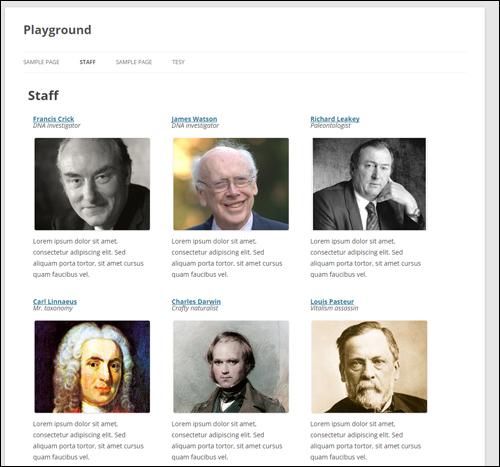
(Staffer archive page. Screenshot source: plugin website)
Staffer works immediately with many popular WordPress themes, and also allows for custom template use and custom content wrappers.
For more details, visit the plugin site here:
If the above plugins aren’t what you’re looking for, search the WordPress plugin directory or go online and search for:
- Add Staff Directory To WordPress
- WordPress Staff List
- Staff Directory WordPress Plugin
- Staff Plugin WordPress
- etc.
Hopefully, now you know how to easily add an easy-to-maintain simple employee directory to your WordPress site using a free WP plugin.

Images of models used in this tutorial to display sample staff members were sourced under creative commons license from pixabay.com
***
"These tutorials have so much information and are easy to understand. If you use WordPress or plan to in the future these will help you with everything you need to know." - Valisa (Mesa, Arizona)