 The development of content publishing systems like WordPress has effectively improved web design and web development for web users.
This is a great thing for business owners planning to run a web presence that is relatively simple, easy and inexpensive to manage.
Prior to blogging and the development of user-friendly content management systems, if you wanted a site, you had to wait until both the website development and web design processes were fully completed. This could mean weeks, sometimes even months of waiting for the work to be done!
The introduction of WordPress themes changed all this. In this post, you will learn what WordPress themes are, how they save your business money on website design costs, and how WP themes make it easy to customize your WordPress site.
Web Design Evolution
More businesses are benefiting from a revolutionary change in website design that has been going for a number of years now. If you are a small business owner, you will want to know more about this, because it can save your business thousands of dollars on web development or website design costs.
Very briefly, this is what happened before applications like WordPress were introduced:
The first step would be to meet with a web development company or website designer for a brief. Next, the “web design” had to be decided upon. This required spending time with someone with website design skills discussing things of the website such as the layout, colours, formats, page elements, content, etc.
Every page of your web site then had to be hand-coded with all the design elements and scripts coded into your page content. All pages were then assembled together into a web site using hyperlinks and navigation menus and uploaded to your server, together with every other file needed to make your website work – script libraries, graphic images, media elements, etc.
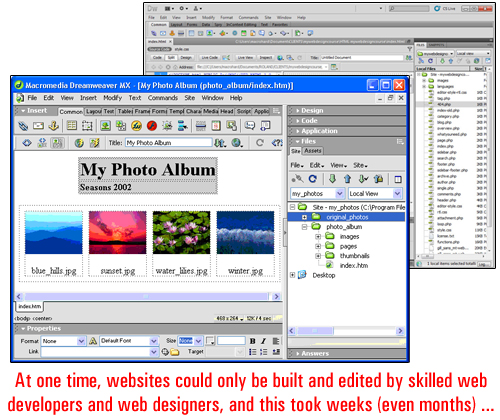
(image source:adobe.com)
Only after everything passed testing and functioned the way it was intended to (and looking how a client had wanted it to look), was the web site deemed to be finished and ready for delivery.
The next phase in the evolution of web design was the introduction of “website templating elements”. Website templates allow the ”look and feel” of the web site to be created separately from content on the page. The introduction of templates helped speed up the website development process and resulted in lowered production costs. This also allowed web development firms to expand their services to include businesses with less money to spend …
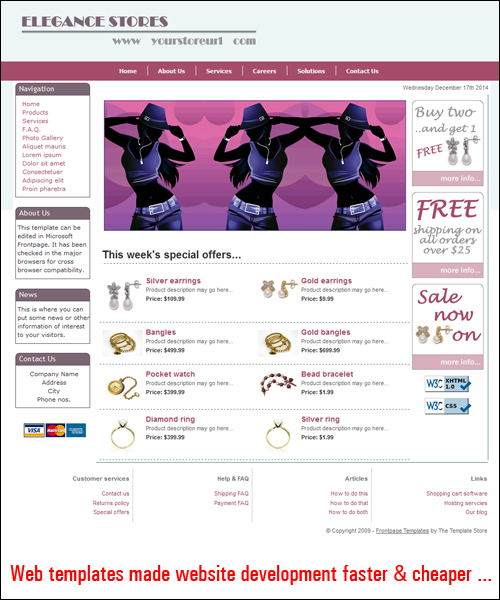
(image source: www.dreamweaver-templates.org)
As more small businesses started adopting “template-based” web design services, web templates started being developed to offer clients with different customization features and options, like color palettes, the ability to specify different menu styles or layouts, and so on.
As websites and web editing tools developed, web templates also began to transform into website template ”systems”, allowing users to customize their website’s visual components.
And then, a “blogging” tool called WordPress was developed and helped to start a new digital publishing revolution …
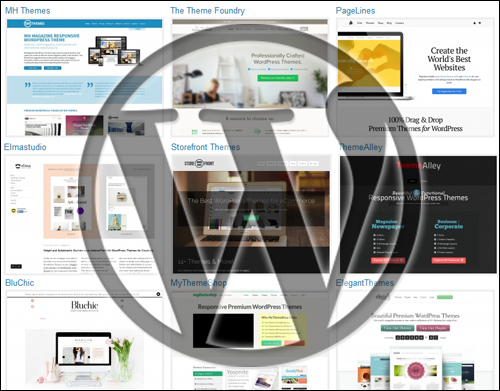
(WordPress – A Content Publishing Revolution)
To learn more about content management systems and the benefits of the WordPress CMS, see the tutorial below:
The WordPress Theme
A WordPress theme pushes the concept of a website template system further.
The WordPress theme system controls all of the design aspects of a web site. It lets you add a “skin” over your site similarly to what a template system does but also provides you with more control over the management and ability to customize template features.
As the official WordPress site described it …
A WordPress Theme is a collection of files that work together to produce a graphical interface with an underlying unifying design for a weblog. These files are called template files. A Theme modifies the way the site is displayed, without modifying the underlying software. Themes may include customized template files, image files (*.jpg, *.gif), style sheets (*.css), custom Pages, as well as any necessary code files (*.php).
(source: WordPress.org)
As the above states, one of the unique and revolutionary features of the WP theme is that how your site looks to visitors on the outside in no way affects the management of your content.
Basically, what this means is that a WP theme lets you change the design of your site as much and as often as you want without affecting your website’s content and all the functionality you’ve built into it. For example, if you have set up your site for e-commerce, replacing the theme won’t affect the content or the functionality of the website. All e-commerce features, site and plugin settings and product information will remain unaffected, but your site will look completely different.
This is huge! Why?
Because with WordPress, you no longer have to spend weeks or months waiting for your site to be completed. You can get your website built quickly and start with any theme you like, and then completely modify the look, feel and design of your site in seconds, whenever you decide … and as often as you like!
Even better, you can easily replace any theme on your site without requiring any web coding skills. Just pick a theme you want, install it on your website and activate it. WordPress lets you change your web design and modify elements like headers, page layout, styling options and more in a few seconds …
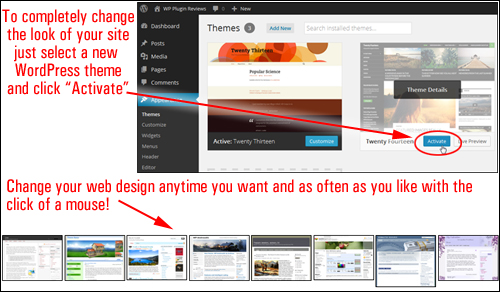
Because WordPress is made available as open source software, website designers all around the world can design themes specifically for the WordPress platform using the WP templating system.
This means that thousands of great WP themes can be downloaded by WP users. Themes are usually distributed freely under the terms of the GNU General Public License, or sold as Premium (i.e. paid) themes.
The WordPress development team maintains a FREE directory of WP themes which allows WordPress users to access thousands of excellent web templates completely free of charge …
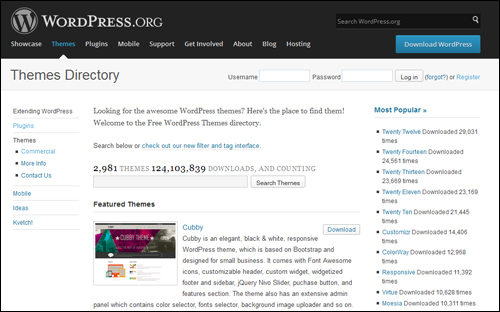
(WordPress.org – WP Themes Directory)
As the popularity of WordPress increases, more designers are now focused on developing themes for a wider audience of web users.
WP themes vary from minimal-looking, to designs that are visually impressive and would easily cost many hundreds of dollars to commission. Surprisingly, themes can be purchased very cheaply, especially when you compare the price to what you would have had to pay if a web designer had to code it from scratch.
You can see several WP theme galleries containing many examples of great WP themes here:
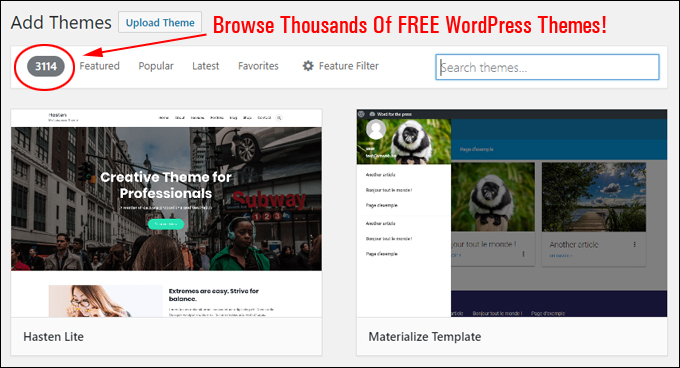
(Browse Thousands Of FREE WordPress Themes!)
WordPress Themes – Benefits
Here are just some of the benefits of choosing WordPress themes over choosing traditional web template design:
Be Up And Running In Minutes
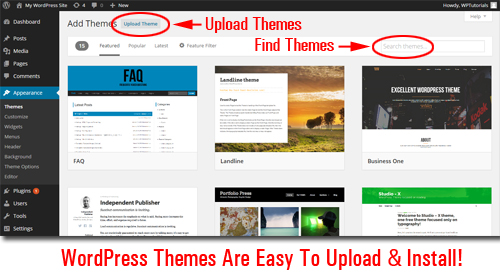
WordPress themes are quite easy to install on your site. Simply upload a zip folder containing the plugin files to your Plugin folder via your WordPress dashboard and activate. Even easier still, you can install any of the themes listed in the theme directory at WordPress.org) directly inside your WordPress admin’s “Theme” section.
Additionally,
- WordPress has a growing community of professional website developers and development companies who contribute thousands of fantastic WordPress Themes available to users. Many of these themes are completely free to use!
- Themes give sites a consistent “look and feel” across all of your blog’s elements, i.e. pages, headers, footers, layout, etc …
- A “theme” works independently of your web site’s content. This makes it possible to swap WordPress themes as often as you like without affecting your underlying content.
- Many WordPress themes provide additional built-in functionality and options that allow you to easily customize your site’s layout, style and design elements to create a unique look to suit your taste.
- Many WP themes are built using a framework that lets users upgrade the theme to newer theme versions without losing its unique customizations (e.g. CSS styles)
- WordPress lets you search, upload and install WordPress Themes automatically right inside your dashboard.
- Themes allow users to save hundreds, even thousands of dollars on website design costs. Free themes cost nothing and most “Premium”themes are normally quite affordable.
About Responsive WP Themes
Many theme developers are now creating themes that incorporate “responsive” web design.
A responsive theme allows websites to automatically readjust the web layout to display smoothly across different screen sizes and resolutions, as well as different platforms) …
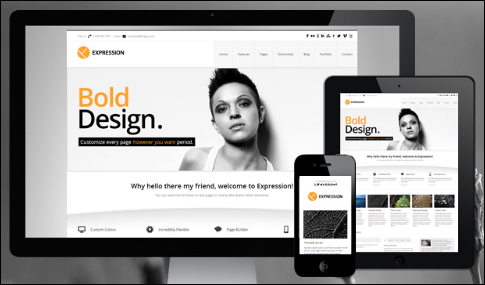
Responsive themes are also optimized for different platforms. Users can navigate, read and display your site on a range of devices without having to resize anything, or requiring website owners to have installed additional display elements.
Note: When purchasing WordPress themes, it’s a good idea to choose a responsive WordPress theme. Not only will a responsive theme ensure that your website works across all devices, but it also means that the theme is newer than non-responsive themes and therefore complies with the latest standards, practices and techniques of web design.
I hope that this post has provided you with a better understanding of WordPress themes, what WordPress themes are, how WordPress themes can help your business save money on web design costs, and how themes make customizing your web design easy.
In our next blog post in our article series for new WP users on basic WordPress features, we show you where to find the best themes for your website or blog.
***
"I love the way your email series "Infinite Web Content Creation Training Series" is documented and presented. It is very absorbing and captivating. The links and tutorials are interesting and educational. This has motivated me to rewrite my content following the concepts I am learning from the email series." - Mani Raju, www.fortuneinewaste.com
***