 Advanced website management systems like the WordPress Content Management System (CMS) have truly improved web design and web development for non-technical business users.
This greatly benefits entrepreneurial-minded people that want to own a web presence that they can manage by themselves.
Before “blogging” and the development of advanced content management systems, if you wanted to build a professional site built for your business, you typically would have to wait until both the web development and website design processes were fully completed. This could mean weeks, sometimes even months of waiting!
The introduction of WordPress themes have changed all this. In this post, we will explore what WP themes are, how themes save you and your business money on website development costs, and how WordPress themes make it easy to customize your WP site.
Revolutionary Web Design
Website owners are benefiting from a revolutionary change in web design that began shortly after websites were first introduced. If you are a business owner, you may want to learn about this, because it can save your business a lot of time and money on web development and website design costs.
Let’s briefly go over what happened before application like WordPress was developed:
The first step would be to meet with a web developer or designer for a brief. After this, the “web design” itself would be decided upon. This involved spending time and money with a professional web designer going over things of the web site such as the, colours, formats, page elements, content, etc.
Each page of your site then had to be individually created with all of your design elements and codes inserted into your content. The pages were then assembled together into a website using links and navigation menus and uploaded to your server, along with all other files needed to make your site work – script libraries, images, media elements, etc.
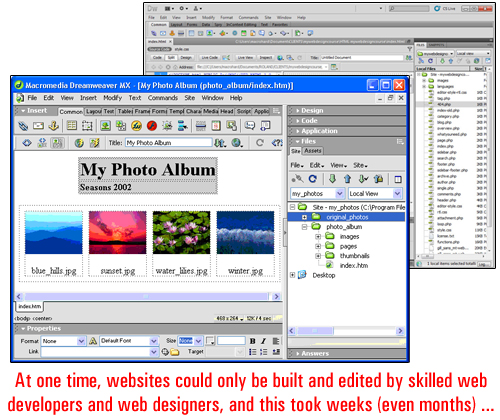
(image source:adobe.com)
Only after everything had been tested and was working how it should (and looking the way a client had wanted it to look), was the web site deemed to have been completed and ready for sign off.
The next phase in the evolution of web design was the introduction of “website templating elements”. Web site templates allow the ”look and feel” of the web site to be worked on separately from content on the page. Having ready-made templates helped to speed up the process of developing web sites and resulted in lowered production costs. This also allowed web site development firms to work with small business clients and clients with less money to spend …
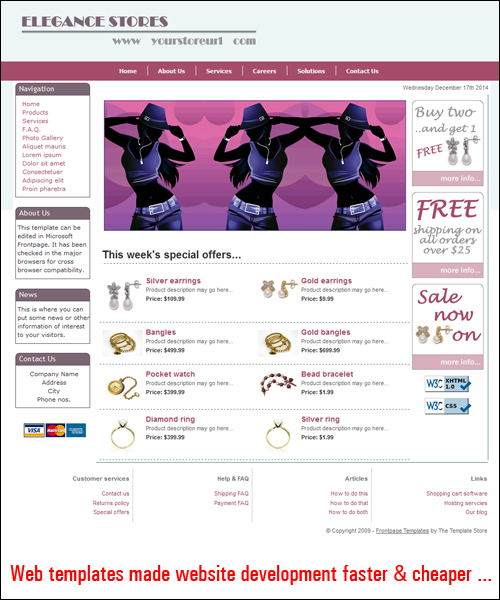
(image source: www.dreamweaver-templates.org)
As the number of web site development companies using “template-based” websites increased, web templates were introduced that could provide various custom features, like the option to switch colors, styles, layouts
As web sites and website editor tools developed, website templates also began transforming into web template ”systems”, which enabled website owners to manage their web site’s design elements.
Then, a “blogging” software called WordPress came along and helped to start a new digital publishing revolution …
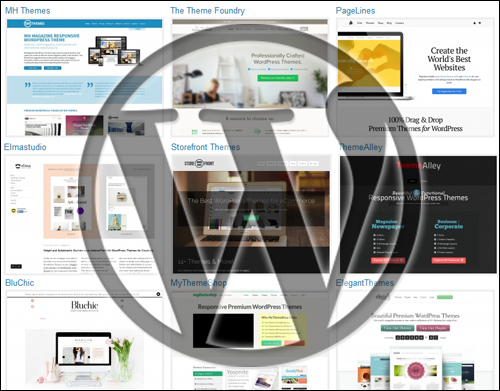
(WordPress – A Content Publishing Revolution)
To learn more about content management systems and the benefits of the WordPress CMS, see the tutorial below:
About WordPress Themes
WordPress themes push website templating systems further.
A WordPress theme controls and unifies every aspect of your website design. It lets you add a “skin” to your site much like a website template system does but it also also provides users with more control over the management, presentation and customization of template options.
According to the official WordPress site …
A WordPress Theme is a collection of files that work together to produce a graphical interface with an underlying unifying design for a weblog. These files are called template files. A Theme modifies the way the site is displayed, without modifying the underlying software. Themes may include customized template files, image files (*.jpg, *.gif), style sheets (*.css), custom Pages, as well as any necessary code files (*.php).
(source: WordPress.org)
As the above states, one of the unique features of WordPress is that the way your website displays to visitors on the outside is managed separately from how your website is configured in the backend to handle areas like content management and functionality.
Basically, what this means is that a WP theme lets you modify the design of your website as often as you want without affecting your website’s content and all the work you’ve put into it. For example, if you have configured your website for e-commerce, replacing the theme won’t affect the content or the functionality of your website. All e-commerce features, plugin settings and product information will remain intact, but the site will look completely different.
This is huge! Why?
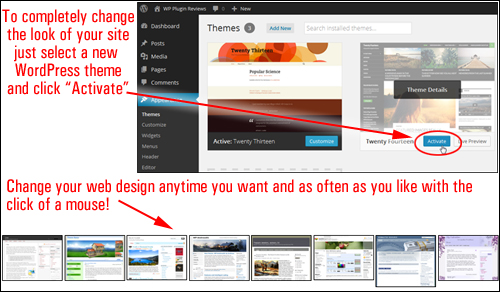
Because when you use WordPress, you no longer need to wait until your site’s web design is completed. You can get your business website built quickly and get started with any theme you like, and change the entire look, feel and design of your website in a few seconds, whenever you choose … and as many times as you like!
Even better, you can easily replace any theme on your site without requiring web design skills. Simply choose a WordPress theme you like, install it on your website and activate it. WordPress lets you change your website design and customize elements like headers, page layout, typography and more in a few seconds …
As WordPress is distributed as open source software, hundreds of web designers can design themes specifically for the WordPress platform using the WordPress templating system.
This means that loads of great WP themes are made available to WordPress users. Themes are normally distributed for Free under the terms of the GNU License Definition, or sold as Premium (paid) WP themes.
The WordPress team keeps a FREE theme directory which gives WordPress users access thousands of great website templates for free …
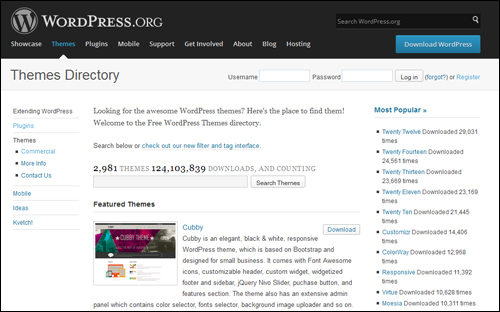
(WordPress.org – WordPress Theme Directory)
As WordPress becomes more popular, more designers are now focusing on developing themes for a wider range of applications.
Themes vary from professional-looking, to jaw-dropping designs that are quite impressive and would easily cost many hundreds of dollars to design. Surprisingly, themes are quite inexpensive.
You can view several WP theme galleries that include stunning examples of great themes here:
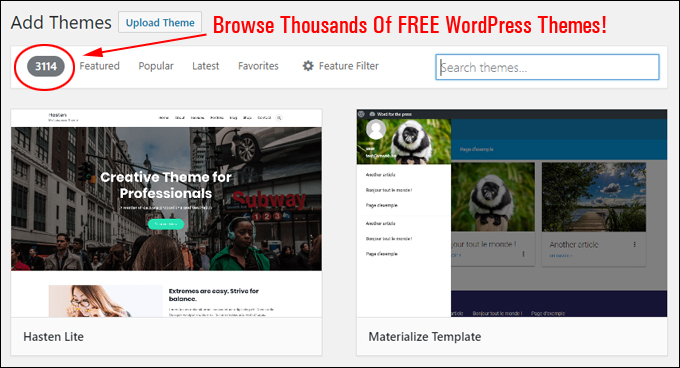
(Browse Thousands Of FREE WordPress Themes!)
Benefits And Advantages Of Using WordPress Themes
Here are just a few of the benefits and advantages of choosing WordPress themes over using website development tools that require traditional web template design:
Ready To Start Using In No Time
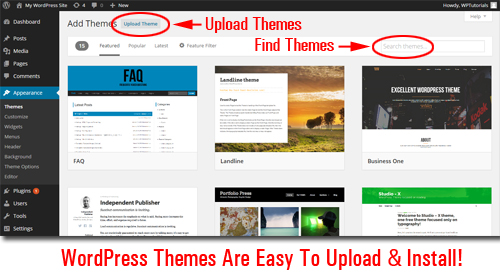
WP themes are very easy to install on your site. Simply upload it to your Plugin folder via your WP admin user area and activate. Even easier still, you can install any of the themes listed in the themes repository at WordPress.org) directly from within your WP site’s admin area.
Additionally,
- WordPress has a thriving community of professional web developers and development companies who, collectively, make thousands of great WP Themes available to WordPress users. Thousands of these themes are completely free to use!
- Themes give sites a unified and consistent “look and feel” across all your site’s elements, i.e. pages, headers, footers, layouts, etc …
- A “theme” works independently of your blog’s content. This allows you change the “look and feel” of your web site as often as you need without deleting the underlying content of your web site.
- Many themes come with built-in functionality and options that let you easily customize the site’s layout and design elements and create a unique look to suit your taste.
- Many themes are built using a framework that lets you update themes to newer theme versions without losing any unique customizations (e.g. styles)
- WordPress allows you to search, upload and install WordPress Themes automatically from the admin panel.
- Themes lets you save hundreds of dollars on website design costs. Free themes cost nothing and most “Premium”WordPress themes are typically quite affordable.
About Responsive WordPress Theme Design
Many WP theme designers are now developing “responsive” themes for WordPress.
A responsive theme enables websites to automatically reconfigure the layout to display smoothly over different monitor sizes and screen resolutions, as well as different platforms) …
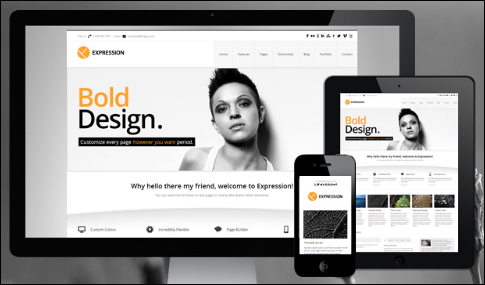
Responsive themes are also optimized for each device type. Users can scroll, read and load a site on most devices without having to resize anything, or requiring the website owner to have installed additional browser elements.
Note: When downloading WordPress themes, we strongly recommend choosing a responsive WordPress theme. Not only will the theme ensure that your website works across your visitors’ devices, it also means that the theme is newer than most non-responsive themes and therefore probably complies with the latest standards and practices of website design.
We hope this post has helped you gain a clearer understanding of themes, what WP themes are, how they can help you save money, and how WP themes make customizing websites easy.
To learn where to search for the best WordPress themes for your website, see this page: Finding Great Free And Paid Responsive WordPress Templates Online.
***
"Wow! I never knew there's so much to learn about WordPress! I bought one of the WordPress for Dummies three years ago, such authors need to be on this course!" - Rich Law, Create A Blog Now
***