 Are you missing out on customers because of a poorly-built website? Regardless of how good your products are, a poorly-constructed website could cost you valuable business.
In a world where beautiful design sells, how your web site looks can affect the success of your business. Your website is probably the first thing that a web visitor sees and this can affect their purchasing decision.
We do things online. Even if it’s just preliminary research, we will instinctively turn on our smart phone and go visit someone’s website first before purchasing products in-store or online.
Now, try to see things from your customer’s point of view. How does your web site appear to others? Does your site invite them to enter and explore things further, or does it make people confused and unsure about what to do next?
What your customers see “above the fold” (i.e. what you first see on your screen) is just the tip of the iceberg. There is so much more than can affect your visitors’ perceptions and their purchasing decisions.
Can WordPress Fix Your Poorly-Designed Website?
Let’s take a look at some of the more important design issues that can affect your website’s results and performance:
Site Design Issues
Common web design issues that can impact a prospect’s perception about your website include the following:
- Color – Poor color schemes can affect your site’s results. This also applies to the use of text and background color. There are ways to specify web colors correctly and even safe web color palettes to ensure that the color schemes you choose will display predictably across various mediums. If in doubt, consult a professional web designer.
- Design Elements – Web pages that contain aesthetically unappealing, outdated and just plain ugly graphics can easily turn prospective clients off your website. Visitors can also be affected by subtle inconsistencies in the design elements and excessive use of design elements.
- Layout – How your pages are structured can have a significant impact on how visitors interact with your site. Layout considerations also include how your navigational items, links, and other objects.
- Responsiveness – As websites are now viewed using various devices with different-sized screens and browsers, it’s important that your website’s design be responsive. If your web pages do not resize automatically to work across all devices, browsers, and platforms, you could experience potential business losses.
Functionality Problems
Some common functionality issues include:
- Too many errors – A huge turn-off for visitors is arriving on a page where hyperlinks don’t work, videos don’t play and images aren’t showing. Subpar functionality is not acceptable for any website, especially if you are trying to come across as a professional. Your website is a reflection of your company. It’s vitally important therefore, to make sure that all your links, videos, and graphics are running smoothly at all times. Sometimes, problems may be related to external things like your hosting, or they may even be unbeknownst to you, but it’s important to ensure that you’re consistently proactive and that you attend to all problems immediately.
- Feature limitations – If your business provides users certain features or functionalities, then make sure that these are not limited. For example, if you intend to sell products online, make sure that you provide customers with full e-commerce features that allow them to select and add products to a cart, use discount codes, purchase with a credit card or PayPal, receive purchase notifications, invoices, and confirmations, etc.
Poor Web User Experience
Invariably, where your business suffers most noticeably because of a poorly-built website is in the realm of the “user experience”.
An unsatisfactory user experience can leave a bad taste in people’s mouths and lead to venting their frustrations across social networks, forums, review sites, comments, etc ….
Common issues that can lead to a bad user experience include:
- Ease Of Use – Your website should be easy to use and effortless to navigate around in. Information about your products and services should be easy to locate. Your site visitors want user-friendly features and they want to find what they are looking for as quickly and as effortlessly as possible. Make your content searchable and if you plan to add downloadable information to your site (e.g. forms and documents), make sure that users are given instructions on how to download and access your files.
- Organization – If your web site isn’t well organized and user-friendly, you run the risk of losing not only prospective customers but also current clients. Features such as descriptive links, product and service categories and sections where your content is grouped or linked together can provide users with an enjoyable user experience.
- Stimulating Website – Users want sites that are user friendly, easy to navigate, and that provide them with stimulating options. This means striking a balance between attractive, modern web design and compelling website copy that engages your website users. For example, draw attention to links pointing to product pages with beautiful graphics next to well-crafted product descriptions. This is effective and will help you improve not just the user experience on your website, but can also lead to more sales and conversions.
- User Interactivity – Another aspect that helps users decide to stick around on your site is providing interactive features that engage customers, like allowing them to leave comments, share, like, download and recommend your content, interact with your staff via a responsive helpdesk, support forum, live chat, schedule appointments, make reservations, etc … You also want users to navigate quickly within your site and access your data without waiting around for content to load, so site loading optimization is important.
- Compliance – One of the most important and often most neglected aspects of creating a great user experience is to ensure that users feel comfortable doing business with you online. To reassure your visitors that your business is credible, trustworthy, secure and professional to deal with, make sure to add legal pages like a contact page, privacy statement, terms of use, security information, earnings disclaimers, etc.
(Web design problems)
As you can see, there are many areas that can lead to a poor user experience and negatively impact your business results online. If your website is poorly constructed, you run the serious risk of not only losing potential clients but also existing clients too.
Now … what if you have arrived here because you have an existing website with design problems that you feel are affecting your business?
First, understand that getting a website overhaul can take some time and can end up being somewhat costly depending on the problem and what kind of site you own, especially if it requires a lot of web code editing.
If you are currently considering having a new website developed or upgrading an existing site, then we suggest that you consider using WordPress.
(WordPress can improve your website results!)
We currently provide more posts about the benefits and advantages of the WordPress CMS platform on this site, but here are just some things to keep in mind about why you should seriously consider using WordPress:
Themes – Inexpensive Web Design
WordPress themes are unique website design templates that let you quickly modify the look of your website in minutes.
There are thousands of professional looking themes available that can be easily downloaded. Many of these are either free, or they are relatively cheap, saving you hundreds of dollars on the cost of web design.
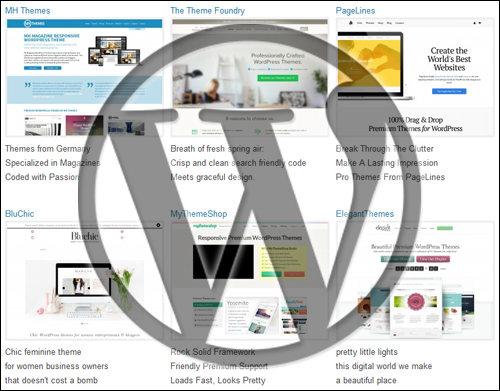
(WordPress Themes)
Most themes nowadays are responsive and provide users with customizable options for changing the design of your website such as color, template elements like menus, headers, footers and typography, layouts and more. Themes are just one of the many things that make WordPress such a powerful tool for helping you create a design for your website that ultimately helps to improve your business.
Learn about themes here:
WordPress – Powerful Functionality
Another great reason to choose WordPress is that WordPress provides site owners with scalable features through add-on applications called “plugins.”
WordPress plugins, like WordPress themes, integrate easily with your site to provide you with virtually unlimited extra functionality.
Earlier we talked about issues like subpar functionality and feature limitations as part of the reason why a poorly constructed web site could cost you money.
WordPress plugins can help you overcome these issues and limitations quite inexpensively. If there is a functionality that you would like integrated into your site, just install a plugin that will do what you need to get things done.
Need a plugin that will notify you immediately about any problems with your site like hyperlinks not working, videos not streaming, pictures that aren’t showing or even alert you if your whole web site has gone down? No problems … there are WordPress plugins that can help you fix that, or notify you about problems so you can correct these immediately!
Want a plugin that will let you turn your website into an online store or provide you with a complete e-commerce system? Again, no problem! There are several inexpensive plugins that will help you sell goods or services online and provide your visitors with full e-commerce features that allow them to choose and add items to a cart, apply discounts, pay using credit card or PayPal, receive notifications, receipts and confirmations, etc.
And just like WP themes, there are thousands of great plugins for WordPress users that can be easily downloaded and are freely available, or you can buy for a relatively reasonable cost, once again, saving you hundreds, even thousands of dollars on the cost of web development.
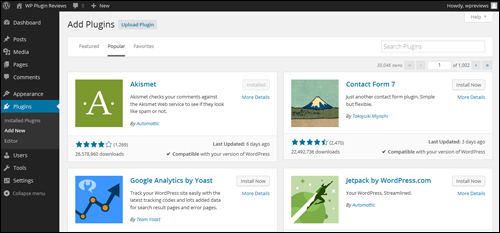
(WP Plugins)
You can learn more about WP plugins here:
WordPress – A Rich Website User Experience
In addition to being able to address problems caused by a poorly-built website, WordPress can also help you create a great user experience for your visitors.
WordPress provides beautiful and visually-exciting themes that cover all kinds of applications and plugins that allow customers to connect, engage and interact with you. With the right combination of a WordPress website, WordPress themes, plugins and great content, you can create a very rich user experience that will keep users coming back to your site.
As stated earlier, consumers will do extensive research online before they make a purchasing decision. If your website isn’t designed to provide your visitors with a rewarding user experience, these consumers will simply move on to another business that does offer them a better website or better user experience.
Hopefully, this article has given you a better understanding of problems that can affect your website and how WordPress can help you grow your business business online. To learn more about using WordPress for a business website please see other posts we have published on this site.
***
"I am beyond impressed with what you have put together. I can tell that you put a ton of hard work into building what you have. You have the absolute best content on WordPress I have ever seen!" - Robert T. Jillie
***