 Are you missing out on customers because of poor web design? A poorly-built web site can lose you valuable business.
In a world where aesthetic principles matter, the look of your web site can be important to the success of your business. Your website is probably the first thing that a web visitor sees and this could influence their purchasing decision.
Think about how most people research businesses nowadays. Even if it’s only just preliminary research, we will typically jump online and go visit a web site first before purchasing products in-store or online.
Now, put yourself in your prospect’s shoes. How does your digital presence appear to them? Does your site invite them to enter and explore things further, or does it make people hesitant and unsure about where to go next?
The way your site looks is just the tip of the iceberg. There are so many other things than can affect your web visitors’ thoughts and their purchasing decisions.
Can WordPress Fix Poor Web Design?
Here are just a few key design issues that can affect your website’s results:
Web Site Design Problems
Some of the most common design issues that can affect your prospect’s perception of your site include:
- Color – Bad color combinations can impact on your site’s results. This also applies to your choice of text and background color. There are methods that can help you specify web colors correctly and even safe web colors to make sure that the palettes you use will display predictably across various devices. If in doubt, seek the services of a web design professional.
- Design Elements – Web pages that contain unpleasant, outdated and just plain old ugly graphics can turn prospective clients away from your website. Visitors can also be affected by subtle inconsistencies in your design elements and overpowering use of design elements.
- Layout – The way your content is arranged can significantly impact how visitors interact with your site. Layout considerations also include how your navigational items, links, and other objects.
- Responsiveness – As websites are now accessed by various devices with different-sized browsers, it’s vitally important that your website’s design be fully responsive. If your web pages do not display well on all devices, browsers, and platforms, you may lose valuable opportunities.
Functionality Issues
Typical functionality problems can include some following:
- Subpar functionality – A huge turn-off for users is arriving on a site where some hyperlinks don’t work, videos don’t play and graphics are missing. Frequent site errors are no longer acceptable in a website, especially when you are trying to come across as a professional. Your digital presence is a reflection of your organization. It’s important to ensure that all your hyperlinks, videos, and graphics are working all the time. Sometimes, these problems are related to factors like your hosting, or they may even be unbeknownst to you, but it’s important to ensure that you’re consistently proactive and that you get problems addressed immediately.
- Feature limitations – If your site provides visitors specific functionalities, then make sure that these are not limited. For example, if you intend to sell products online, make sure that you provide visitors with full e-commerce functionality that allow them to easily choose and add items to a cart, use discount coupons, buy with a credit card or PayPal, receive purchase notifications, receipts, and confirmations, etc.
Poor Web User Experience
Invariably, where prospective clients suffer the most due to a poorly-constructed web site is the “user experience”.
An unsatisfactory user experience can leave a bad taste in users mouths and lead to venting their disappointment on social sites, forums, review sites, comments, etc., bringing you negative publicity.
Here are just some of the more common issues that can lead to a poor user experience:
- Ease Of Use – Your website needs to be user-friendly. Information about your products and services should not be kept in obscure places. Your web visitors want user-friendly features and they want to find what they are looking for quickly and without disappointment. Make your content searchable and if you plan to add downloadable files to your site (e.g. forms and documents), make sure that visitors are given instructions on how to download and access your information.
- Organized – If your site isn’t organized and user-friendly, you run the risk of losing not only prospective customers but existing clients as well. Providing features such as search engine-friendly URLs, product and service categories and clearly-defined areas where your content can be easily found will help provide users with an enjoyable experience.
- Eye-Catching Features – Visitors want websites that are user friendly, well organized, and that are stimulating. This means striving for a balance between attractive, modern web design and compelling website copy that engages your users. For example, draw attention to hyperlinks which lead to your product pages with professionally-taken photos or illustrations with well-crafted product descriptions. This is very effective and can help improve not just the user experience on your website, but also grow your sales and conversions.
- User Engagement Features – Another thing that helps visitors want to stick around on your site is providing interactive features that engage users, such as the ability to leave comments, share, like, download and recommend your content, interact with your support staff via a responsive help desk, support forum, live chat, schedule appointments, make reservations, etc … Additionally, you want visitors to browse quickly within your site and access your data without waiting around for pages to load, so site loading optimization is important.
- Compliance – One of the most important and often neglected aspects of creating a great user experience is to ensure that users feel comfortable doing business with you online. To reassure your web visitors that you are credible, trustworthy, secure and professional to deal with, make sure that your web site includes legal pages such as a contact page, privacy policy, terms of usage, security information, FTC disclaimers, etc.
(Web design problems)
As you can see, there are many areas that can contribute to a poor user experience and impact your business success online. If your website isn’t designed in a user-friendly way, you run the serious risk of not only losing prospective paying clients but also your current customers too.
Now … what if you have arrived on this website because you have an existing website with design problems that you feel may be affecting your business?
First, keep in mind that getting issues addressed on an existing website can take some time and can also end up being somewhat costly depending on the problem and what kind of website you operate, especially if it requires modifying web code extensively.
If you are in the process of having a new website built or upgrading an existing site, then we suggest that you seriously consider building or redesigning your website with WordPress.
(WordPress can help improve your website results!)
We currently provide more in-depth information about WordPress on this site, but here are just some key points to keep in mind about why you should seriously consider using WordPress:
WP Themes – Unique Website Design Features
WordPress themes are unique web site design templates that allow you to easily customize the look and feel of your entire website with the click of a mouse button.
There are literally thousands of professional themes available that can be easily downloaded. Many of these are either free, or are extremely affordable, saving you hundreds of dollars on the cost of web design.
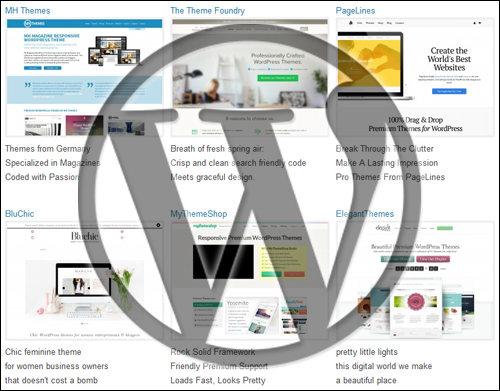
(WP Themes)
Most themes for WordPress are responsive and provide website owners with customizable features for changing the design of your site such as the color, template elements like menus and headers, layouts and more. Themes are just one of the many things that make WordPress an ideal tool for helping you achieve a design for your website that ultimately helps your business.
Learn about WP themes here:
Plugins – Modular Features
Another great reason to build your site using WordPress is that WordPress provides website owners with expandable features through add-on applications called “plugins.”
Plugins, like themes, integrate easily with your site to provide you with almost unlimited features.
Earlier in this article we discussed issues like subpar functionality and feature limitations as part of the reason why a poorly designed web site could end up losing you business.
WP plugins can help you overcome these issues and limitations quite easily and inexpensively. If there is a feature that needs to be added to your website, just install a WordPress plugin that gets things done.
Want a plugin that will let you know about any issues detected with your website such as hyperlinks not working, audios not playing, images that are missing or even tell you if your whole website is down? No problems … there are plugins that can help you fix that, or let you know about problems so you can correct these immediately!
Need a plugin that will let you turn your site into an online store or provide you with a complete e-commerce business solution? Again, no problem! There are several inexpensive WP plugins that will help you sell products on your site and provide your customers with full e-commerce functionality that allow them to easily select and add products to a cart, enter discount coupons, buy using credit card or PayPal, receive purchase notifications, receipts and confirmations, etc.
And just like WordPress themes, there are literally thousands of great WP plugins that can be easily downloaded and are freely available, or you can purchase relatively inexpensively, once again, saving you thousands of dollars on the cost of website development.
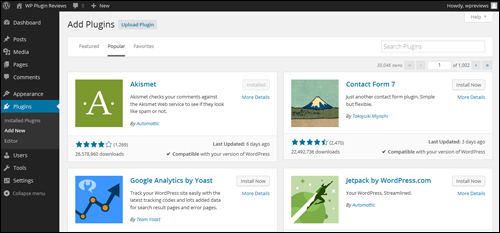
(WordPress Plugins)
You can learn more about plugins here:
WordPress – A Rich Web User Experience
In addition to being able to correct problems caused by a poorly-designed website, WordPress can also help you give customers a great user experience.
WordPress provides beautiful, professional and visually-exciting themes that cover all needs and applications and plugins that allow customers to connect, engage and interact with you. With the right combination of a WordPress site, WP themes, plugins and great content, you can create a a highly interactive and engaging user experience that will keep people coming back for more.
As stated earlier, consumers will do extensive research online before they make purchasing decisions. If your website isn’t designed with a focus on the customer, these consumers will simply move on to another business that does provide them with a better website or better website experience.
Hopefully, this post has given you a better understanding of issues that can affect your website and how WordPress can help you build a better online. To learn more about using the WP platform please click on links to visit our related posts section.
***
"I have used the tutorials to teach all of my clients and it has probably never been so easy for everyone to learn WordPress ... Now I don't need to buy all these very expensive video courses that often don't deliver what they promise." - Stefan Wendt, Internet Marketing Success Group
***