 There are many benefits to choosing the WordPress CMS platform for building and growing your business online. One of these is that WordPress makes it very easy to add content, expand your site’s functionality and reconfigure your site’s layout with no code editing skills or knowledge required.
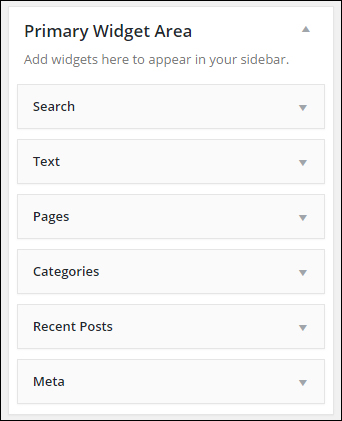
WordPress gives you the ability to quickly and easily insert, remove, and manage various blocks of content on your site’s sidebar menu (or header and footer sections too, depending on what theme you have installed) using widgets.
(Widgets)
In this blog post you will learn how WP widgets work, what makes them so useful and how widgets can add new functionality to your web site.
What Are WordPress Widgets? A Basic Guide To WordPress Widgets For Business Website Owners
(WordPress widgets help make managing and using WordPress easy!)
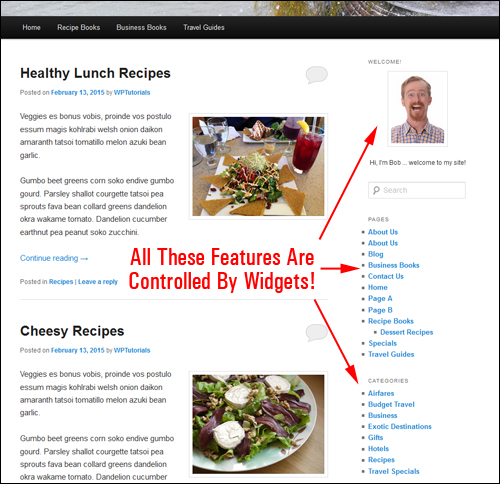
Widgets are small modules of code that perform a specific function, such as adding a functionality, or a script or menu item to your website.
WordPress is written using a scripting language called PHP (Hypertext Preprocessor). Normally, in order to add features and functions that will enhance the functionality of a website, you need to learn how to script code.
Now … don’t worry if the above sounds too geeky. As you are about to see, WP widgets are made for non-technical users.
Widgets help you manage specific features and functions on your site without requiring knowledge of coding.
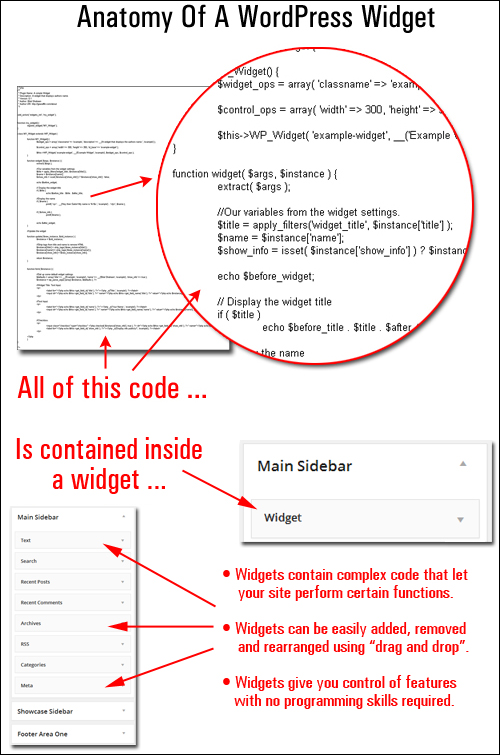
(WordPress widgets help you manage technical features and functions on your website without requiring knowledge of coding)
Widgets were originally developed to provide a simple way to allow WordPress users to manage aspects of their WordPress theme’s layout and functionality.
Simply put, a widget lets you do things like:
- Easily insert, edit and remove features to areas of your website without having to touch any underlying code, and
- Rearrange the functional layout of your theme on ”widgetized” areas of your site (e.g. the sidebar, header, footer and other areas) using drag-and-drop technology.
Here are just some of the functionality you can add to your site’s sidebar area (plus headers and footers and other areas, depending on the theme you have installed) using widgets:
- pages on your website
- content categories
- post archives
- menus displaying only selected pages
- links to external sites
- links to your recent posts
- user comments
- clickable text ads
- quotations
- surveys
- RSS content excerpts
- customers login section
- video galleries
- social media buttons
- add widgets from external sites (e.g. Facebook)
- administrative forms (e.g. login, register, etc.)
In other posts and tutorials, we write more extensively about plugins and themes; what they are, what they do, how these can easily add loads of new functionality to WordPress and even alter the look and feel of your website.
As you will soon discover, themes affect where widgets work on your site and many plugins also come with accompanying widgets that can further extend your website’s performance.
Widgetized Themes
Most themes support widgets and provide widgetized areas on your site where you can have widgets in.
Normally, functions controlled by widgets can be found in the theme’s sidebar, but depending on the theme, widgets can also be found in the header area, in the footer section, sometimes even below or above your content section.
It all depends on what theme you have installed.
For example, the theme shown in the screenshot below provides users with only one widget area for the theme’s sidebar navigation …
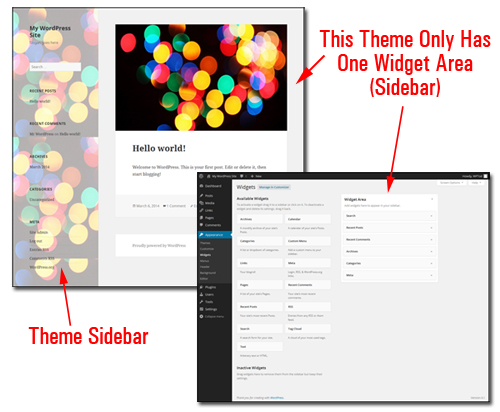
(Some WP themes only provide a single widget area)
Here is the widget screen of the theme shown above, so you can see that this particular WordPress theme only contains one widget area …
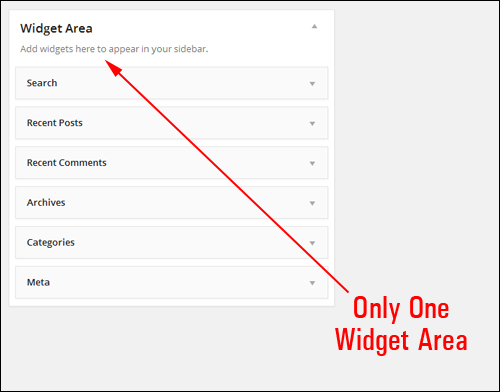
As you can see, the only area where users can add widgets to their website using the theme above is in the site’s sidebar area.
In contrast, the WP theme shown in the screenshot below contains multiple widget-enabled areas …
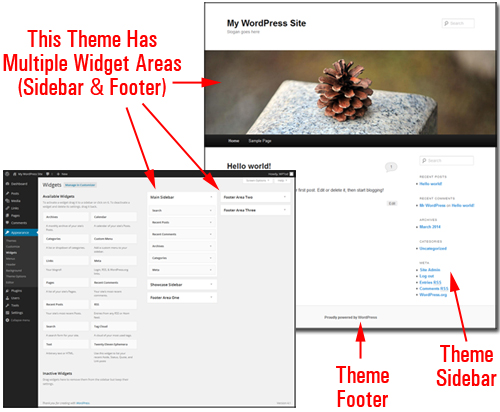
(Many WP themes offer users multiple widget-ready sections)
Here is an enlarged image of the widget panel of the theme above, so you can see how many widget areas this particular theme includes …
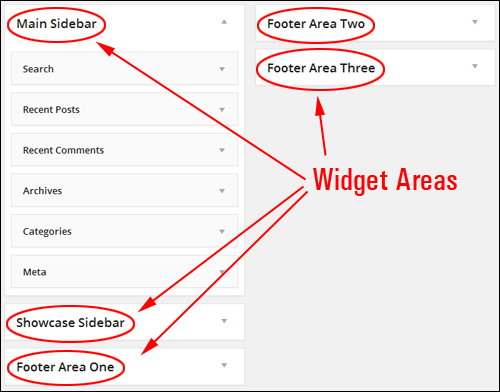
(Multiple widgets areas)
As you can see, in the above theme, you can add widgets to the sidebar area of two different page templates (Main Sidebar and Showcase Sidebar) and three different Footer areas (Footer Area One, Footer Area Two, Footer Area Three) …
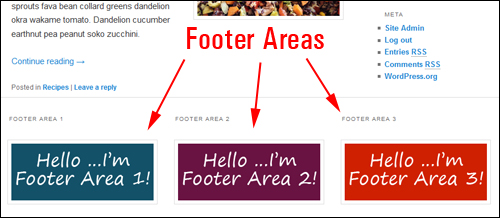
(Some themes let you add widgets to your site’s footer area)
Where Do I Access My WordPress Widgets?
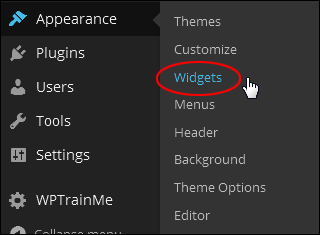
The Widgets section is found inside your WP administration area and can easily be accessed from the WP admin menu by selecting Appearance > Widgets …
This loads the Widgets screen in your web browser …
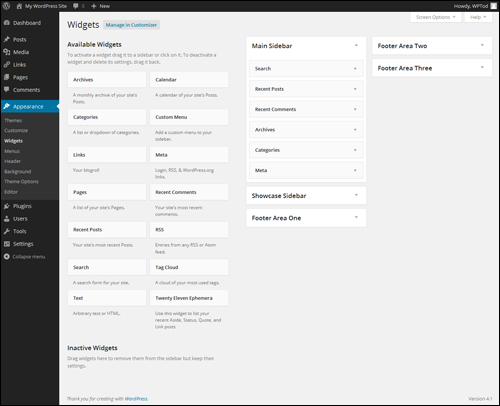
(Widgets Area)
The Widgets screen displays a list of all the widgets that are currently available for use on your site.
On the right-hand side of the window, you can see your “active” widgets …
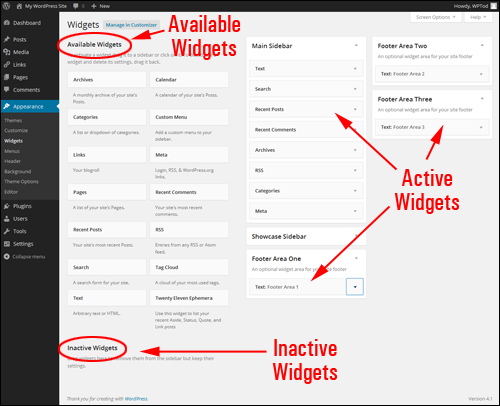
(Activate or deactivate widgets using drag & drop)
Available widgets can be made Active or Inactive using drag & drop.
Widgets dragged from the Available Widgets section to widget areas like your sidebar, footer, etc. automatically become activated for use on your site.
In addition, the Widgets area includes an Inactive Widgets section that lets you remove any widgets that you no longer want actively displayed on your site. Inactive widgets retain their settings.

In a default WordPress installation, your site already comes with a number of pre-installed widgets (e.g. widgets for displaying your pages, links, posts, post categories, adding text, adding RSS feeds, adding tags, adding a search box, etc …) and active widgets.
These widgets are available right out of the box in your default WordPress theme and display items like Search, Archives, Categories, etc. to site visitors …
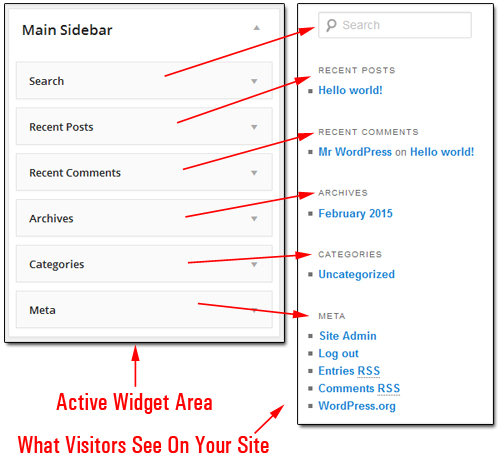
(By default, your site already comes with several pre-installed widgets)
Sometimes, you may find that new widgets appear in your Widgets section when new plugins are installed on your website …
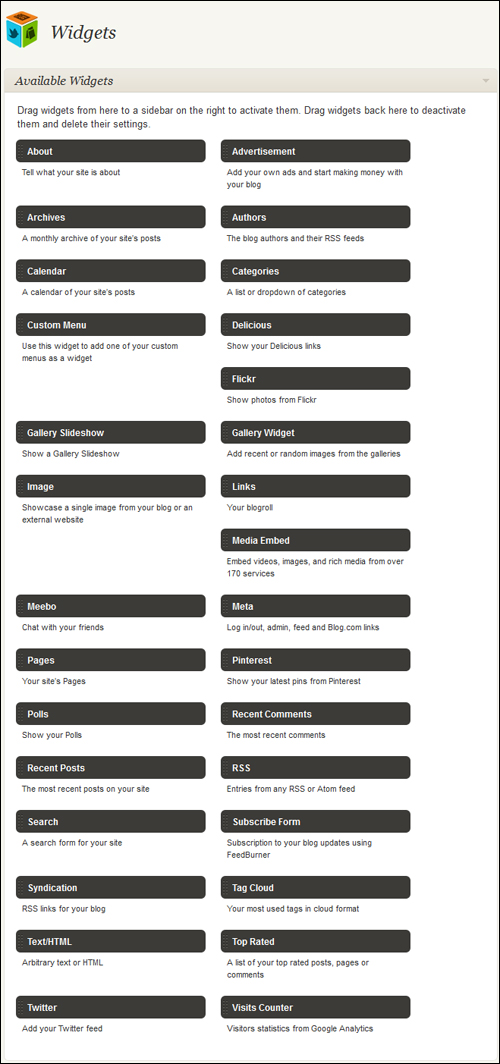
(Installing WP plugins can sometimes add new widgets to your Widgets area!)
WP Widgets Features: Drag And Drop
Widgets are great because you can easily add, activate, deactivate, reorder and delete them from your Widgets area just by using drag & drop …
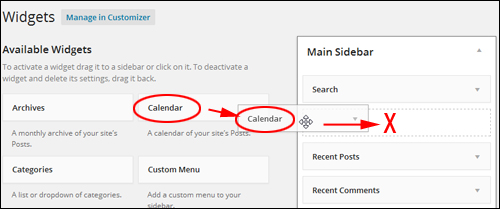
(Rearrange your site’s widgets using drag & drop)
Drag-and-drop lets you easily rearrange the order of your widgetized sections.
For example, take a look at the image below. In this site, the widgets have already been configured to show:
- A subscription form,
- A contact support button, and
- A couple of click to call sales buttons from a widgetized plugin …
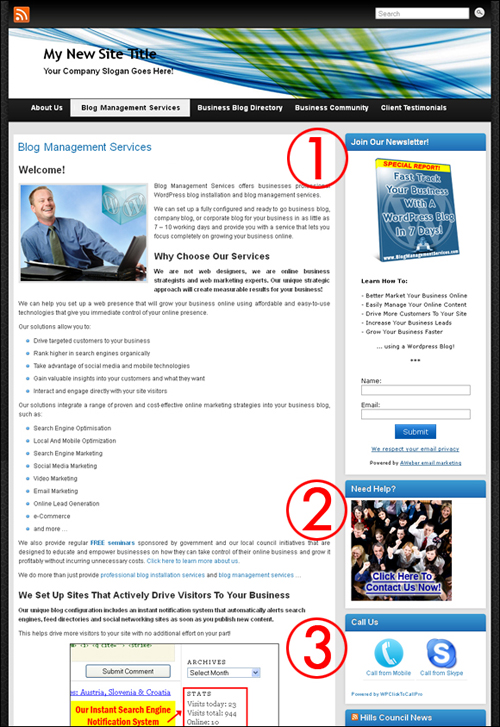
(Widgets control the order certain features on your site appear)
Looking inside the example site’s Widget area, you would see that these features display on the site in the same order as their corresponding widgets were arranged in the active widget section …
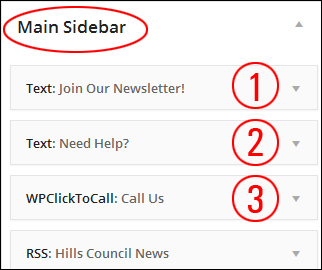
Let’s now reorganize these widgets in the Main Sidebar Widget Area by dragging & dropping elements in the widget area …
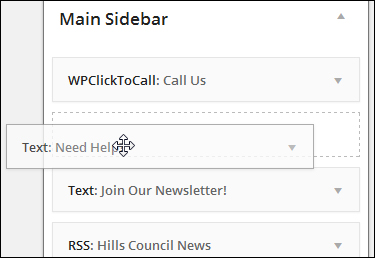
(Drag-and-drop to rearrange widgets in your widget area)
The widgets have now been reordered in the sidebar …
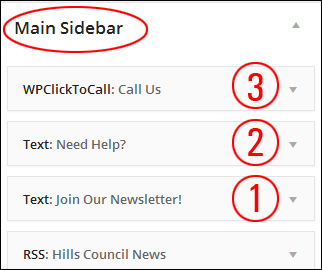
As you can see, this instantly changes the order of items in your site’s sidebar. Note in the screenshot below that the click to call function (3) is now the first item on the sidebar menu, and the contact us banner (2) can now be found above the newsletter opt-in form (1) …
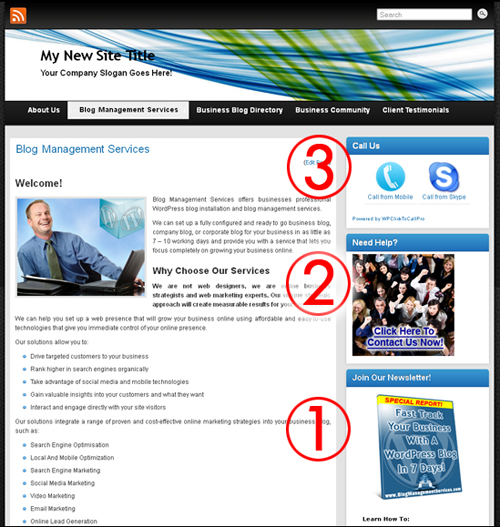
(Widgets are really easy to use!)
Pretty simple stuff, huh?
Here are a few more useful things worth knowing about widgets:
Widget Management – Customize Widgets Section
Depending upon the actual theme that you have installed on your site, you can also customize widgets without making actual changes to your site, so you can be sure that you like what you see before committing these changes to your live website.
You can do a number of edits to your widgets in preview mode, like adding, deleting and reorganizing your current widgets to any widget areas that your theme makes available, and see all changes in real time. If you like what you’ve done and click the “Save and Publish” button, your changes will then be instantly updated and reflected on your site.
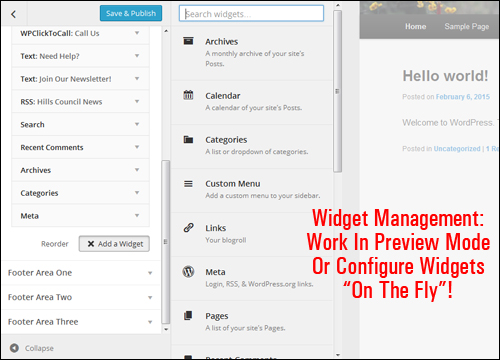
(Widget management – work in preview mode or configure widgets on the fly!)
Widget management is a valuable feature of WordPress. You can work in preview mode inside the WordPress Theme Customizer screen (Appearance > Customize) and see how your widget content will appear prior to publishing it (to avoid making mistakes), or configure widgets on the fly using the Widget editor area shown previously.
Widget Configuration
As we have explained previously, WordPress lets you quickly and easily reorder how information is displayed in areas of your website sidebars, footers and navigation menus with just a few clicks of your mouse, using drag-and-drop …
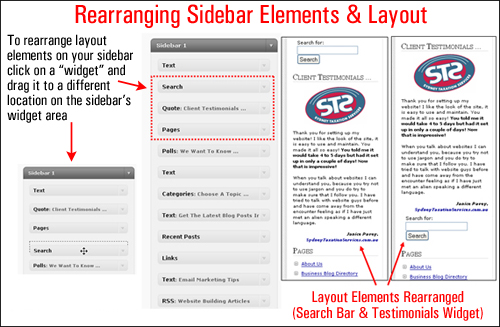
(Reorganizing sidebar elements with widgets can help improve your site’s visitor experience)
In the above screenshot, for example, you can see that we have easily change the widget elements in the sidebar by switching the search and testimonial sections. As you now know, this was easily done by dragging and dropping the widgets into different positions inside the sidebar widget area.
Rearranging sidebar elements with widgets can improve your site’s user experience.
Now … what about the widgets themselves? Can the widgets be customized instead of simply added, removed and rearranged?
Absolutely!
With most static websites, you would need to edit code in your web templates to reorganize the layout, make unique customizations to features on page elements like shopping cart information sections, or just add other features like an index of your site pages, or a dropdown menu of your post categories, a blog post archive section, customized menus, links to recommended resources, a list of your most popular posts, the latest excerpts of comments added to your posts, a section displaying text ads, client testimonials or survey results, RSS feed content, video thumbnails, Facebook feeds, and more.
While some widgets are “fixed” in the sense that they provide little to no customization, other than to add an optional title to the widget as shown in the example below …
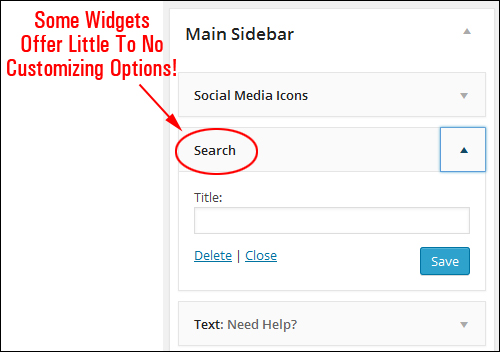
(Some widgets provide users with little to no customization)
Many widgets offer various settings that allow you to further configure them. This can include things like making certain types of information hidden to site visitors but visible to registered users, displaying additional forms, fields, or information, specifying sizes of sidebar images, videos, etc. and more …
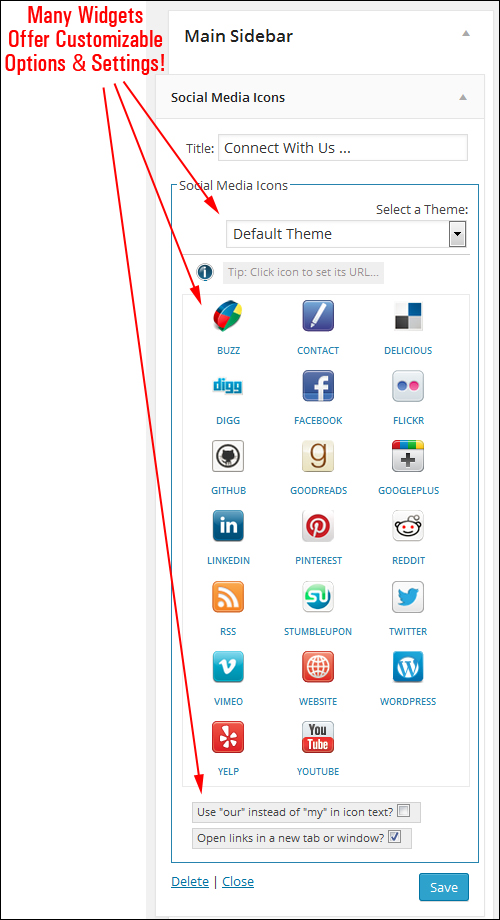
(Many widgets offer configurable options!)
Using WP Widgets
As you have just seen, widgets require no coding experience or programming expertise to use. Most widgets can be easily added to your site simply by activating a plugin and then dragging and dropping the plugin’s related widget into your Active widgets area.
For some useful tips and tricks to using widgets, see these detailed step-by-step tutorials showing you how to use different types of widgets in WordPress to boost the effectiveness of your website, plus many cool tips on how to get the most out of WordPress with widgets:
- How To Use And Configure WordPress Widgets – Part 1
- How To Use And Configure WordPress Widgets – Part 2
- How To Use And Configure WordPress Widgets – Part 3
- How To Use And Configure WordPress Widgets – Part 4
Related Posts
If you are learning how to use WordPress, you may also find the following related posts useful:
Hopefully, now you have a better understanding of issues that can affect your web site and how WordPress can help you build a better online. To learn more about the benefits of using WordPress please click on links to visit other posts we have published on this site.
***
"This is an awesome training series. I have a pretty good understanding of WordPress already, but this is helping me to move somewhere from intermediate to advanced user!" - Kim Lednum
***