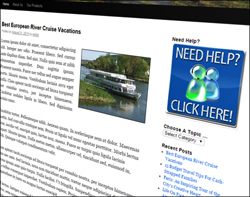
 In Part 1 of this step-by-step tutorial, we explained how to use widgets in WordPress and in Part Two, you learned how to configure text widgets.
In Part 3, we began configuring a number of frequently-used widgets.
In this final section, you are going to conclude this tutorial series by learning how to configure a few more useful WordPress sidebar widgets.

In WordPress v. 4.8, WordPress introduced new media widgets covering images, audio, and video, and an updated text widget that supports visual editing …
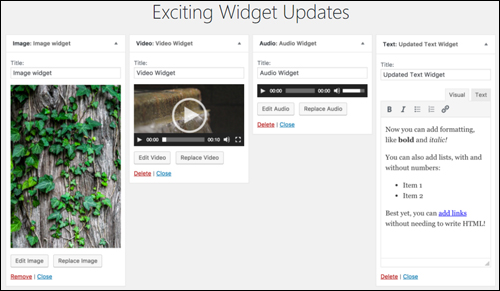
(WordPress 4.8 introduced new widget updates)
These widgets let you add content from your media library and media stored in other servers or storage locations (e.g. Google Drive, Dropbox, Amazon S3, etc.).
Let’s go through how to configure and use each of these widgets:
Rich Text Widget
From version 4.8 onward, WordPress has added native rich-text editing capabilities to text widgets …
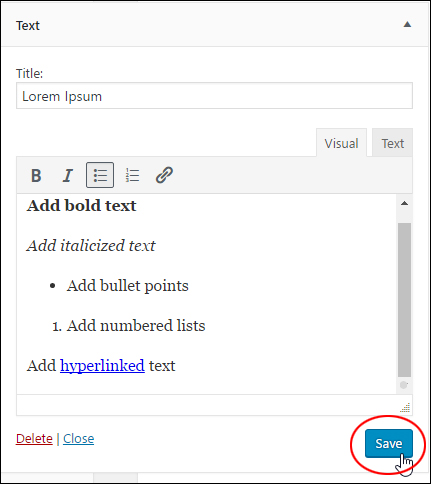
(Rich Text Widget)
This lets you format text, create lists, add emphasis, and insert links into your sidebar text quickly and easily …
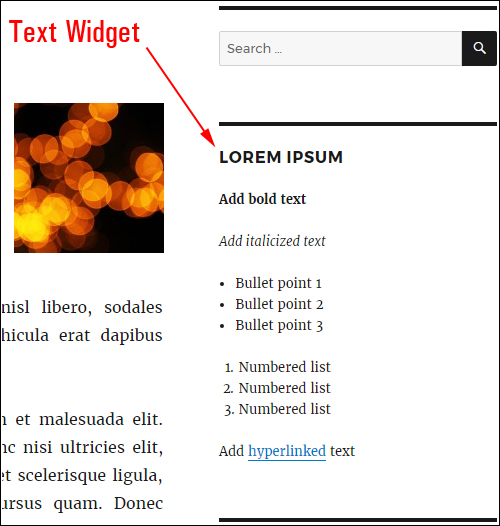
(Format text easily with the new text widget)
To learn more about using text widgets in WordPress, see the tutorial below:
WordPress Image Widget
The WordPress Image Widget lets you add an image to your sidebar from your Media Library or an external storage location.
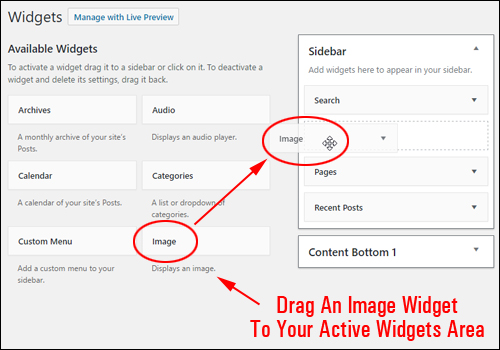
To add an image, drag an image widget to your active widgets area …
(Image Widget)
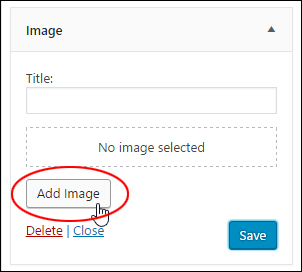
Click on ‘Add Image’ …
(Let’s add an image!)
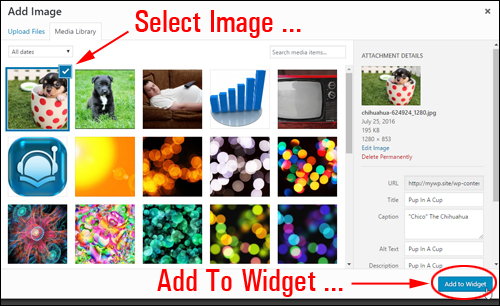
Select an image from the Image Library, check or add image details (e.g. Caption, Alt text, Description, etc.) if desired and click the ‘Add to Widget’ button …
(Select an image)
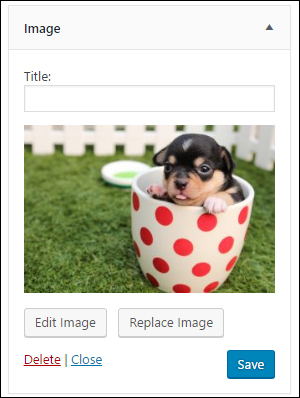
The image will automatically load into the widget area …
(Image added to widget)
Add a Title to your image if you want, or leave the ‘Title:’ field blank and click ‘Save’ …
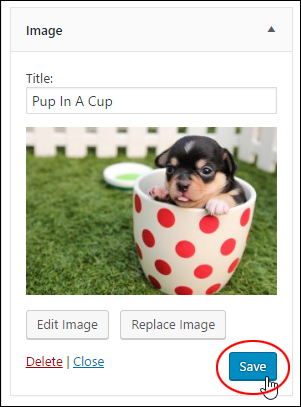
(Save your image)
Preview your website and you should see the image displayed where you have placed your image widget …
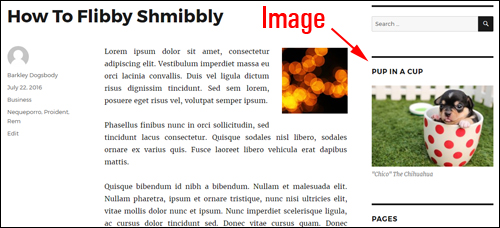
(Image added to website using WordPress image widget)
If you want to link your image to an URL, go back to your image widget and click on ‘Edit Image’ …
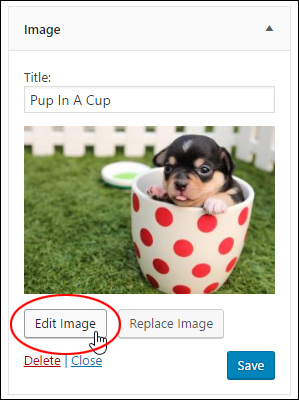
(Image Widget – Edit Image)
Add a URL in the ‘Image Details’ > ‘Display Settings’ > ‘Link To’ screen and click the ‘Update’ button …
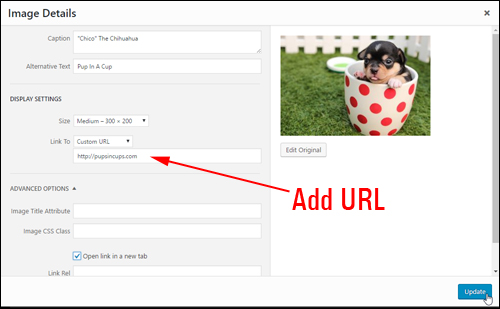
(Link your image to an URL)
To add an image stored in an external server or remote location, locate and copy the URL of the image to your clipboard …
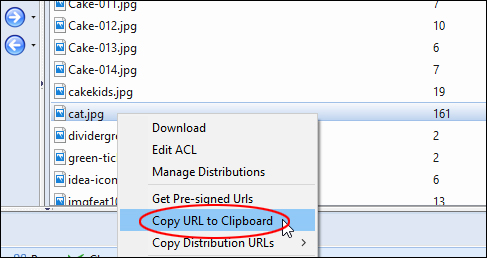
(Copy image URL to your clipboard)
Go back to your image widget and click on ‘Replace Image’ …
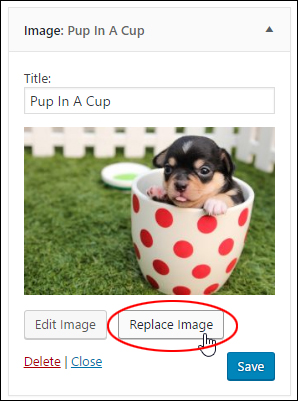
(Image Widget – Replace image)
The Media Library browser opens. Click on ‘Insert from URL’ and paste in the image URL copied to your clipboard, then click on ‘Add to Widget’ …
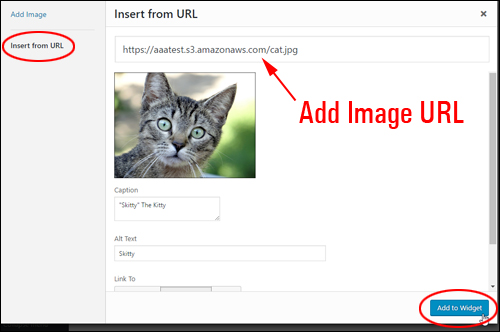
(Add image URL)
If you have previously added an image title in your widget, remember to replace it if required, then click ‘Save’ …
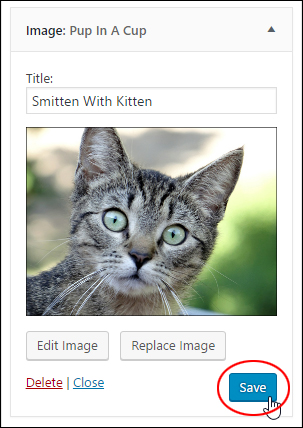
(Save your new image)
The new image will now display on your sidebar …
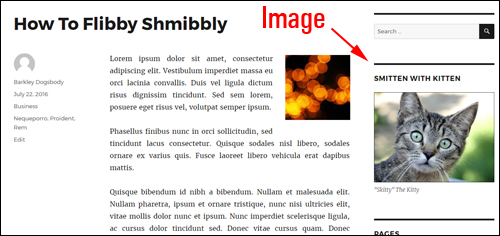
(New image added using WordPress image widget)
To learn more about adding images to WordPress, see this tutorial:
WordPress Video Widget
The WordPress Video Widget lets you add audio files to your sidebar from your Media Library, YouTube, Vimeo, or an external storage location.
To add a video to the sidebar, drag a Video widget to your active widgets area …
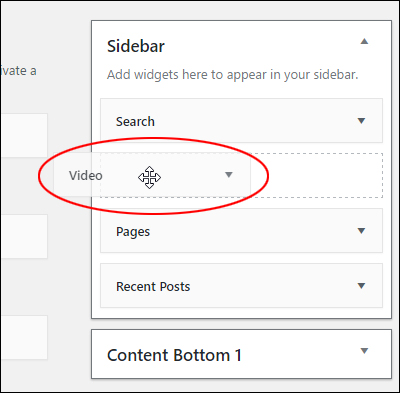
(Drag a Video widget to your sidebar)
Click the ‘Add Video’ button …
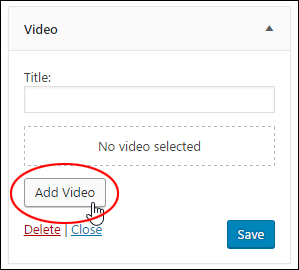
(Video widget – Add Video)
Select a video from your media library or add a video URL and click the ‘Add to Widget’ button …
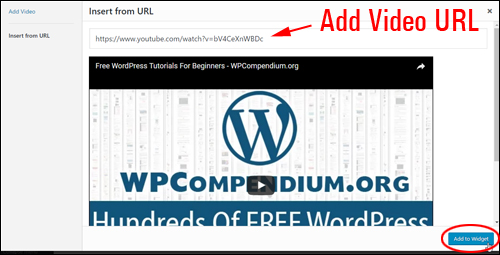
(Add a video URL)
Add a title to the widget if desired and click ‘Save’ …
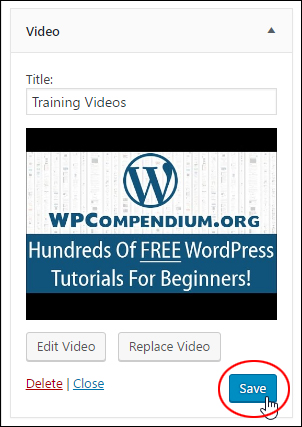
(WordPress Video Widget – Save Button)
Your video will display on your site where the video widget has been added …
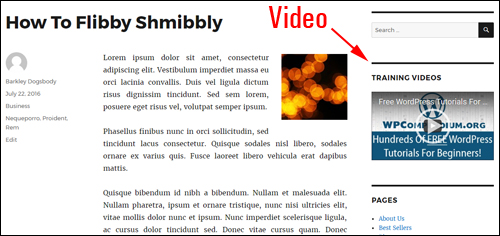
(Video added using WordPress video widget)
To learn more about adding video to WordPress, see this tutorial:
WordPress Audio Widget
The WordPress Audio Widget lets you add audio files like podcasts, music or a personal greeting to your sidebar from your media library or an external storage location.
To add an audio file to your sidebar, drag an audio widget to your active widgets area …
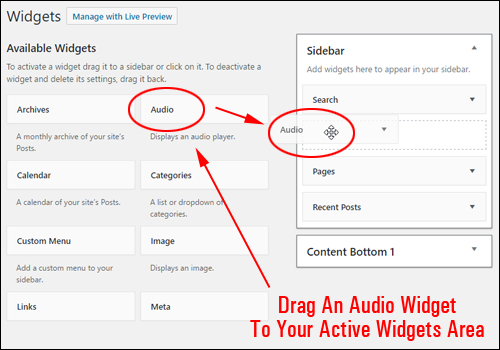
(Add an audio widget to your sidebar)
Click the ‘Add Audio’ button…
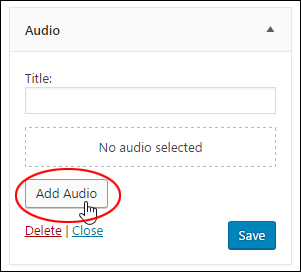
(WordPress Audio Widget – Add Audio button)
Select an audio file from your media library or insert the URL of an audio file stored in an external location …
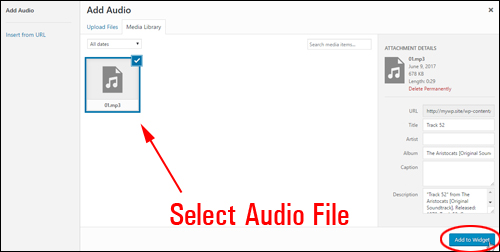
(Select your audio file)
Add a title to your widget if desired and click the ‘Save’ button …
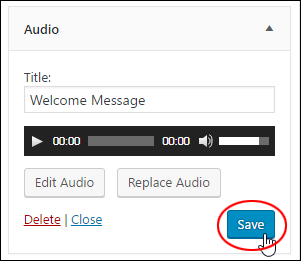
(Save the audio file on your audio widget)
Your site will now display an audio file to visitors where you have placed the audio widget …
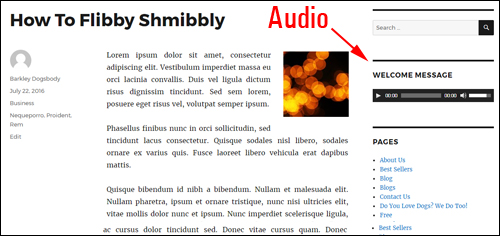
(Audio file added to your site using the WordPress Audio Widget)
To learn more about adding audios to WordPress, see this tutorial:
Adding An RSS Widget To The Sidebar Navigation Area
Let’s now add a widget to display news items on your sidebar.
To add the widget, select an RSS widget in the Available Widgets section and drag it to your sidebar …
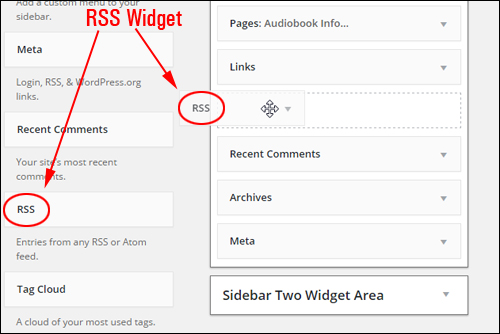
(WordPress RSS Widget)
Enter the following information into the widget settings:
- RSS feed URL: Paste the URL of your RSS feed here.
- Feed Title: If you want to add an optional title to your widget, enter it into this field.
- Items to display: Choose the number of items to display in the sidebar from this drop-down menu.
- Display item content: Tick this box if you would like to show the feed item content.
- Display item author: Tick this box if you would like to display the RSS feed item author.
- Display item date: Check this box if you want to show the RSS feed item date.
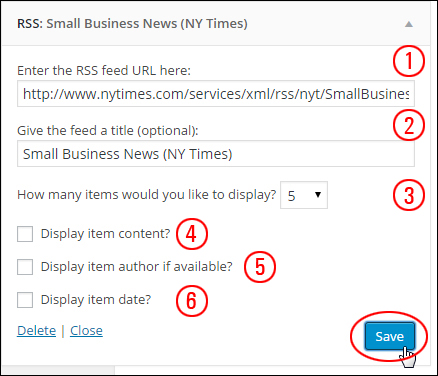
(RSS Widget settings)
Experiment with different settings to find the combination that best suits your preferences.
The example below shows an RSS widget configured using the settings shown above …

(RSS Widget added to sidebar area)
The example below shows an RSS Feed widget configured using other options selected …

(WordPress RSS Widget settings)
To learn more about using RSS feeds in WordPress, see this tutorial:
Add A Tag Cloud
Let’s add A Tag Cloud widget to display clickable tags on your sidebar.
Tags displayed in your Tag Cloud widget are managed in the Tags screen …
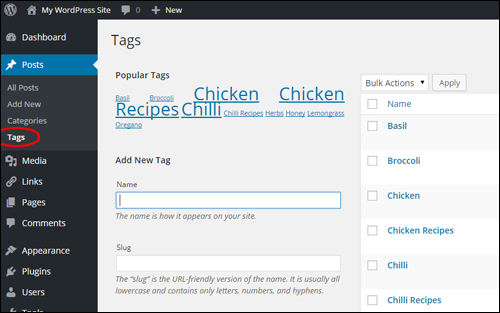
(Tags area)
To use the widget, find a Tag Cloud widget in the Available Widgets section and drag it to the active area …
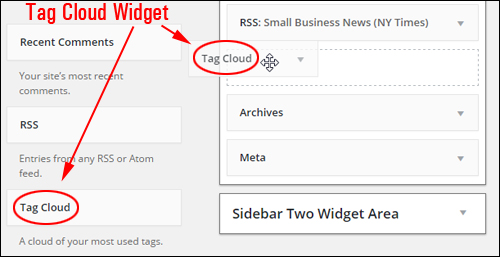
(Tag Cloud Widget)
There’s not much to set up in this widget. You can add a title if you want, and choose whether to display items in the tag cloud using Tags or Categories. Click Save when done …
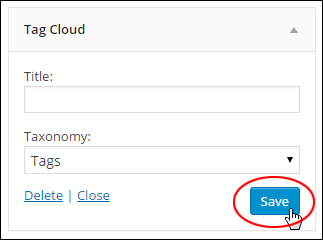
(WordPress Tag Cloud Widget settings)
Your Tag cloud will now display on the sidebar navigation area …

(Tag cloud displaying WordPress tags)
The example below shows an Tag Cloud widget configured to show Categories instead of Tags …
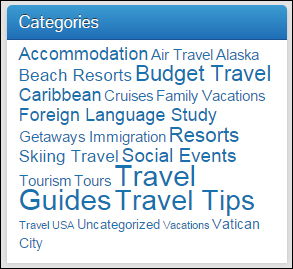
(Tag Cloud widget displaying WordPress categories)
To learn more about using post tags in WordPress, see this tutorial:
Configuring The WordPress Archives Widget
To complete this tutorial series, we’ll configure the Archives Widget, which is another common WordPress widget.
As you publish new posts in WordPress, your older posts begin to move further away from public view. Your posts are still there, it’s just not as visible.
The Archives Widget lets visitors view dated content …
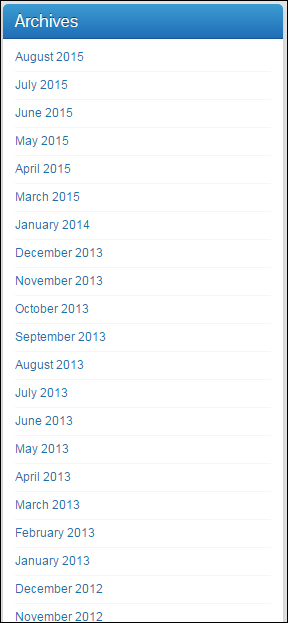
(WordPress Archives Widget)
There is really very little to set up. You can add a title if you want, and choose whether to display items in your sidebar as a dropdown menu, and show the number of posts . Click Save when done …
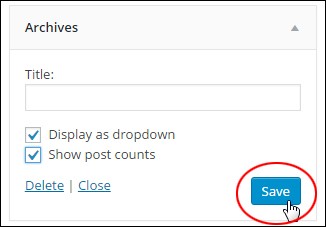
(WordPress Archives Widget settings)
The example below shows a published Archives widget configured for showing posts as a dropdown menu with post counts enabled …
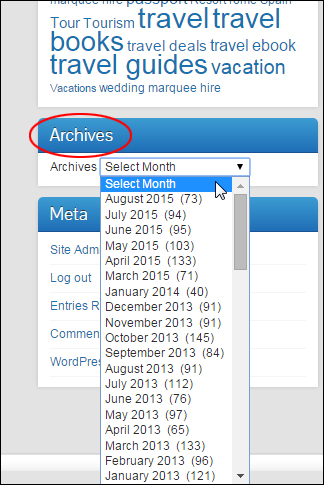
(WordPress Archives Widget displayed on blog sidebar)
Now that you know how to configure a number of widgets on your WordPress site, let’s explore some other useful ways to use WordPress widgets.
Useful Widget Tips
Here are some useful features worth knowing about widgets:
Add ‘Visibility’ Function To Widgets
Installing the Jetpack plugin not only adds many new widgets to your widgets area …
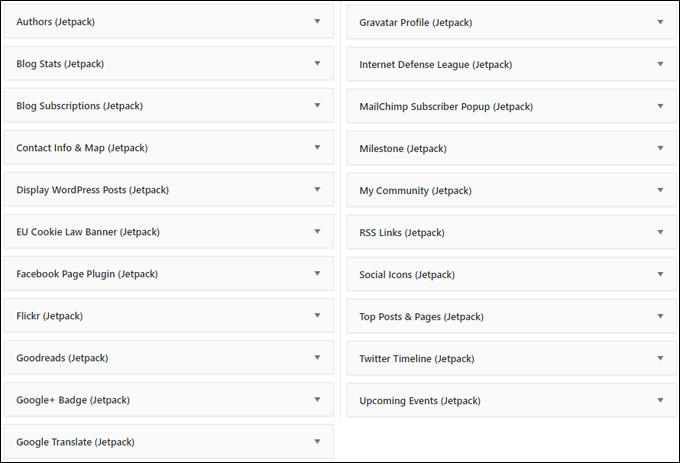
(Jetpack Widgets)
It also adds a useful ‘Visibility’ function to all WordPress widgets …
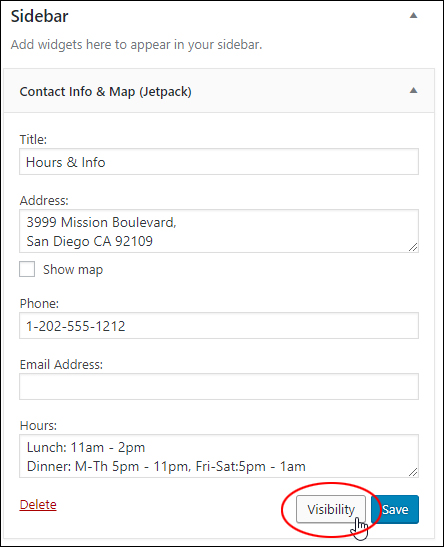
(Jetpack adds ‘Visibility’ to all widgets)
This function lets you specify whether to display or hide widgets from your sidebar based on conditions you set for a particular category, author, user. role, tag, date, or page …
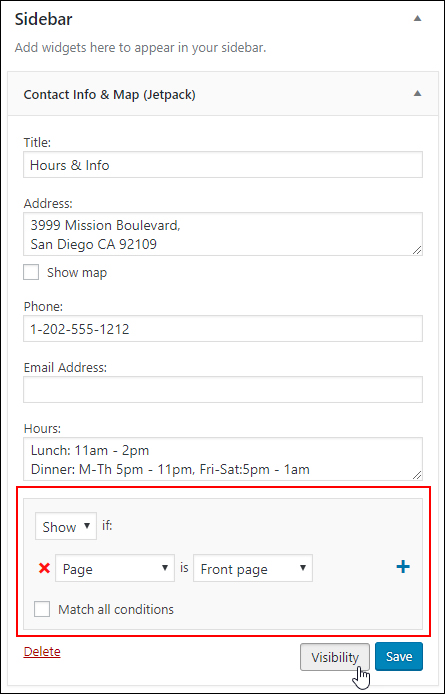
(Set conditions to show or hide widgets)
This is a really useful function to have.
For example, you can:
- Display a widget only on your home page or only on posts published under certain categories, tags, authors, dates, etc.
- Configure widgets to display specific or time-sensitive announcements based on a post’s category, date, etc.
- Configure widgets to display targeted ad banners based on a post’s category or tag.
- Hide widgets from appearing on certain posts or pages to prevent users from being distracted (e.g. remove widgets with ads from your sales pages).
- And more!
To learn more about using the Jetpack plugin, go here:
How To Override Default WordPress Sidebar Widgets
If you see widgets appearing on your blog sidebar that aren’t showing up in your active sidebar in the Appearance > Widgets section, it’s because some themes will display their own default set of widgets unless you add widgets to your sidebar.
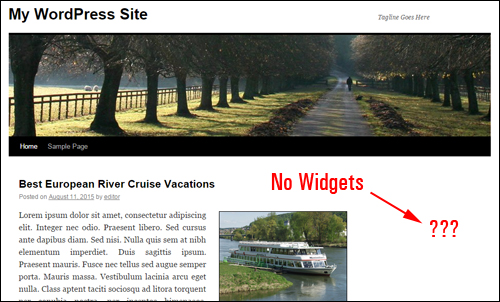
For example, this site displays a couple of widgets in the blog sidebar …
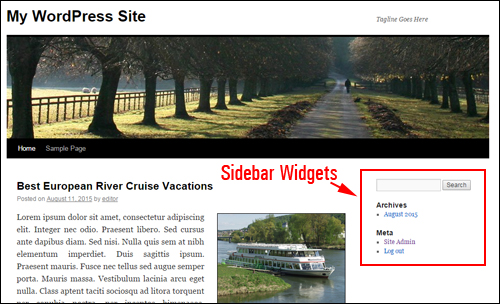
If you look inside the Widgets area, however, you will see that no widgets have actually been added to the active widget areas …
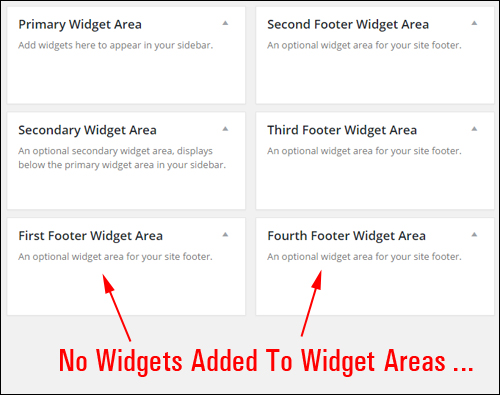
This is because the above theme is using default widgets.
As soon as you add one or more widgets to an active widget area, the other widgets will disappear and be replaced with the newly-added widgets instead.
Note: If you want no widgets to show up in the sidebar, either use a theme page template without a widgets section or just add a blank Text widget to your sidebar section.
Just add a blank text widget to a widget area …
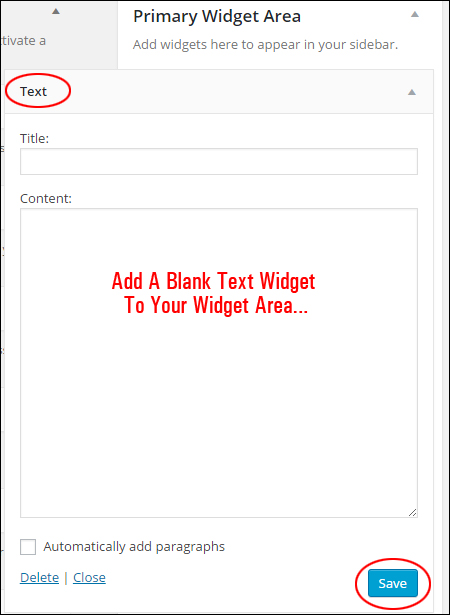
And the default widgets won’t display in the sidebar/footer section …
Accessibility Mode
As we have shown you previously, with WordPress you can quickly reorder how content displays in areas of your website or blog, like sidebars, footers and navigation menus with only a few clicks of your mouse button, using drag-and-drop …
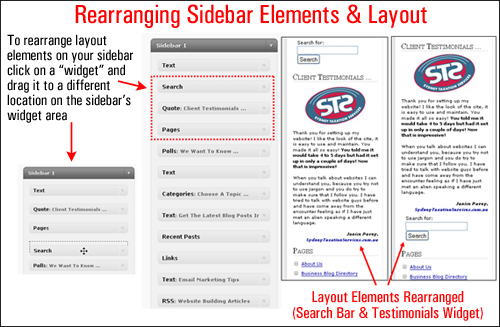
(Rearrange sidebar elements using widgets to improve your site’s visitor experience)
In the screenshot above, for example, you can see that we have easily redesigned the layout in the sidebar section by switching the search and testimonial sections. This is easily done by dragging and dropping the widgets into different positions inside the sidebar widget area.
Reorganizing sidebar layout using widgets can improve your site’s visitor experience.
If, for some reason, you find that you cannot move widgets around using drag-and-drop (e.g. using a mobile device that doesn’t support dragging-and-dropping), you can still work with widgets if you enable Accessibility Mode.
Enable Accessibility Mode For Widgets
Enabling Accessibility Mode, via your Screen Options, lets you use Add and Edit buttons instead of using drag-and-drop.
To enable Accessibility Mode, log into your WordPress admin and go to Appearance > Widgets …
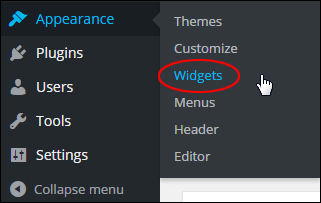
(WordPress Widgets Menu)
Select Screen Options on the top right hand corner of the screen …
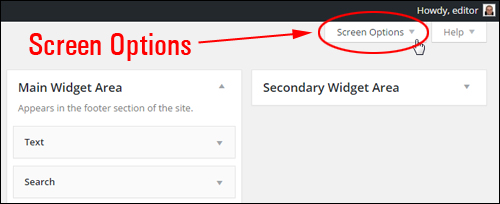
(Widgets – Screen Options)
Click link to enable accessibility mode …
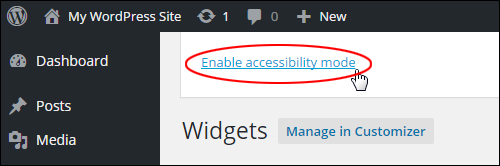
(Switch On accessibility mode)
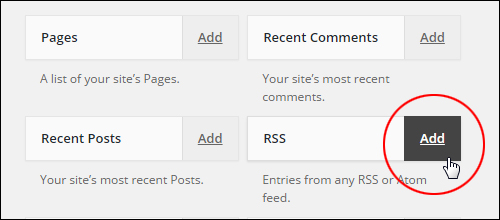
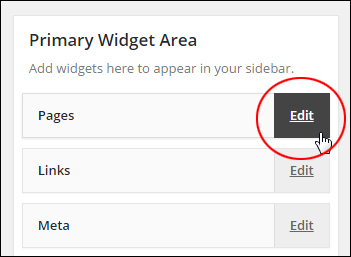
Once accessibility mode has been enabled, the widgets in the Available Widgets section will display an Add link, and the widgets in the Active Widgets section will display an Edit link …
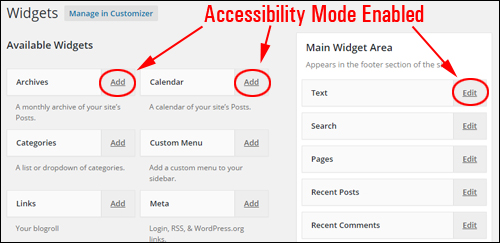
If you click on a Widget’s Add link in the Available Widgets section …
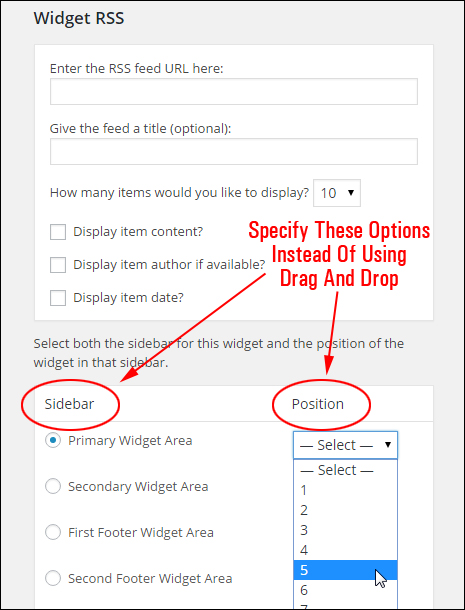
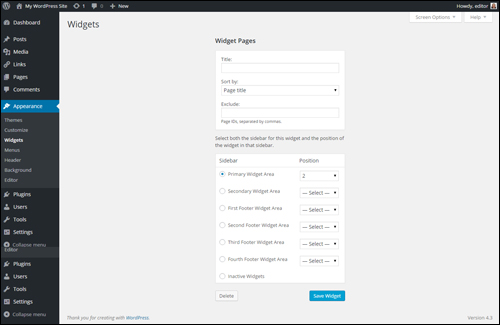
A screen will display the selected widget with options for customizing the widget’s settings, selecting the location to add the widget, plus dropdown menus that let you specify the position of the widget in the widget area (e.g. position “1”, “2”, “6”, etc.) …
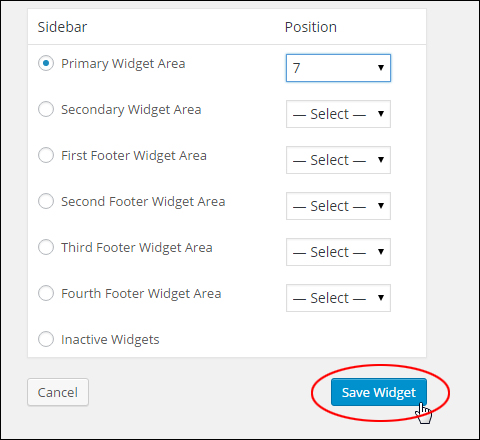
Click Save Widget to add the widget to the Active Widgets section, or Cancel to go back to your previous screen …
Click on an active widget’s Edit link …
A screen will display your selected widget with options for modifying its settings.
Click Save Widget to return to the Active Widgets section, or click the Delete button to remove the widget from the Active Widgets section …
Click on Disable accessibility mode in the Screen Options section to restore the drag & drop function to your Widgets …
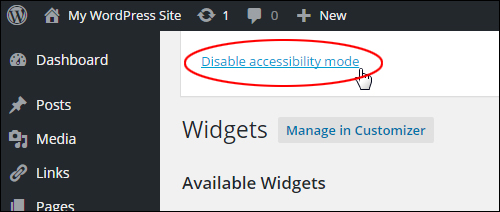
(Disable accessibility mode)
How To Create Your Own Custom Sidebar Widgets
Most widgets will either be installed by default when you create a new WordPress site, or be automatically added to your Available Widgets area by plugins that you install on your website.
If you want to create your own sidebar widget, then here is an easy way:
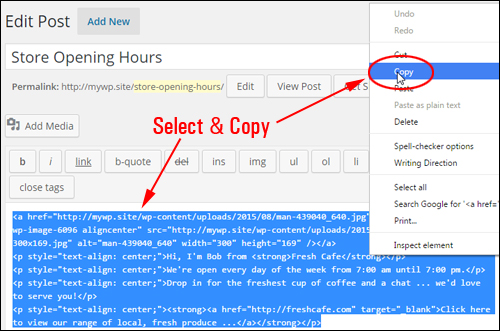
First, create a new Post and enter the content that you would like to show on the sidebar area…
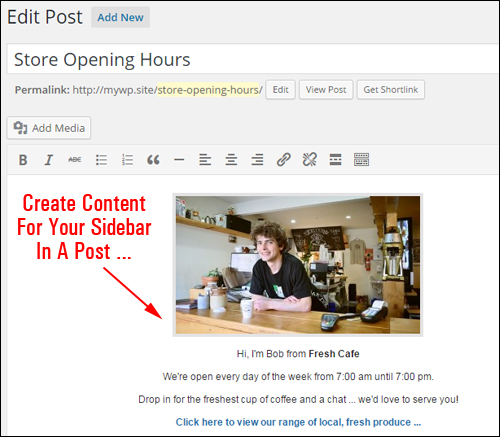
Ensure that any images you plan to use are resized to fit the maximum width of the sidebar menu. Also, keep in mind that there’s no a lot of room to add content on the blog sidebar, so try and keep your information concise.
Also, don’t worry about publishing your Post – all we are after is to copy the content so we can paste it into your sidebar widget.
Once you have composed your content in the WordPress post editor, click on the Text tab …
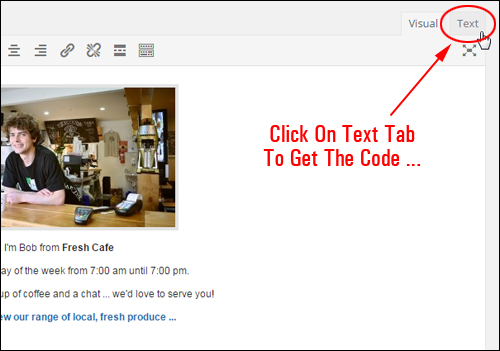
Select and copy everything to your clipboard…
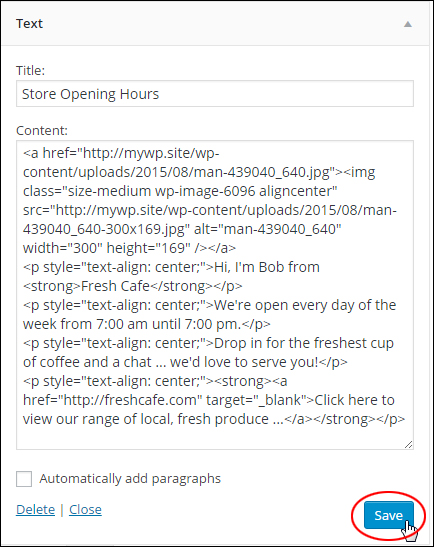
Now, go into your Widgets Area.
Add a new Text widget to your sidebar, paste the content from your clipboard into the content field and click Save …
Your new widget is now added to the sidebar…
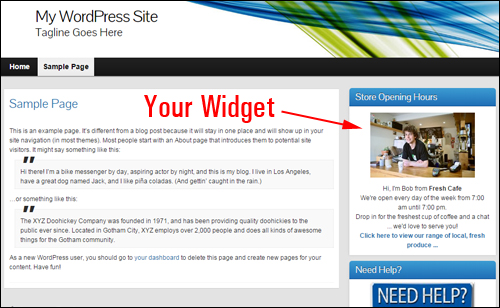
(Create your own custom sidebar widgets)
Congratulations! Now you know how to use and configure the most commonly-used sidebar widgets.
Subscribe below & receive 101+ useful WordPress tips that will help grow your business online faster ...
***
"This is an awesome training series. I have a pretty good understanding of WordPress already, but this is helping me to move somewhere from intermediate to advanced user!" - Kim Lednum