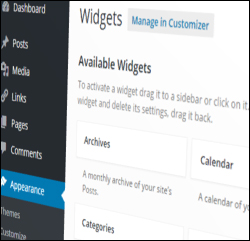
 As we’ve discussed in this article, one of the many benefits of using WordPress to manage and grow your web presence is that you can easily add content, improve your site’s functionality, or change the layout of your site without web coding skills required.
WordPress lets you quickly and easily add, remove, and rearrange various types of content from your blog’s sidebar area (and header and footer sections too, depending on what theme you have installed) using widgets.
Once you know how to use widgets, you can easily add things to your site like:
- list of your web pages
- content categories
- archive
- customized menus
- links to resources
- links to your recent posts
- user comments
- clickable ads
- customer testimonials
- polls & surveys
- RSS feed items
- opt-in form
- video thumbnails
- social media buttons
- add widgets from external sites (e.g. affiliate programs)
- administrative forms (e.g. login, register, etc.)
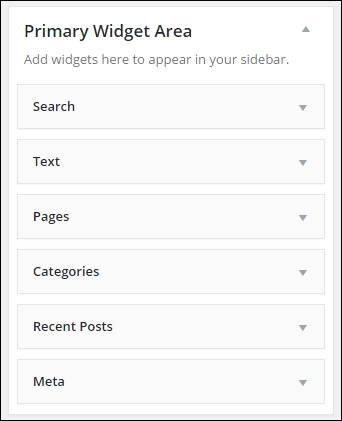
(WP widgets help make managing and using WordPress easier)
To learn more about what WP widgets are, how widgets work and how using widgets can help you expand your site’s capabilities, see this article:
In this tutorial series we teach you how to use and configure a number of commonly-used WordPress widgets.
How To Use Widgets In WordPress
The Basics
Before we start learning how to configure widgets, it helps to first make sure that you understand some of the basics of using widgets:
Most WordPress Themes Support Widgetized Areas
Most WordPress themes support widgets and provide sections in the theme’s layout where you can use widgets, such as the sidebar, header area, and the footer area. Depending on the theme, widgets can sometimes also be added below or above the content area …
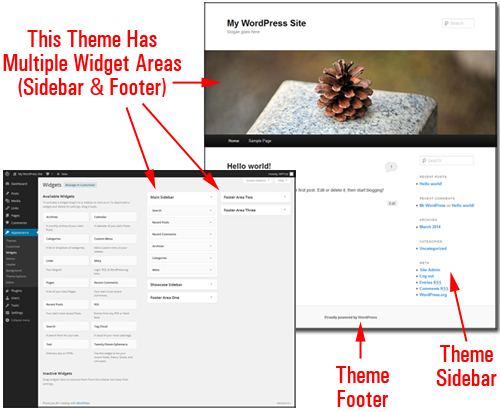
(Many themes provide a number of widget-enabled sections)
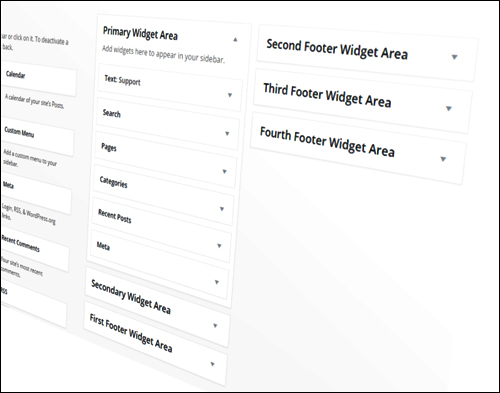
These widget-ready areas correspond to a feature inside the Widget administration panel called “Widget Areas” …
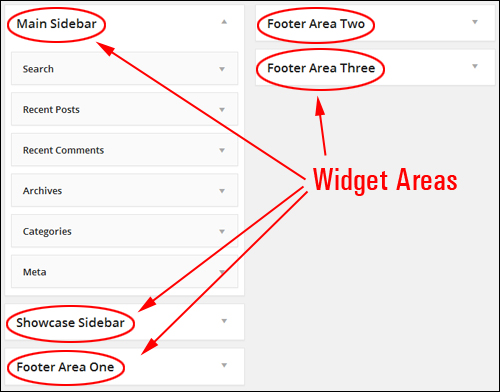
(Widget Areas)
Widgets Screen
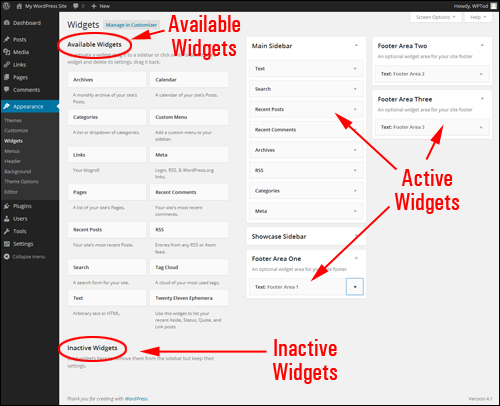
The Widgets section displays all the widgets that are available.
On the right-hand side of the window, you can see all “active” widgets …
(Widgets can be activated or deactivated with drag & drop ease)
Available widgets can be made Active or Inactive using drag-and-drop.
Widgets dragged from the Available Widgets section to widget areas like your sidebar, footer, etc. automatically become active and can be used to perform their function on your site.
Your Widgets screen also includes an Inactive Widgets section that lets you remove widgets that you no longer want to actively display on your website. Inactive widgets retain their settings.
Rearrange WordPress Widgets With Drag-And-Drop
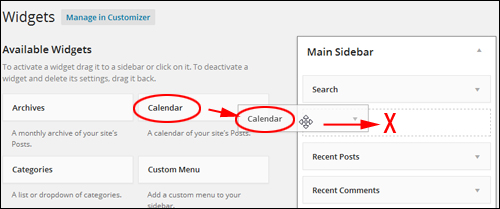
You can easily insert, activate, deactivate, reorder and delete widgets using drag & drop inside the Widgets section …
(Rearrange widgets using drag and drop)
You can also easily rearrange your theme’s layout by dragging and dropping widgets.
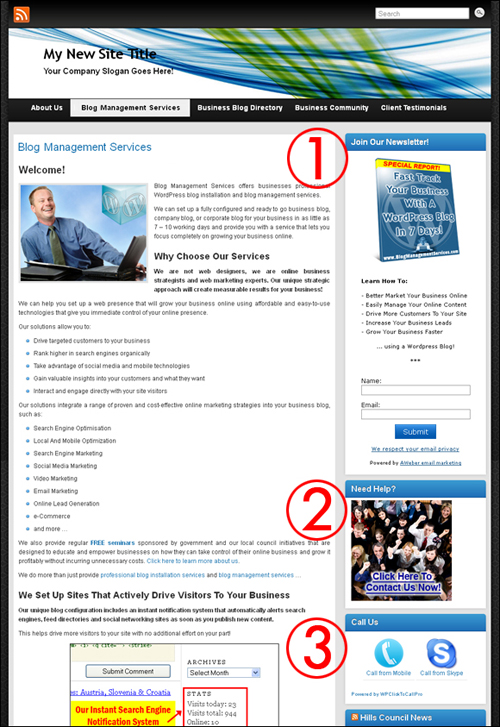
For example, take a look at the image below. In this site, the widgets have already been configured to display things on your site like:
- A newsletter opt-in form,
- A click for support button, and
- ’Click to call’ buttons from a widgetized WordPress plugin (i.e. a plugin with an accompanying widget) …
(Widgets control how certain features appear on your WordPress site)
If you look inside the example site’s Widget area, you will see that these features appear on the site in the same order as they have been arranged in the active widget section …
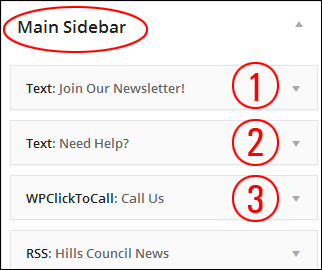
Let’s now reorganize these widgets in the Widget Area using drag & drop …
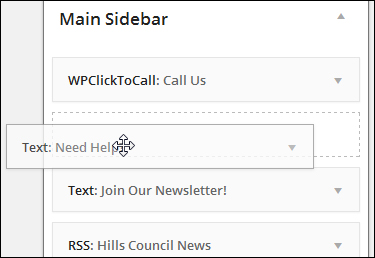
(Drag-and-drop to rearrange widgets in your widget area)
The widget features have now been reorganized in the sidebar …
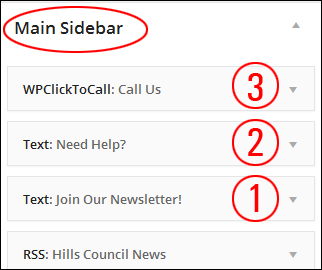
This immediately changes the order of items in the site’s sidebar.
Rearranging sidebar elements using widgets can help improve your site’s visitor experience.
Note in the screenshot below that the ‘click to call’ feature (3) is now at the top of the sidebar area, and the ‘contact us’ graphic banner (2) can now be found above the newsletter sign-up form (1) …
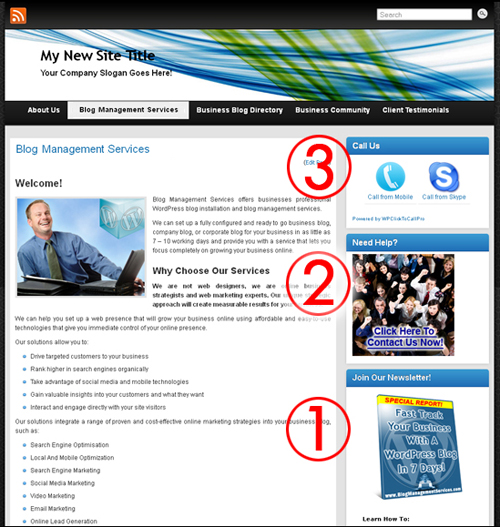
(Reorganize sidebar elements using widgets to improve your site’s visitor experience)
Removing Widgets From Your WordPress Sidebar
Deleting widgets from the sidebar is very easy.
For example, let’s show you how to remove the Search widget from the sidebar menu …
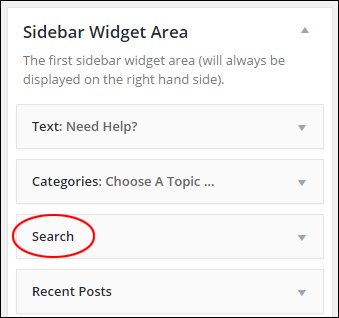
(WordPress Search widget)
To delete a widget from an active Widget area, you can either expand the widget settings and click the Delete link …
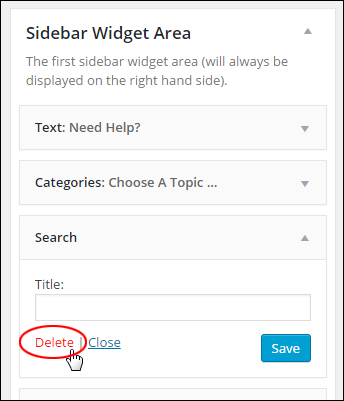
(How to delete WordPress widgets)
Or just drag the widget out of the Active Widgets area and drop it into the Inactive Widgets section …
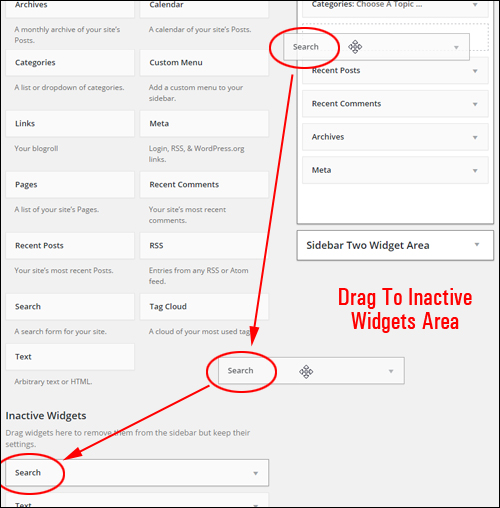
(Remove a WordPress widget)
Repeat this process for all widgets you want removed from the sidebar. You can always reactivate widgets by dragging them back into the active widgets area.
Widget Settings
Many widgets can be customized further. This includes hiding information from users (but allowing access to registered users), displaying additional forms, fields, or information, specifying dimensions of sidebar images, videos, etc.
Click on the little triangle in the corner of a widget to toggle between expanding and collapsing the item …
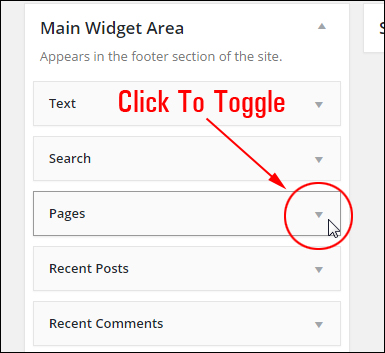
(Toggle to expand/collapse widget settings)
When the widget expands, you can change and save your settings, remove your widget from the “Active Widgets” section, close the widget, or click on the triangle to collapse the widget …
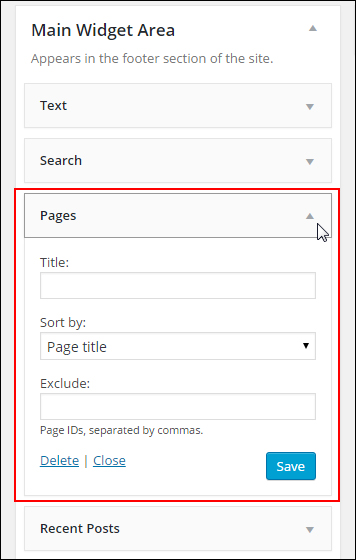
(Widget settings)

Some widgets offer little to no customization, or they may only allow you to add an optional title …
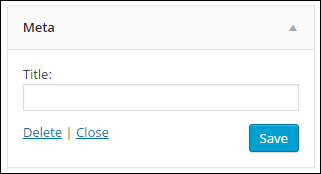
(Some widgets provide users with little to no configurable options)
Theme Customizer
Depending on which theme you are using, you can also manage and customize your widgets without actually making changes to your site. This way, you can be sure that you are happy with your customizations before making any permanent changes to your site.
Widget management is a great feature of WordPress. You can work in preview mode inside the WordPress Theme Customizer screen (Appearance > Customize) and see how the widget content will appear prior to publishing any changes you’ve made (to avoid making errors), or configure widgets on the fly using the Widget editor area.
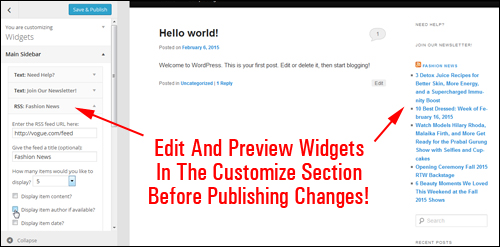
(preview widget changes live in the Customize feature)
If you need to make changes to your site while viewing the front-end, just click on the Customize link …
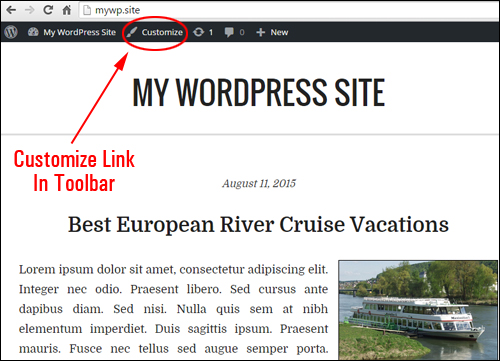
(Customize your site quickly)
This will bring you to the Customizer feature in the backend.
You can do lots of things to the widgets in preview mode (like adding, removing and moving widgets around), and it will all be done in real time. If you are happy with the results, click the “Save and Publish” button and the changes will instantly become visible on your site.
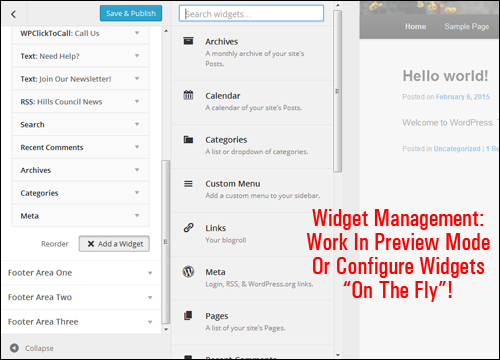
(Widget management – configure widgets on the fly!)
After saving changes, your site will automatically update the widget settings and display the latest configuration to your site visitors.

Because the theme you choose determines how elements display on your site, we recommend that you install the theme first before configuring widgets.
Also, remember to use the Customizer feature to preview all changes. This saves you from having to keep two browsers open while you work through this tutorial.
Now that you know the basics of using widgets, let’s configure a number of commonly-used WordPress sidebar widgets.
***
This is the end of section one of this series of tutorials on how to use Widgets.
Click on this link to access the rest of this tutorial:
***
"Wow! I never knew there's so much to learn about WordPress! I bought one of the WordPress for Dummies three years ago, such authors need to be on this course!" - Rich Law, Create A Blog Now
***