
Welcome to Part Three of our Web Traffic Blueprint article series, where we show you how to drive visitors automatically to your website using the WordPress CMS.
In Part One of this article series, we described the process, and explained why using an expertly configured WordPress website is the key to automating traffic to your website …
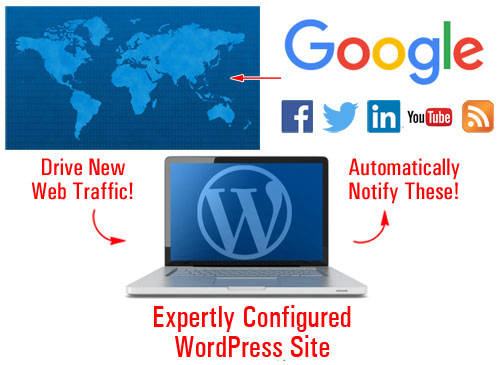
(With an expertly configured WordPress website or blog, all you have to do to automatically attract more traffic is publish web content on a consistent basis!)
In Part 2, we discussed the setup phase of the blueprint. We explained the best way to start if you don’t have a web presence yet, how to set everything up if you already have a website, and what to do if your website has been built with WordPress.
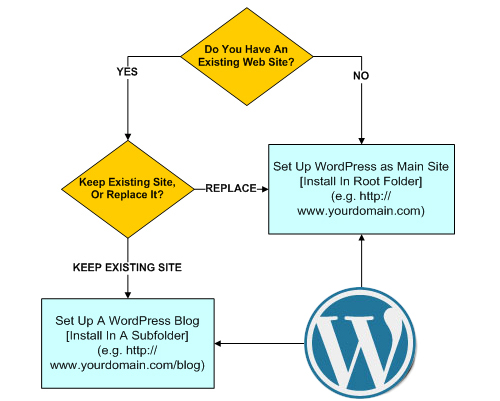
(In Part 2 we show you where to set up WordPress on your domain)
In this section of the series, we will discuss the configuration phase of the traffic system. We will show you how a WordPress site should be configured to bring new traffic automatically simply by posting fresh content to your website.
WordPress Traffic Automation System – Configuration Phase
The ability to drive more traffic to one’s website is often cited by business owners as the greatest challenge they face online. Businesses are becoming increasingly more competitive worldwide and are looking for any and every opportunity they can to improve their performance online.
Being able to automatically generate traffic on demand can be a tremendous competitive advantage. An expertly configured WordPress site gives you a flying start as soon as your site is launched.
Configuration Is The Difference
There is a significant difference between an expertly configured WordPress site and a website that has been professionally set up by a web-building expert but not necessarily configured to take advantage of everything WordPress can offer.
Here’s one way to describe the differences:
An expertly configured WordPress website gives you a web presence with an automated online business marketing process!
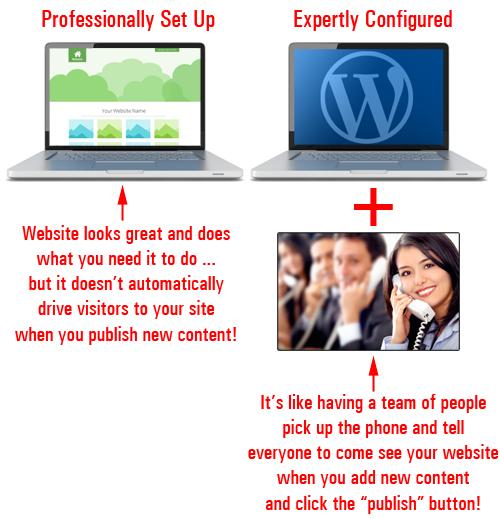
(An expertly configured website gives you a web presence and an automated online business marketing tool!)
Not only are more steps needed to build and integrate an automated online business marketing process into your website, but also a special kind of expert knowledge.
To illustrate this here’s a little story.
A Semi-True Story …
All was going just fine in the widget assembly factory when everything ground to a sudden halt.
No one could figure out what has happened and so the manager decided to call in an expert to try and fix the problem.
Shortly after arriving, the expert headed immediately towards the main control box. After staring at the box for 5 minutes or less, the expert then took out a tiny hammer from his tool belt and made a very gentle tap near the top-left corner of the control unit.
Immediately, everything returned to normal.
The floor manager was delighted as he thanked the expert, who left as quickly as he had arrived.
A couple of days later, the factory manager received a request for payment of services rendered totalling $5,000.
The manager dialed the expert, demanding to know why he had charged them such a ridiculously high fee for so little time spent delivering such minimal amount of work and promptly requested an itemized invoice before hanging up.
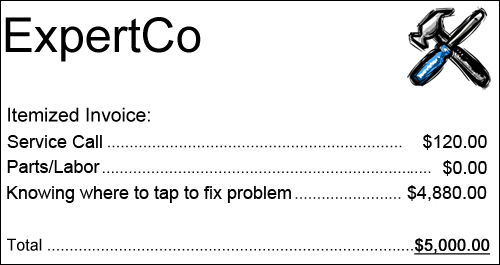
The next day, a bill of payment arrived and was placed in the manager’s intray. Upon opening it, this is what he saw:
The main challenge most businesses face online is driving new traffic to their sites.
How much money did the widget plant stand to lose when production stopped working and no one in the factory floor had the expertise to fix it? Did the expert in our story not have the right to ask to be compensated fairly for spending years building up the knowledge and expertise that allowed him to immediately assess and avert a crisis?
Similarly, if you could have a WordPress web site set up and configured so all you have to do is publish content to it and Google, Facebook, Twitter, LinkedIn, YouTube and dozens of other online properties would be instantly notified, how much time and money would this save you?
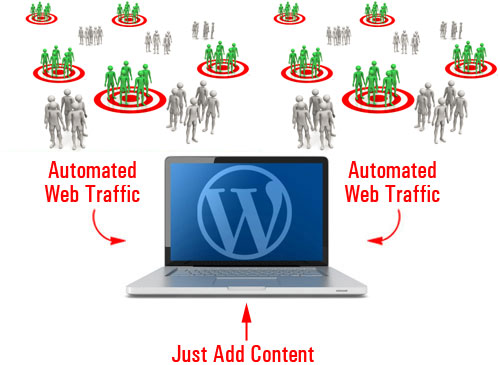
(How much time and money would you save if you could automate the process of driving traffic to your site?)
While the solution to many problems often seems quite simple once implemented, it rarely turns out to be that way.
Knowing how to expertly configure a WordPress site is more than installing a website and configuring some basic settings. It requires knowing where to tap! In other words, knowing things like:
- Which plugins you need to install to add specific functionalities to your site.
- Which 3rd-party services you need to set up to get certain outcomes
- Which internal and external settings need to be configured to make sure things will function to plan, etc.
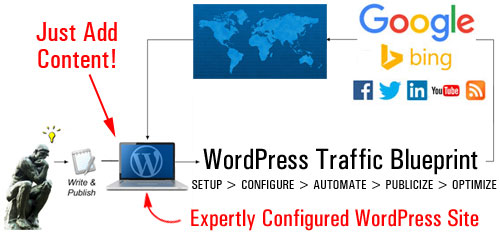
(Driving web traffic automatically with WordPress is a process that requires expertise)
Although this part of the WordPress traffic automation system may not seem so technically challenging, it can be quite complicated. The reason why is because it’s not just about installing and configuring one or two plugins, clicking a button, or tweaking some options and settings in your admin area … it’s all this and so much more.
The configuration stage is a process that involves your web server, your website, and various third-party sites and services …
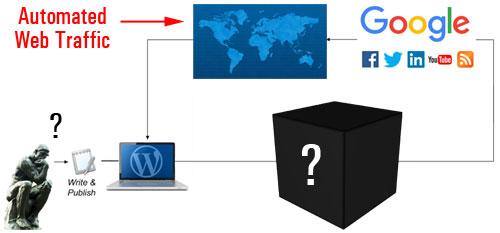
(The configuration stage involves more than just configuring a few settings in WordPress)
If we try to flowchart the steps involved in the configuration process, it would look like this …
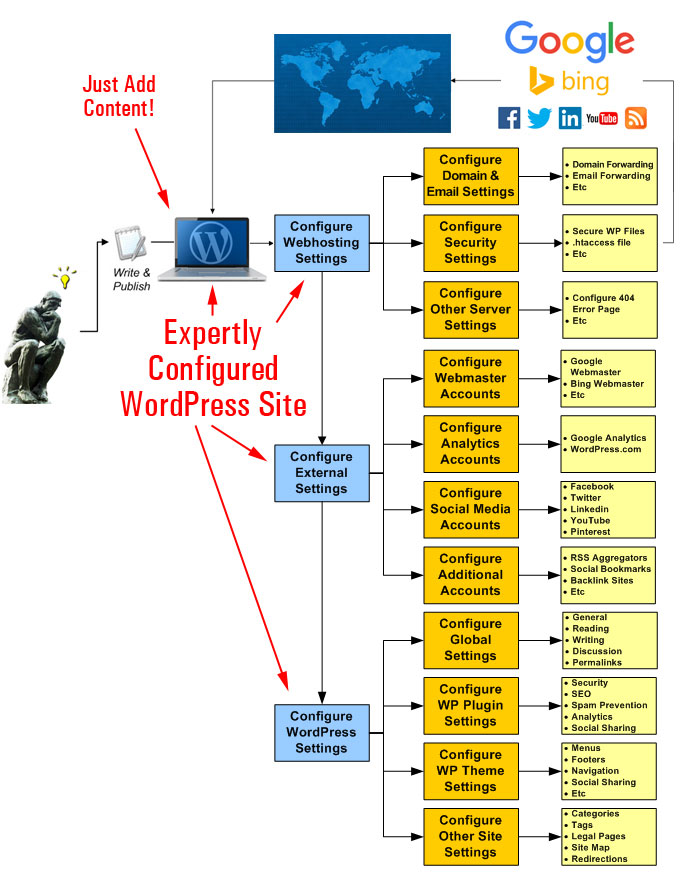
(A simplified diagram showing all the steps involved in the configuration phase)
Let’s examine what’s involved.
Your Server
We’re not talking about the process of configuring your web-hosting account for installation purposes (this is normally done during the Setup phase). We’re talking about tweaking settings in your server specifically for handling all web traffic …
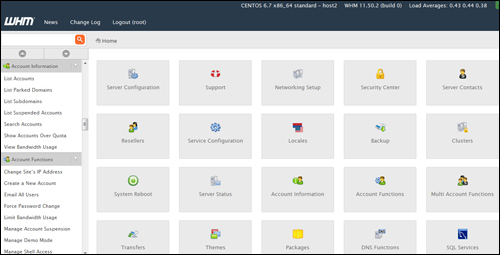
(During the configuration stage, your web server settings need to be checked for handling both good and bad traffic)
Not all traffic is welcome traffic. Some of the traffic your business will attract will be unwanted traffic like bot spam, malicious threats, brute-force bot attacks, etc.
This part of the configuration process, therefore, is all about evaluating your needs, planning for bad and good traffic and adjusting settings in your server accordingly. This includes looking at things like integrating spam protection and security threat prevention, to configuring domain and email forwarding, setting up htaccess file redirections, etc …
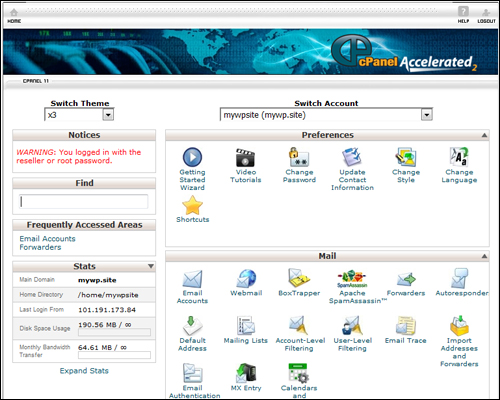
(Have you configured your webhosting settings for handling things like emails, page error redirections, etc?)
After fine-tuning your server settings and configuring these (if required), the next step is to configure various third-party sites and services.
External Accounts
The idea behind setting up external sites is that all of your content will be published to one central location (your WordPress site) and from there, it will get automatically distributed to other components of your traffic system, or notify traffic-related web properties and applications.
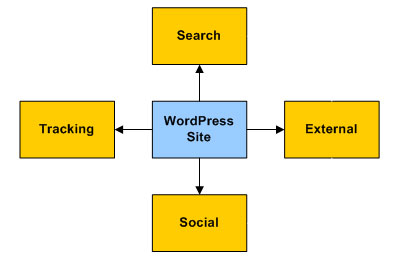
After adding these external services to your traffic network, content with links pointing back to your site gets automatically syndicated to search, social and aggregator accounts. Your content and site will benefit from exposure online, helping your business tap into new sources of traffic.
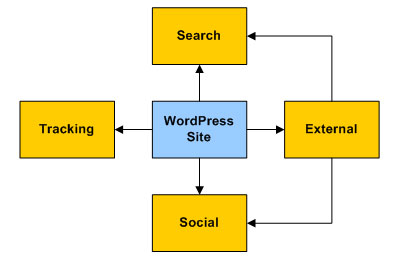
Some third-party sites will need to be set up before configuring your site’s settings to help save time and some will need to be done later, during the automation phase.
For example, here are just some of the accounts you will need to have set up:
Google Webmasters
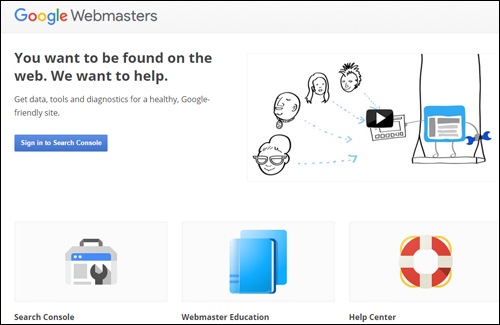
(Google Webmaster Tools)
Google Search Console lets you inform Google about your site’s pages, submit XML sitemaps for faster page indexing, and provides you with essential data, SEO tools and diagnostic reports about your website.
Once your account is set up, you can use this information to automate traffic settings and notifications in WordPress and other applications.
Google Analytics

(Google Analytics)
Google Analytics lets you improve your website’s traffic performance, SEO, marketing activities, and more, by tracking all user engagement, pages visited, keywords searched for, search engine referrals, etc.
After setting up your Google Analytics account, your account information can be integrated with WordPress via any of several Google Analytics plugins and automatically sent to other useful applications and reporting tools.
Bing Data And Tools
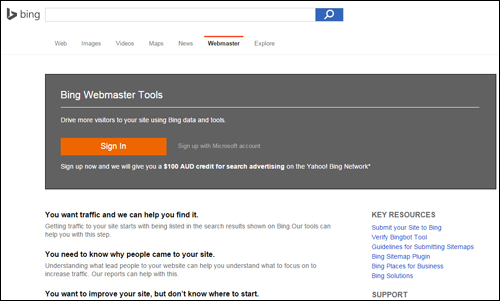
(Bing Data And Tools)
Bing Webmaster Tools is similar to Google Webmaster Tools. After setting up your account with Bing, this information can be used with web traffic settings and notifications in WordPress using plugins like Yoast SEO and other applications.
WordPress.com
(WordPress.com)
As discussed in Part Two, WordPress offers a self-hosted (WordPress.org) and a hosted (WordPress.com) option. We recommended choosing the self-hosted WordPress platform if you plan to grow a professional web presence.
WordPress.com (the hosted option), however, provides some great features, which a number of WordPress plugins can access. We recommend setting up an account with WordPress.com, therefore, and we’ll explain how to integrate this into your web traffic generation system in the next installment of this article series.
Social Media Pages

(Syndicate your content automatically to your social media and social bookmarking accounts and bring new visitors to your site)
You will need your various social accounts set up before you can integrate these with your traffic generation system.
After setting up and configuring everything, you will be able to syndicate your content automatically to your social media and social bookmarking accounts and get new traffic to your site.
Make sure you have accounts and pages set up with all of the big social networks – Facebook, Twitter, YouTube, Pinterest, LinkedIn, etc.

There are many social bookmarking sites you can You can syndicate your content to many social bookmarking sites. You don’t need to create accounts with all of them, just choose the ones that will work with your setup and/or content syndication tools.
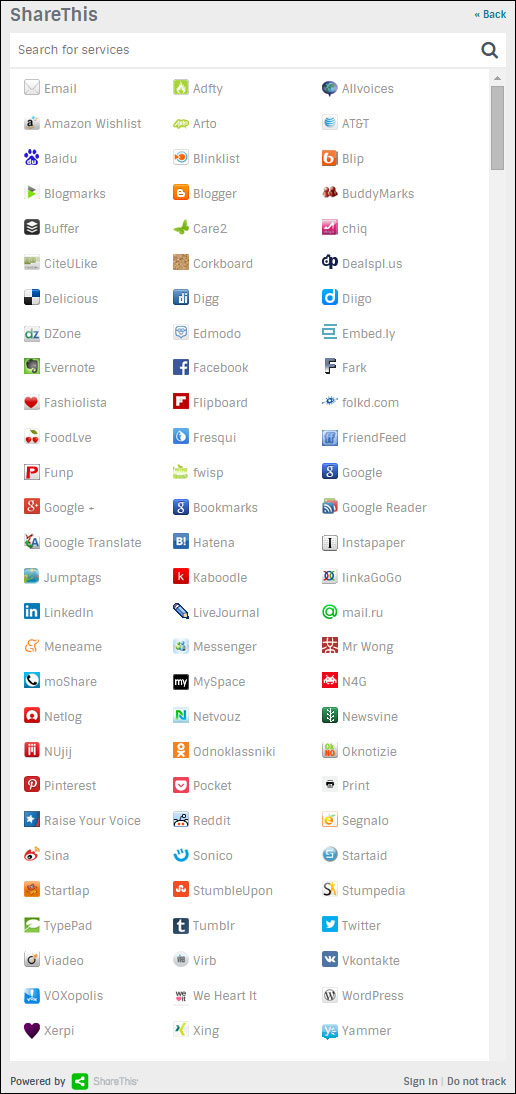
(There are many social bookmarking sites you can post your content to. Image source ShareThis.com)
Additional Sites, RSS Aggregators, Etc.
There are many online platforms and RSS aggregators that can serve as secondary-level traffic generation sources. Some are free or provide free accounts, and some offer a range of pricing plans to suit different users.
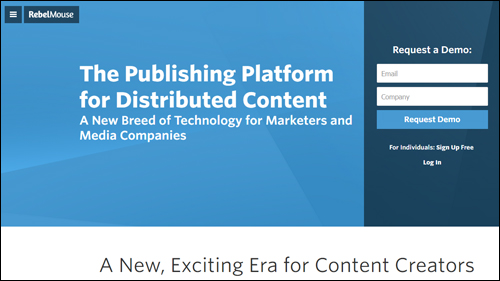
For example, here is a content aggregator that allows you to add your WordPress blog feed …
RebelMouse
(RebelMouse)
RebelMouse is a news aggregator for your social profiles and RSS feeds. Your content is displayed in a Pinterest-like format and visitors can follow your RebelMouse account.

There are various technologies and third-party applications you can add to your own traffic system. Please feel free to contact us if you need assistance exploring some of these further, or to discuss a strategy to suit your needs.
Once you have configured your web server and set up accounts with third-party services, it’s time to configure your WordPress settings.
Configuring WordPress For Traffic
The first step in configuring your site for traffic is to make sure that its global settings have been correctly set up.
Let’s go over some key areas.
WordPress Settings
By default, WordPress includes a Settings menu that allows you to configure your site’s global settings …
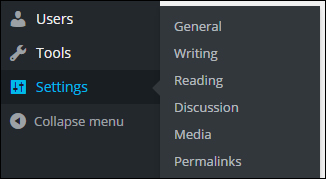
(WordPress admin menu – Settings)
General Settings
Content entered into fields like Site Title and Tagline can influence your site’s SEO, search indexing, etc …
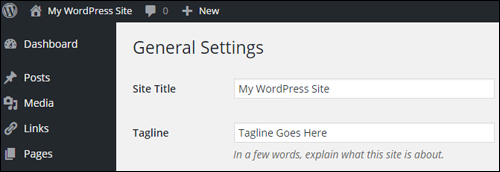
(Global Settings – General Settings Section)
Writing
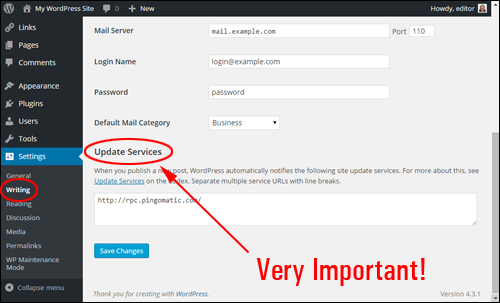
The Writing Settings area contains an important and frequently overlooked built-in traffic notification system …
(WordPress Settings – Writing Settings Section)
As described below the Update Services section title,
When you publish a new post, WordPress automatically notifies the following site update services …
Unless you have purposely chosen to prevent search engines from indexing your site – see next section, then your site will automatically ping the list of update services entered into the Update Services field
By default, only one service is available …
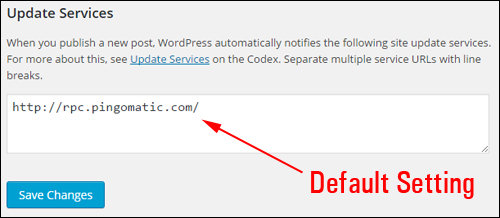
(Update Services – A Powerful Traffic Feature Of WordPress)
WordPress lets you notify dozens of update services automatically – just add a list of all the update services you want to notify as soon as you publish a new post to this section and WordPress takes care of the rest …
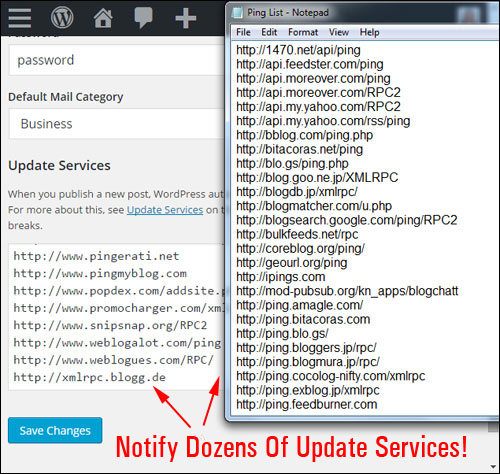
(Notify dozens of update services automatically with WordPress!)

Download A Comprehensive List Of Ping Services For Your WordPress Site!
Click the link below to download a comprehensive list of reliable and authoritative ping services for your WordPress site or blog:
Download A List Of Ping Services For Your WordPress Site
***
Note: If you need help setting up the list of ping services on your site, we recommend using a professional web services provider. You can find professional WordPress service providers in our WordPress Services Directory.
Reading Settings
This section affects how your content gets seen by readers when they visit your home page and blog pages.
The syndication settings in this section can influence web traffic. For example, choosing to display the full content vs a summary of your post, affects how your content displays to users in RSS feeds and blog post digests, and could play a part in someone’s choice to explore your content further, and whether or not they will visit your website to get the rest of the content from summaries, or read the content in full without the need to click through to your site.
As far as traffic is concerned, however, the most important setting in this section is whether the Search Engine Visibility check box is ticked or not.
Generally, you want search engines to visit your site. Leaving this box unchecked enables WordPress to automatically ping all the update services you have specified in the Update Services field when new posts get published (see Writing Settings above). Unless you have a specific reason why search engines should not visit your site, make sure this box is left unticked …
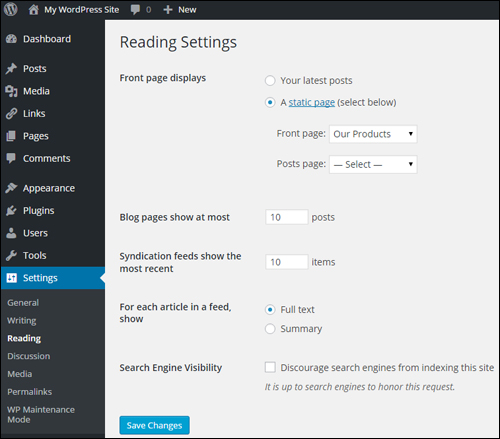
(Settings Menu – Reading Settings)
Discussion
Although the settings in this section are mostly concerned with how users engage with content on your site, you have the option to allow notifications to blogs linked to from your articles, and to allow link notifications from other blogs (pingbacks and trackbacks). This can work for you, but it can also drive bad traffic in the form of SPAM comments …
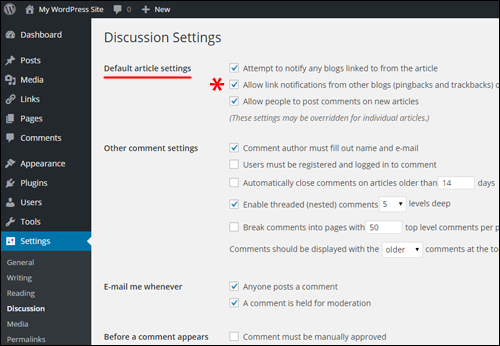
(Global Settings – Discussion Settings Screen)
Permalink Settings
Permalinks allow you to create SEO-friendly URLs …
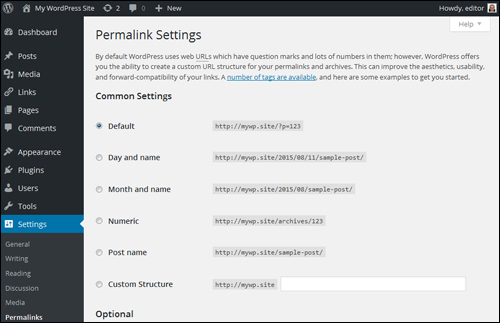
(Global Settings – Permalinks Section)
The examples below show some of the ways your site’s permalinks can be configured …
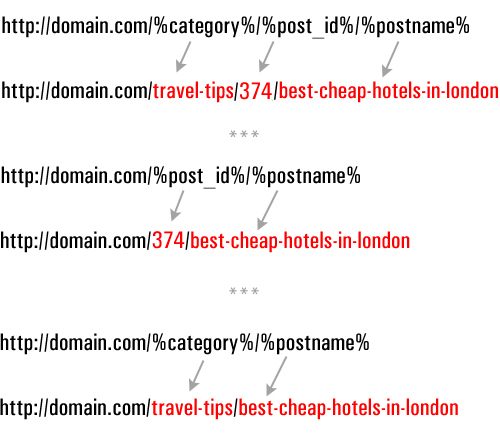
(Configuring SEO-friendly URLs)
We have written a detailed tutorial on using WordPress permalinks here: Using Permalinks To Improve Your WordPress SEO
Configuring WordPress Traffic Plugins
WordPress provides users with thousands of plugins that can add almost every kind of functionality imaginable to your site, including plugins with features that help to improve traffic generation.
Here are some types of plugin categories that affect traffic and plugin examples
Blog Defender Security Plugin
Once again, it’s important to configure your site for dealing with both good traffic and bad traffic. No matter what type of business you run or plan to run online and how small you think your web presence is, you simply cannot afford to ignore the importance of securing your website or blog.
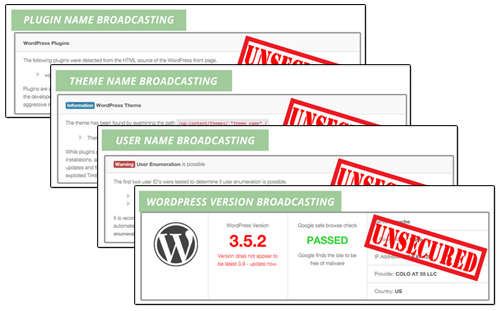 (WordPress Security Plugins help prevent bad traffic from harming your web presence)
Security plugins like Blog Defender help to make your website invisible to attacks from hackers and bots.
Go here for more info:
SEO Plugins – Yoast SEO
SEO plugins help drive traffic by improving the search engine friendliness of your website …

(WordPress Plugin – Yoast SEO)
A plugin like Yoast SEO (previously called WordPress SEO by Yoast) can significantly improve your SEO. Properly configured, the Yoast SEO plugin not only makes your site easier for search engines like Google and Bing to find and index, it allows you to configure how your content will show up in Google’s search results and social media pages, e.g. Twitter, Facebook, and Google+.
WordPress Social Sharing Plugins
Allowing visitors to share your content with others online can help drive significant traffic to your site, especially if your site provides great content that adds real value to readers.
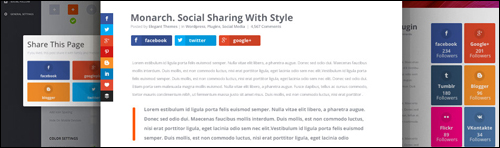
(WordPress users can easily add social features to their website using free or inexpensive WordPress plugins)
You can easily add social features to your website with WordPress plugins.
Many social sharing plugins allow you to specify which sites visitors can share your content to, embed social buttons into your content, set up default update notifications, display/hide share counters (e.g. number of shares), etc. Some social sharing plugins even allow you to protect content or downloads which users can unlock by linking or tweeting your page.
Configuring WordPress Theme Settings For Traffic Generation
As well as configuring various plugins, many WordPress themes also include features that can help grow your site’s traffic.
For example, in addition to options and settings for configuring the layout and design of your site, some themes also provide options for improving SEO and site linking structure for faster indexing, add tracking, social sharing buttons, etc …
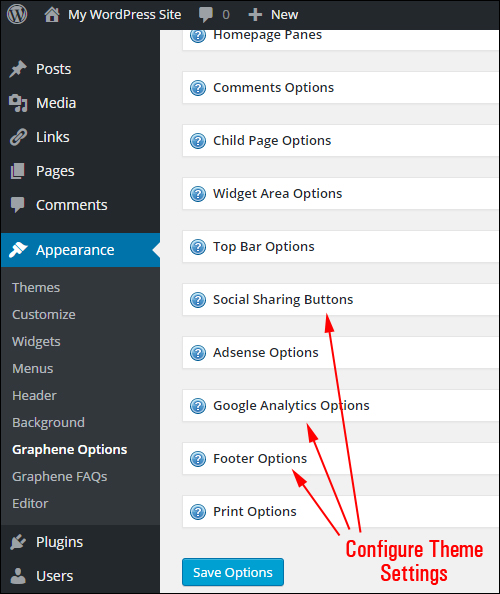
(Many themes have built-in traffic optimization features)
With a number of themes, adding social sharing features to your website is as easy as selecting the option to enable this functions …

(Many WordPress themes come with built-in social sharing features)
Additional Configuration Steps For WordPress
Last but not least in the web traffic system configuration process, are the components that need to be configured outside of the global settings.
These include the following:
Website Compliance Pages
Once again, when preparing your website for an increase in traffic, it’s important to plan not only for how to deal with bad and good traffic but also for all the things that can go wrong as more and more people start finding and visiting your website.
If you do business online (or are planning to), you need to make sure that your website complies with legal requirements of government agencies that regulate online business practices.
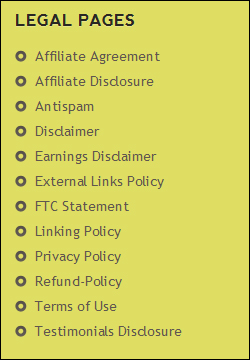 (Does Your Website Or Blog Comply With The Law?)
For a detailed article about why it’s important to have a legally compliant website, refer to this article:
Post Categories And Tags
Categories & tags help to improve your site’s search engine optimization, which helps you get more traffic.
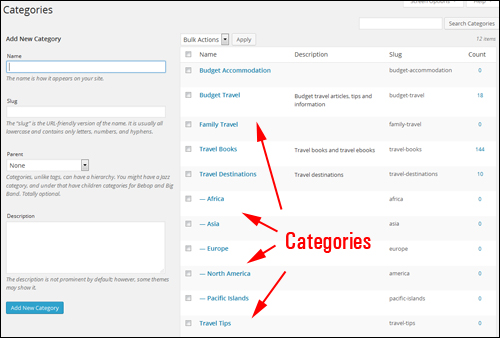
(Post categories help to improve your site’s search engine optimization, which helps you get more traffic.)
As we strongly recommend in this article, your site’s post categories and tags should be reviewed and set up earlier on, during the Website Planning Stages.
In the configuration phase, you will want to review and make sure that the post categories and tags you have set up.
Site Map
A site map that displays all of your site’s posts and pages is not only a useful navigation tool, it can also help external tools find more of your website content …
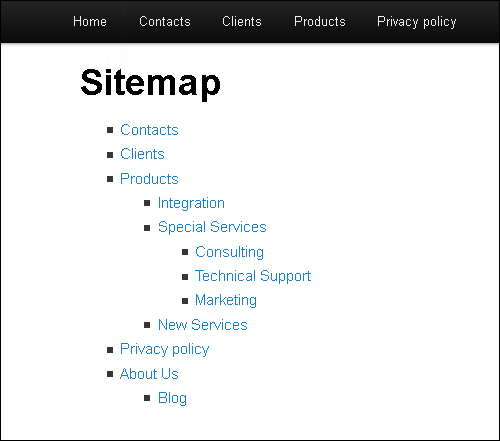
(Site Map – great for visitors and beneficial for traffic too!)

It’s important to note that an HTML site map and an XML sitemap are different things. Although search engines like Google can index your site just using an XML sitemap (which a plugin like Yoast SEO will create for you – see earlier section), allowing visitors to find more pages on your site results in increased traffic.
Configure Your Site’s 404 Page Not Found
When online visitors type in the wrong URL or click on a dead link, they will typically be presented with a 404 Not Found error page …
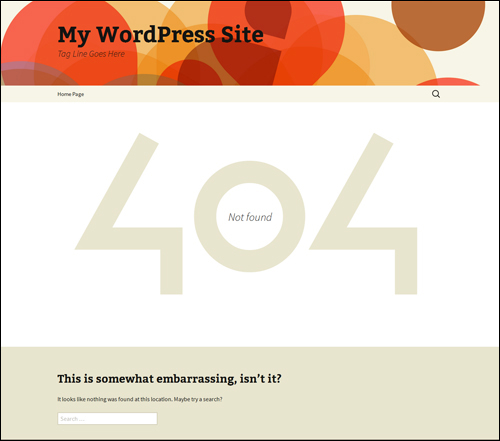
(Default WordPress 404 Error Page)
A 404 Error Page can redirect confused visitors to your functional pages …
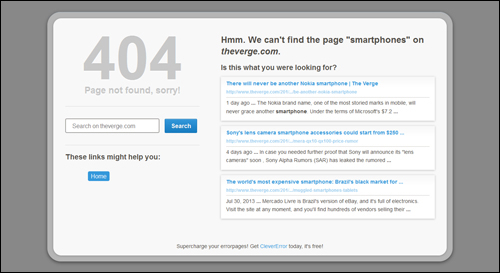
(Configuring your 404 Error Page allows you to recover web traffic that may otherwise be lost.)
Although a 404 Not Found page can be set up on your server, there are several WordPress plugins that allow you to easily configure your 404 page from your WordPress admin area.
WordPress Traffic Automation Blueprint: Configuration Process – Summary
Once you have your site fully set up and expertly configured, all you then need to do is add content consistently to begin bringing more traffic.
The process of expertly configuring your WordPress site, however, can be quite involved and requires the configuration and integration of a number of different elements and web properties …
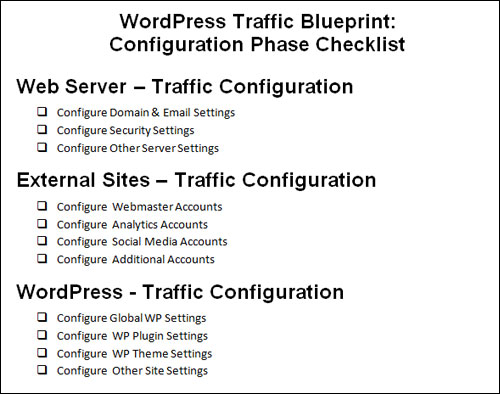
(Traffic Blueprint – Configuration Phase Checklist)
The knowledge and expertise involved in expertly configuring a WordPress site can take many web developers months to acquire.
Once you have expertly configured your WordPress site, the next step is to automate the process. This step is explained in the next section of the WordPress Traffic System series.
This is the end of Part 3
To read more, click here:

This article is part of an tutorial series designed to help site owners learn how to grow their business online and drive traffic automatically using a WordPress website and proven web marketing strategies.
Want To Get Automatically Notified When New Tutorials Get Published? Then Subscribe Using The Form Below!
***
"I am beyond impressed with what you have put together. I can tell that you put a ton of hard work into building what you have. You have the absolute best content on WordPress I have ever seen!" - Robert T. Jillie
***