 Welcome to Part Four of our Web Traffic Blueprint article series, where we show you how to automate traffic to your site using WordPress.
So far, we have covered the following in this series:
In Part One of this article series, we describe the traffic automation process, and explain why using an expertly configured WordPress website or blog is the key to automating traffic to your website …
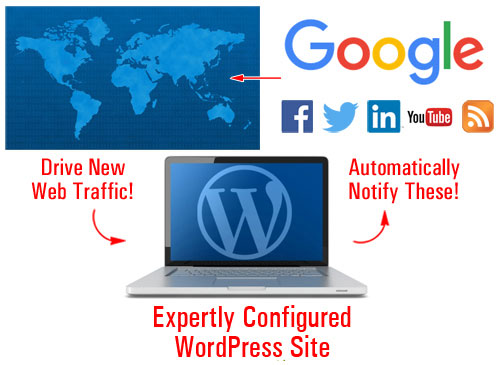
(With an expertly configured WordPress blog, all you have to do to bring traffic is add fresh content consistently!)
In Part Two, we focus on the setup phase of the automation process. We explain the best way to get started if you don’t have a web presence yet, how to set everything up if you already have a site, and what to do if your site has been built using WordPress.
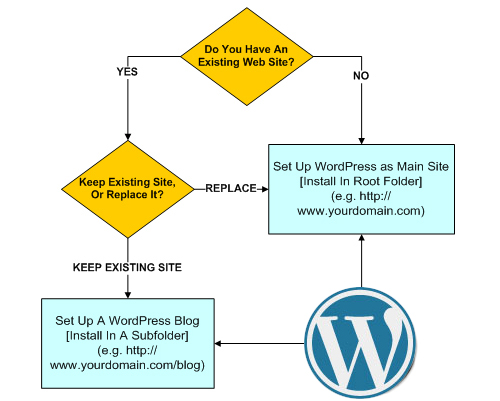
(In Part two we show you where to set up WordPress on your domain)
In Part Three, we discuss important configuration decisions.
In this step, we configure all the settings that affect your website’s traffic-getting ability …
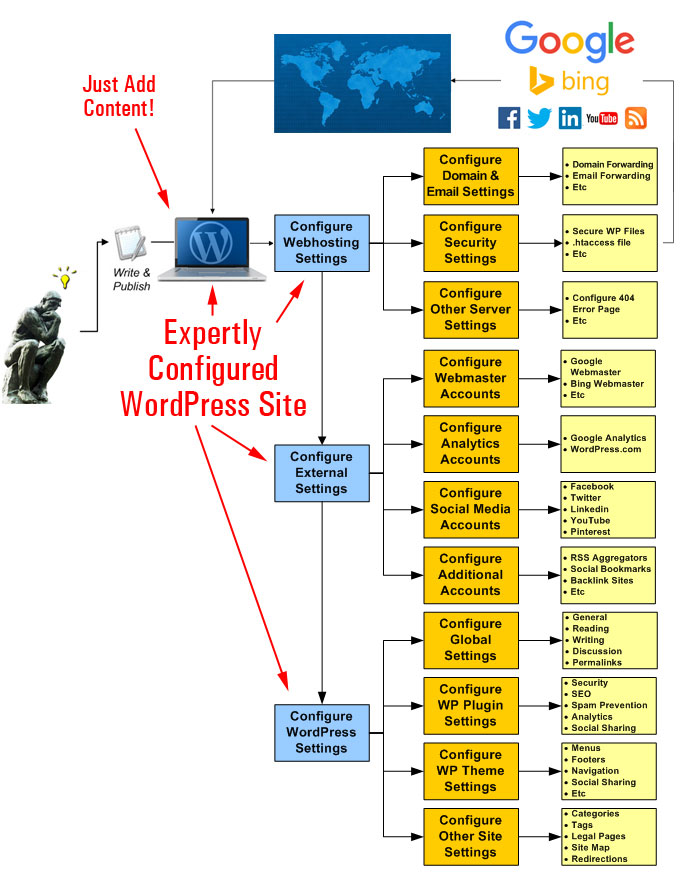
(In Part Three you will configure all the settings (hosting, internal and external) that can affect your site’s ability to generate traffic automatically)
In Part 4, we will discuss ways to automate the traffic system using plugins.
Why You Should Automate The Traffic Generation Process
Depending on who you listen to, you could find yourself trying to spend 1-2 hours or more every day posting content on social media.
Many small business owners lack the time, human resources and financial means to engage in the kind of content marketing that many online marketing experts prescribe. If you are spending hours checking Facebook, LinkedIn, and Twitter in addition to writing content for your website or blog, how will you get anything else in your business done?
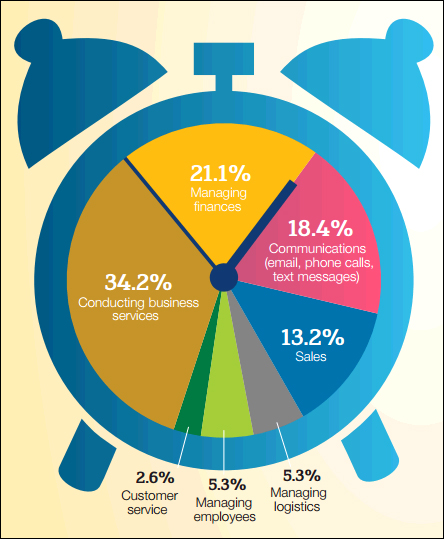
(Small business owners spend most of their time keeping their businesses up and running. Image source: NFIB)
Many businesses spend most of their time trying to keep their businesses up and running. On top of this, there’s also sales and marketing. After all, businesses need to remain competitive and make sales in order to survive.
A study of small businesses done in 2012 by VerticalResponse – an email and social media marketing company, found that:
- Almost half of all small businesses surveyed spent around 6 hours per week on social media (the other half of businesses surveyed using social media spent even more time – between 6 and 21+ hours per week). This was a 66% increase from the previous year, so if the same survey was done today, the figures would most likely be significantly higher.
- More than half of all small businesses surveyed spent 1-3 hours or more to create a blog post.
- Finding and posting content for social media was their most time-consuming online activity.
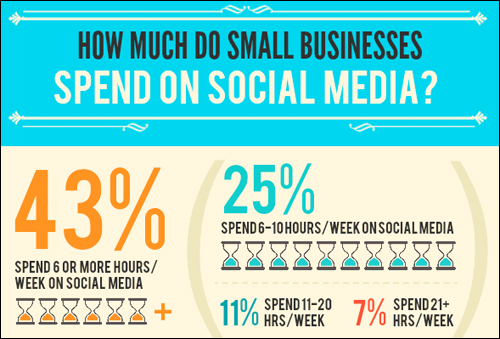
(Small businesses spend more time every year marketing and promoting themselves online. Infographic: VerticalResponse)
As small businesses spend increasingly larger amounts of time on online marketing as a matter of business survival and competition, this puts more and more pressure on businesses to prioritize their time on other vital areas …
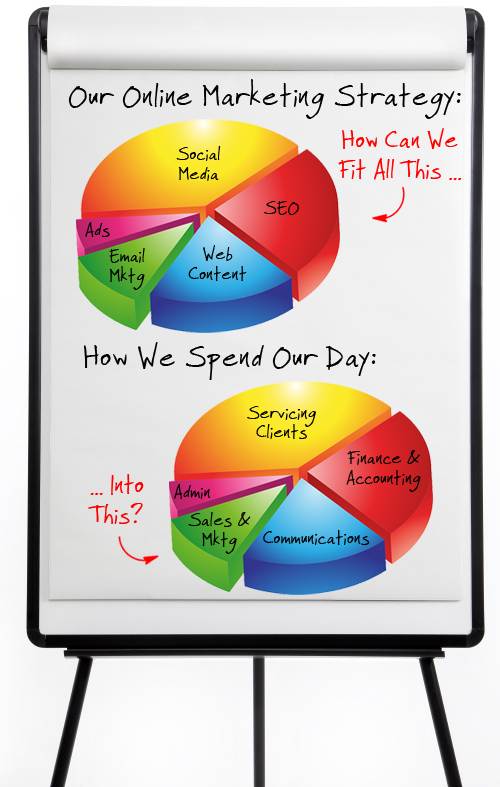
(Businesses with limited resources, marketing budget, and time and many different areas to focus on require careful planning of their marketing strategy.)
Another thing to keep in mind is that, in addition to spending time social websites, you are investing all of your efforts into virtual real estate that you don’t control. You don’t own Twitter, Facebook, or Pinterest. These companies can and will make decisions that can dramatically impact your business without requiring your input. Why invest so much effort and time building content on rented real estate? With a self-hosted WordPress website, you can control your own virtual real estate and distribute your content automatically to other websites.
Investing in business automation to leverage time and increase productivity is nothing new. Businesses have been doing it since the dawn of the Industrial Age. In the Digital Age, however, the increased availability of so many new marketing channels creates a number of dilemmas for small business owners, especially for those with limited budget, resources, and time. For example:
- Which marketing channels should you focus more of your budget, efforts, and your time on?
- Should you invest so much time and effort building a web presence on other people’s sites (e.g. YouTube, LinkedIn, Tumblr, etc.) while ignoring the benefits of building content on your own domain?
- Do you create new content for every channel you plan to include in your marketing strategy?
The Benefits Of Automating The Traffic-Getting Process With WordPress
What I’d like to share with you now, is a free, simple, and effective method that allows you to automate your traffic-getting process with WordPress.
With this method, you will be able to:
- Save time creating content for your website and other marketing channels (e.g. social media),
- Save money on content creation and unnecessary web marketing costs,
- Determine which marketing channels you should invest more efforts, budget, and your time on,
- Invest most of your time and efforts building your own asset instead of someone else’s and still benefit from other people’s marketing channels.

Many automated traffic solutions tend to focus on black hat methods, such as manipulating search engine results. This is not what the focus of this article series is about. In fact, we urge you to avoid using black hat software, sites, strategies, and anything that violates the terms of service and policies of services like Google, Twitter, Facebook, etc..

(Automating your web traffic does not require using black hat methods!)
What we are focusing in this article series is to show you how to be smart with your limited resources and automate your content distribution in order to leverage your time and marketing efforts, and increase your exposure online to websites that your target audience frequents.
An Automated Content Distribution, Traffic And Lead Generation, And Sales & Marketing System
As we’ve just seen in the previous section, many business owners lack the time, human resources and financial means to engage in the kind of content marketing that most experts are prescribing. What you want to do, then, is be strategic with your limited budget, resources, and time.
So, instead of choosing this approach, which is very time-consuming …
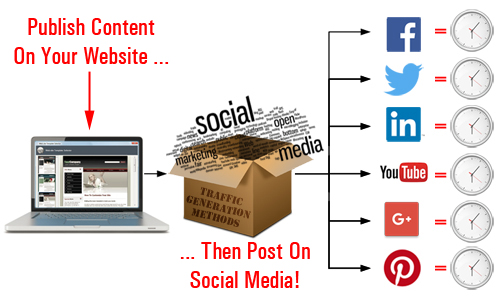
(Posting content to different services one by one is extremely time-consuming!)
Why not opt for this strategy instead …
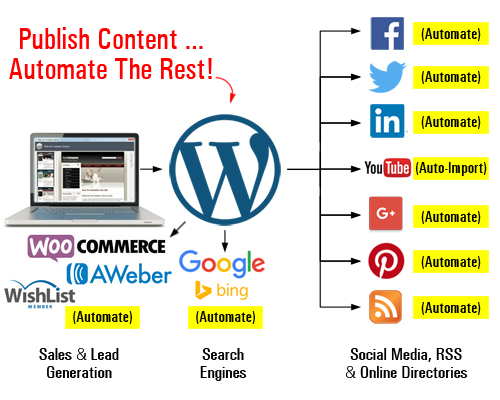
(Set up an automated content distribution, lead and traffic generation, and sales and marketing system with WordPress)
With an expertly configured WordPress site, you can build more than just a website for your business … you can set up an automated traffic and lead generation and sales & marketing system, where all you do is publish your content and WordPress then automates the rest.
With WordPress, you can publish content once, and automate the distribution of your content to all other channels.
You can:
- Automatically distribute content to social media sites and bookmarking sites,
- Distribute comments and content automatically to other blogs and web properties using RSS
- Import content automatically (e.g. videos)
As your business evolves, you can add more functionality and automate processes like:
- Sell products and services with e-commerce,
- Capture leads with opt-in forms and add your subscribers to newsletters and autoresponders,
- Allow visitors to register on your site with different membership levels,
- And so much more!
You can do all of this using inexpensive WordPress plugins. Once these plugins are installed and configured on your site, just direct your visitors to the appropriate sections (e.g. your store, subscription forms, membership area, etc.)
How do you do all of this?
Simple … first, set up your site as shown in Part 2. Then, get it all configured as shown in Part 3. Once all of this is in place, you then automate various processes using plugins like the ones discussed in the section below.
The video below shows you how everything works once your WordPress site has been expertly configured …
WordPress Traffic Blueprint – Traffic Generation Plugins
Let’s take a look now at some examples of traffic-generation plugins that can help to:
- Syndicate content automatically to social media sites and social bookmarking websites
- Syndicate comments automatically to other blogs
- Post content via RSS to other web properties
Jetpack
You can get your posts automatically distributed to sites like Twitter, Facebook, Tumblr, Google+, LinkedIn and more as soon as you publish new content using a plugin like JetPack.

Download URL: https://jetpack.com/
Jetpack is a free WordPress plugin with many great functions.
After installing Jetpack, connect the plugin to your WordPress.com account …
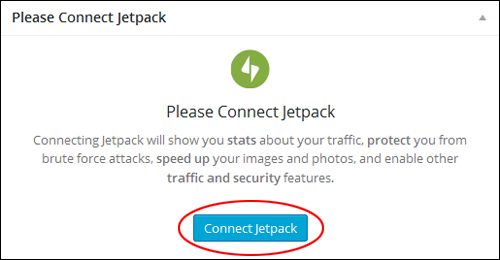
(Make sure that Jetpack is connected to your WordPress.com account)
Next, activate a feature called Publicize …
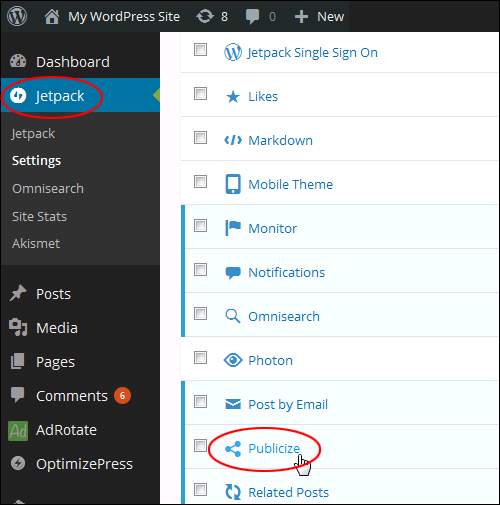
(Activate the Publicize feature)
Once this section is configured, you will be able to automatically share your posts on Tumblr, Twitter, Facebook, GooglePlus, LinkedIn, and more …
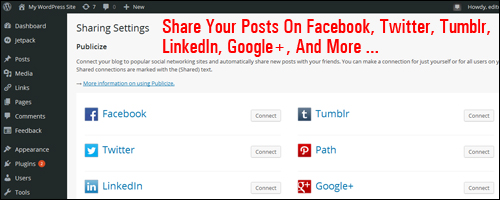
(Publicize your content automatically to several social networks.)
After all account and plugin settings have been configured, your content is ready for distribution.
Publicize adds a new section to your Publish box …
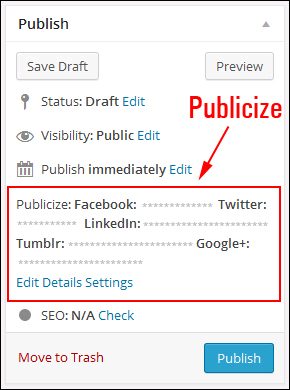
(Publicize details appear in the post publishing section.)
Now, whenever you publish new content, it will automatically be shared on every account you have set up …
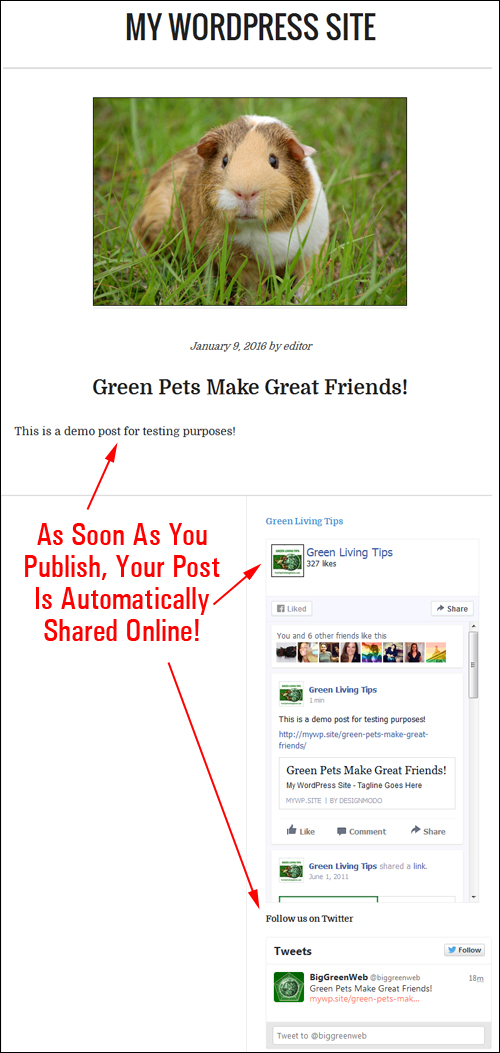
(As soon as you publish, your posts are automatically shared online.)
Jetpack provides a hands-free, automated way to get more exposure online for your content on social networks.
CommentLuv

(CommentLuv)
The WordPress built-in commenting system lets your visitors engage with your web site, post comments, reply to existing comments and participate in discussions.
You can enhance the WordPress built-in commenting feature using a number of 3rd-party plugins like Disqus, IntenseDebate, LiveFyre, or CommentLuv that integrate with social media, helping to share and spread your content around.
For example, a plugin like CommentLuv (Pro version) can help make your blog more attractive to commenters by offering them a wider choice of backlinks if they tweet, +1, or like your post. This plugin will visit the comment author’s site while they are typing their comment and retrieve their latest blog posts, which can be included at the bottom of their comment after clicking the submit button.

(CommentLuv can encourage a greater level of commenting and improve user engagement on your site.)
To learn more about the benefits of using this WordPress plugin, visit this site:
Social Link Machine
(SocialLinkMachine – Content distribution plugin)
Social LinkMachine is a WordPress plugin that lets you drip-feed your content, build diverse anchor text backlinks, include relevant YouTube videos and images, and social signals on auto-pilot …
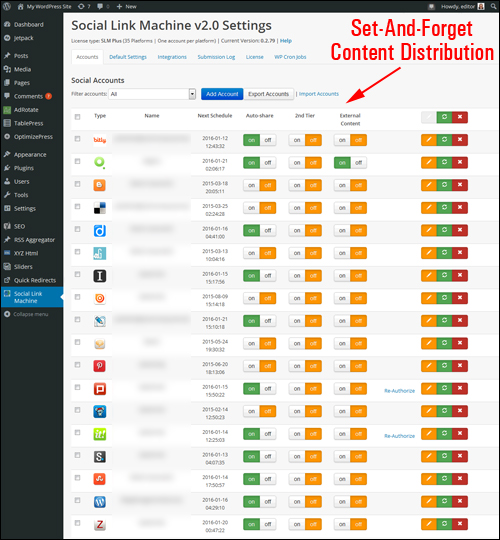
(Social LinkMachine – drip-feed your content automatically to many social websites)
With Social LinkMachine installed, you can automatically syndicate and drip-feed your content to over 30 traffic-generating websites, like:
- Bookmarking Sites: e.g. Delicious, Folkd, Instapaper, Zotero, etc.
- Web 2.0 Blogs: e.g. Blog.com, Rebel Mouse, Tribe, etc.
- Social Platforms: Facebook, YouTube, etc.
- Image Sharing Platforms: e.g. Pinterest, etc.
- Document Sharing Platforms: e.g. Docdroid, Scribd, etc.
To learn more about this WordPress plugin, visit this site: Social LinkMachine
Also, if you would like to know more about setting up social media tracking (in order to get useful information about your content distribution campaigns), we have created a comprehensive article where we explore several social media measurement tools and technologies that you may want to check out. To learn more, visit this page:

The above are just a few examples of the many content distribution plugins that are available to WordPress users.
Kickstart Your WordPress Traffic System
After your traffic automation system has been set up, we recommend kickstarting the process of driving traffic to your site with the steps shown in this tutorial:
WordPress Traffic System: Automated Content Distribution Stage – Summary
Once your website or blog and plugins have been set up and configured, all you have to do then is publish content regularly to automatically start attracting traffic organically.

We have created an entire email training series aimed at helping you never run out of great content ideas for posting to your web site:
Once you have expertly configured your WordPress site, the next step is to optimize the process. This step is explained in the next section of the series.
This is the end of Part Four
To keep reading, click on the link below:

***
"Your training is the best in the world! It is simple, yet detailed, direct, understandable, memorable, and complete." Andrea Adams, FinancialJourney.org
***