 Welcome to Part 5 of our Website Traffic Blueprint article series, where we show you how to grow your business online automatically using WordPress.
So far, here is what we have covered in this series:
In Part One of this article series, we describe the traffic automation process, and explain why using an expertly configured WordPress website or blog is the key to generating automated web traffic …
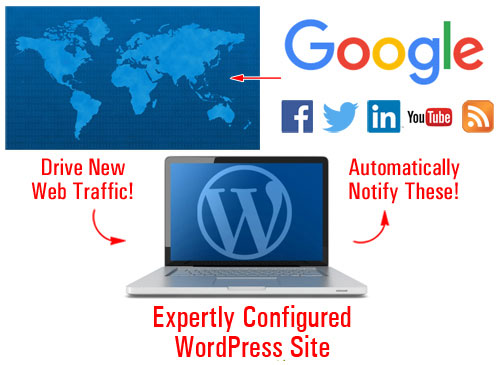
(With an expertly configured WordPress web site, all you have to do to automatically attract traffic is add content on a consistent basis!)
In Part Two, we discuss critical setup decisions. We explain the best way to get started if you don’t have a web presence yet, how to set everything up if you already have a website, and what to do if your existing website has been built using WordPress.
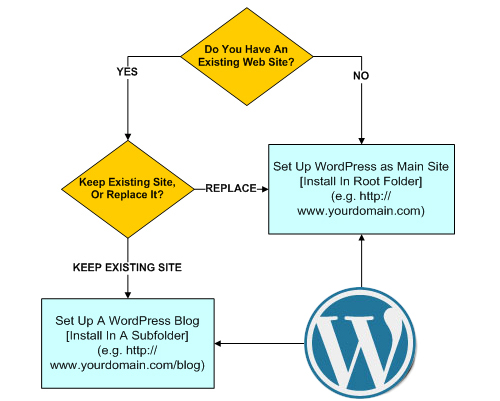
(In Part 2 we show you where to set up WordPress on your domain)
In Part Three, we focus on important configuration decisions. We configured webhosting settings, WordPress settings, and external settings that can affect your website’s ability to generate traffic automatically …
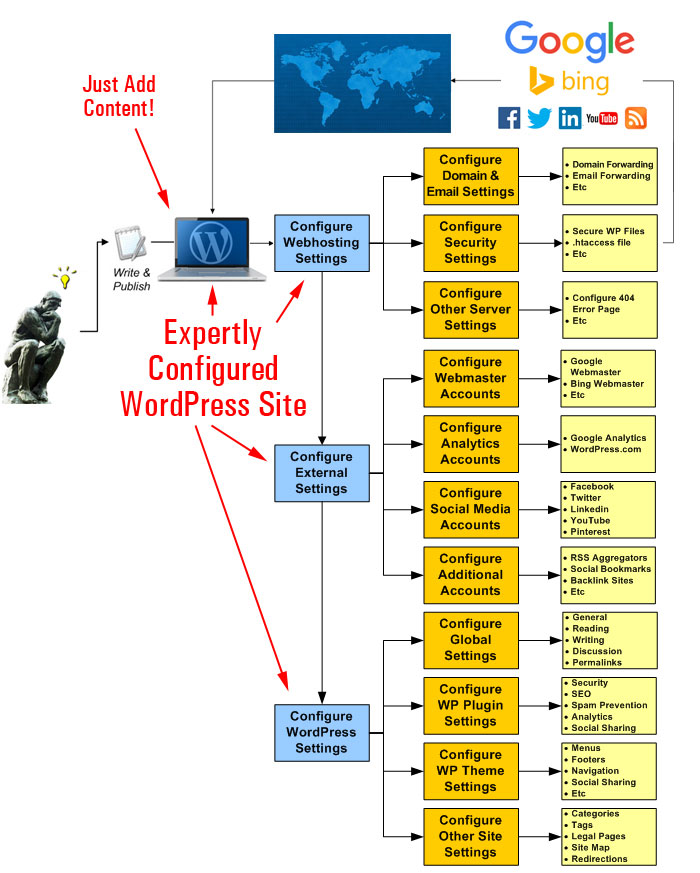
(In Part Three we explain how to configure all the settings that affect your website’s traffic-getting ability)
In Part Four, we looked at ways to automate the traffic system with different WordPress plugins.
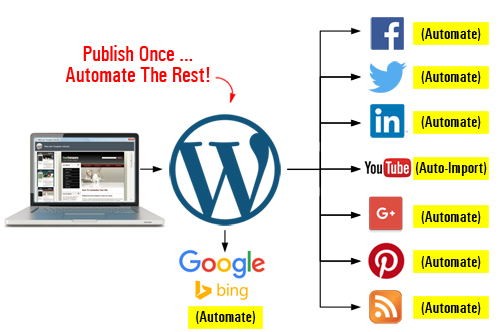
(Publish once and automate your content distribution to all other channels!)
In this section of the WordPress web traffic automation blueprint article series, we discuss ways to optimize the traffic-getting process with a number of different tools and strategies.
WordPress Traffic Blueprint – Traffic Optimization Systems
In addition to having an expertly configured WordPress website or blog, generating traffic successfully on a consistent basis is the product of a clear business vision, careful digital planning, and good systems in place.
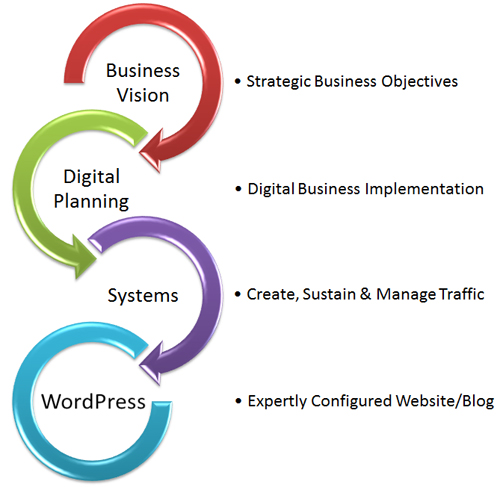
(Optimized traffic is the result of a business vision, planning, and excellent systems)
Let’s briefly review the systems that will help you grow and manage new traffic.
These include:
- Marketing Systems – The processes and methods used to drive traffic to your business.
- Technical Systems – The systems used to keep your digital presence operating efficiently for receiving new traffic.
- Business Systems – The systems used to manage and respond to new traffic.
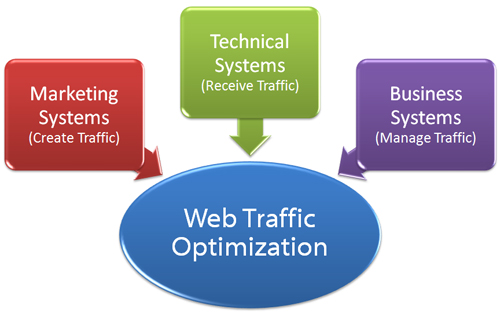
(Systems help you grow, automate, and manage your web traffic)
Let’s review the importance of the above systems briefly:
Marketing Systems
Your marketing systems consist of the processes and methods used to create traffic for your business. Your online marketing systems can be tested by asking questions such as:
- What is your content marketing/online marketing strategy?
- How will you allocate your budget and resources to these channels?
- Who will create your content, sales funnels, and marketing campaigns?
- How will you track conversions and measure the cost-effectiveness of your marketing campaigns?
During the setup and configuration phase, you should have installed an analytics program (e.g. Google Analytics). If you’re just starting out, you may want to consider investing in some paid advertising to help you generate some initial results. If you’re tracking your marketing campaigns correctly, this should yield some actionable data, such as the keywords people are searching online to find your site, which you can use to create web content targeted specifically to your audience’s needs.
Technical Systems
Your technical systems and processes ensure that your digital presence remains up and running for receiving traffic. There’s no point sending traffic to your site if your site is constantly experiencing problems or your pages are taking too long to load.
Your systems need to handle areas like webhosting, site maintenance and support, installing and updating software (e.g. plugins), integration, customization, troubleshooting, etc.
You can test your technical systems by questions such as:
- Who is looking after my server?
- Who looks after my website and keeps my site, plugins, themes, etc. maintained and up-to-date?
- Who will fix errors, troubleshoot problems, provide technical support and advice, etc. should any problems arise?
Many potential issues can be minimized if your website planning process and setup and configuration phases have been completed correctly. Like all technology, however, you should expect new problems. Your technical systems need to be able to handle these.
Business Systems
You need good business systems and processes in place to help you manage and respond to new traffic. This includes:
- Communication systems
- Managing human and financial resources
- Handling sales enquiries
- Order fulfillment
- Customer training/service
- etc.
If you intend to outsource key aspects of your digital marketing and technical support, then make sure you have implemented good systems to manage all outsourcing.
WordPress Web Traffic System – Optimizing Traffic Generation
With clear business objectives and great systems in place, all you need to focus on is how to grow and optimize a “traffic loop”.
Let’s go through an example of implementing, optimizing, and further automating a traffic loop. Take a look at the chart below …
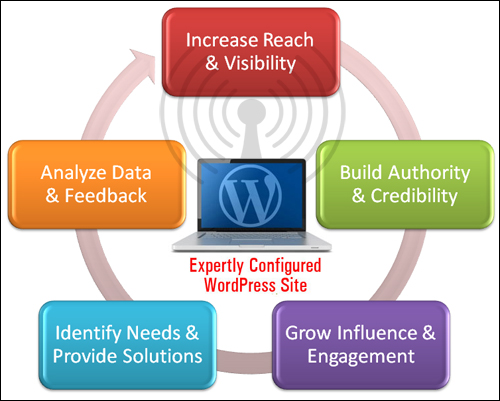
(Implementing and optimizing a traffic loop)
Increase Reach And Visibility Online
The first step of the process is to get your business exposed to as many potential users as your time and resources will allow.
Useful Tips & Ideas
- An expertly configured WordPress site will allow you to automatically distribute your content to places like Facebook, Twitter, Pinterest, etc. The easiest way to increase your reach and visibility online, therefore, is to simply publish more content on your site.
- As mentioned earlier, investing in some paid advertising (e.g. Facebook ads) can help generate some initial data, which you can use to create content targeted specifically to your audience’s needs.
- Repurpose your content to leverage different media formats.
- Continue learning about ways to increase more web visitors using methods like Twitter ads, YouTube, StumbleUpon, etc.
Plugins, Tools, & Strategies
We’ve already covered a number of useful tools, plugins, and strategies in previous sections of this article series.
Also, if you haven’t already, see other posts and tutorials on this site to learn more about plugins that let you easily add the following to your site:
- Share your posts online,
- Run contests, offer discounts or downloads for shares/likes,
- Add user generated content, feeds, etc.
- Distribute content online in other media formats (e.g. videos, PDF guides, audio, etc.)
Build Authority & Credibility
Getting more of your content out there is a great first step, but to make this more effective, your content also needs to build authority and credibility with your audience.
Publishing authoritative content improves your chances of getting more people to link to it and share it with others and hence more visitors.
Useful Tips & Ideas
- Focus on creating content that adds value to potential visitors and that showcases your expertise. This includes content that informs and educates readers, training content, user reviews, adding testimonials, etc.
- Consider publishing PDF guides that can be sold or distributed online (e.g. sell on Clickbank.
Plugins, Tools, And Methods
If you need great ideas for content that you can post on your website, then subscribe to our email training course on growing your business with content marketing here:
Also, contact us to learn more about plugins that let you easily add the following to your website:
- Legal Pages
- Testimonials
- Customer Support (e.g. Helpdesk, Live Chat, etc.)
- Ratings
- User Reviews
- Badges/Certificates Of Recognition
Grow Influence & Engagement
As your business grows, you may want to consider developing “traffic on demand.” You can do this by growing a list or starting a network.
With “Traffic On Tap,” all of your traffic will come from an audience of customers or subscribers – people who already know you and trust you. Your influence and reputation can be used to generate new traffic with every post you publish, forum post you add, or email you send out.
Useful Tips
- Encourage commenting and discussions on your site.
- Add an email newsletter and encourage people to subscribe.
- Add a free, paid, or ‘freemium’ membership site.
- Create or join an online group on Facebook.
Tools & Strategies
There are many solutions and plugins that can help increase your online influence and improve user engagement. For example:
- List-Building Tools (e.g. Aweber, GetResponse, etc.)
- Contact Forms, Live Chat
- Forums & Social Communities (e.g. bbPress, BuddyPress)
- Polls and Surveys
- Webinars (e.g. Webinar JEO)
- Comment sharing
- Add media, video galleries, etc.
Identify Problems & Provide Solutions
By taking advantage of incoming traffic to discover what problems your users are trying to solve, you can have an endless funnel of ideas for new solutions, all of which provide new opportunities to generate new streams of traffic.
Tips
- Create an e-learning program.
- Consider publishing a “how-to” e-book that you can sell or distribute online.
- Add an e-commerce store to your business.
Plugins, Tools, And Methods
If you plan to provide solutions online (as opposed to just providing information), then some of the more useful WordPress plugins you may want to consider adding to your site include:
- Membership Site plugins (e.g. Wishlist Member, S2 Member, etc.)
- e-Learning Courses (e.g. Courseware)
- Event Registrations (e.g. EventEspresso)
Analyze Data & Feedback
The final step of the process is the collection and analysis of data. Learning to gather and interpret data from existing traffic lets you discover new ways to generate additional traffic.
Hopefully, by now you have already installed an analytics tool (e.g. Google Analytics) on your website. Make sure you understand the metrics and can interpret the data.
WordPress Traffic Blueprint – Summary
Once you implement the above strategies, all you have to do is rinse and repeat, fine-tuning and refining your methods as you go to grow your traffic and improve your results.
In summary:
- Begin with an expertly configured WordPress site backed by good marketing, technical and business systems,
- Implement a content marketing strategy (with some paid advertising to drive initial traffic and generate useful data) to increase your reach and visibility online,
- Add plugins, list-building strategies, and other solutions as needed to build authority and credibility, and also to increase engagement with users,
- Promote any new solutions, products or services using your existing channels and strategies to generate additional streams of traffic,
- Analyse your data and your results, automate your processes wherever possible, and begin the cycle again.
Hopefully, this post has given you a blueprint that will help you automate and optimize the process of driving traffic to your WordPress web site and build a more successful business online.

***
"Your training is the best in the world! It is simple, yet detailed, direct, understandable, memorable, and complete." Andrea Adams, FinancialJourney.org
***